
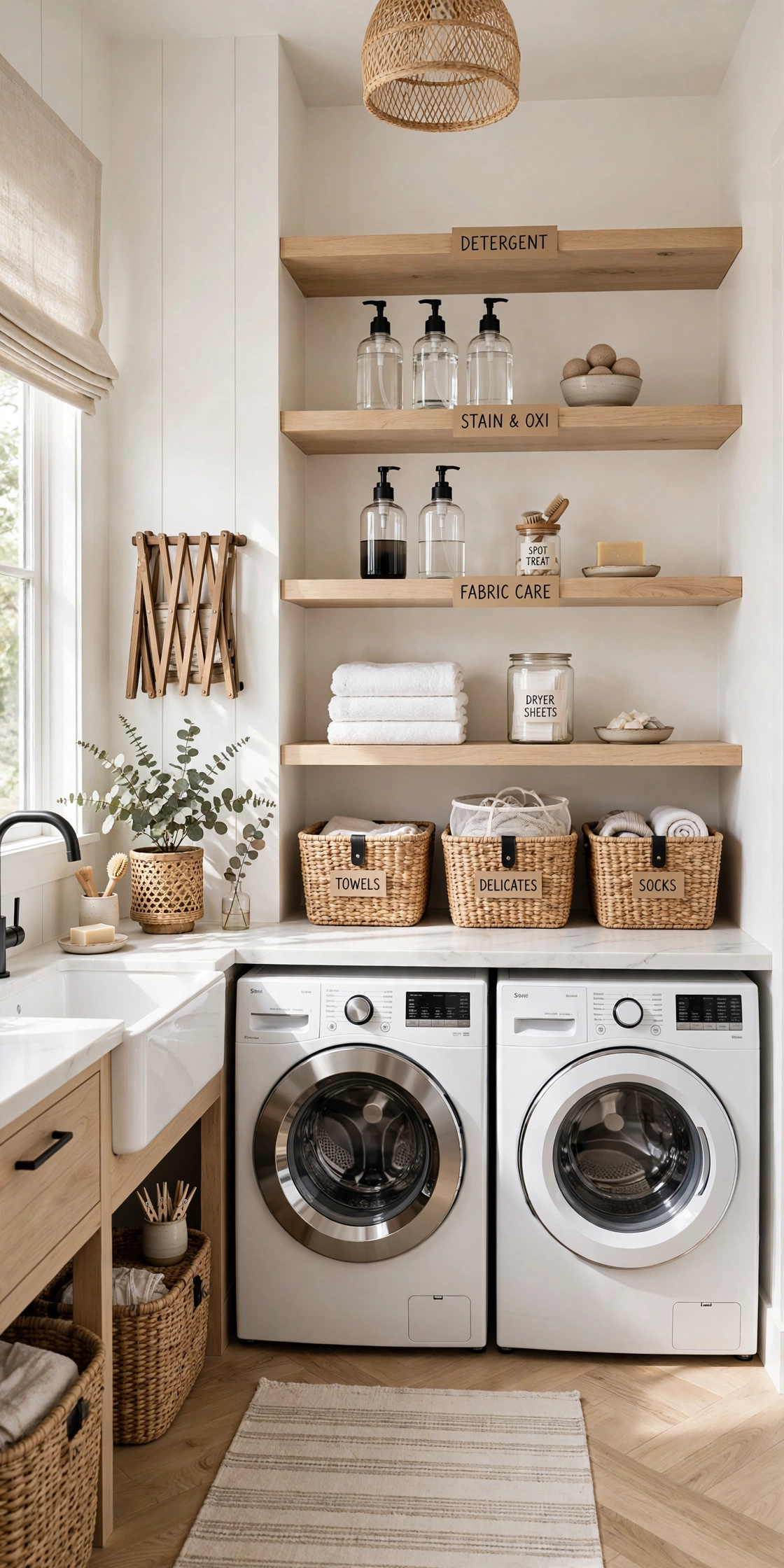
Wash day shouldn’t feel like a chore you dread. A disorganised laundry room — piles on the floor, detergent bottles everywhere, nowhere to fold — turns a simple task into a stressful one. These 15 laundry room organisation ideas turn any laundry space, from a tiny corner to a full room, into a calm, efficient system.
Every idea is budget-friendly, most take under 30 minutes, and none require a renovation. Let’s make laundry day effortless.
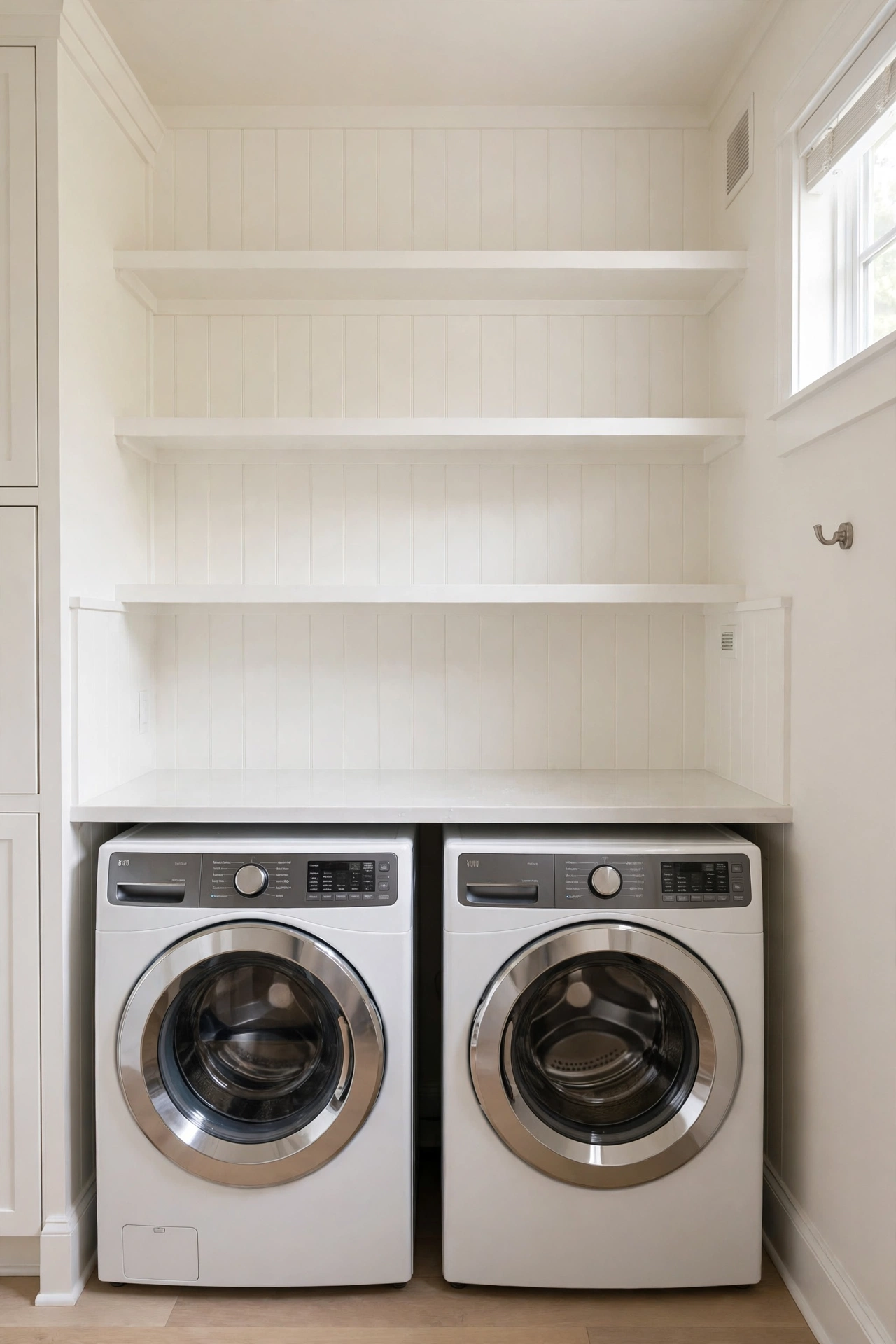
1. Empty It and Reset the Space
You can’t organise around expired products and mystery socks. Pull everything out, toss the empty bottles and ancient stain removers, wipe every surface, and start with a clean slate. This one-time reset shows you exactly what you own — and what your laundry room actually needs to hold.
Most people find half their products are duplicates. The declutter alone makes the space feel twice as big.
The rule: If it’s empty, expired, or you haven’t used it in a year, it goes.
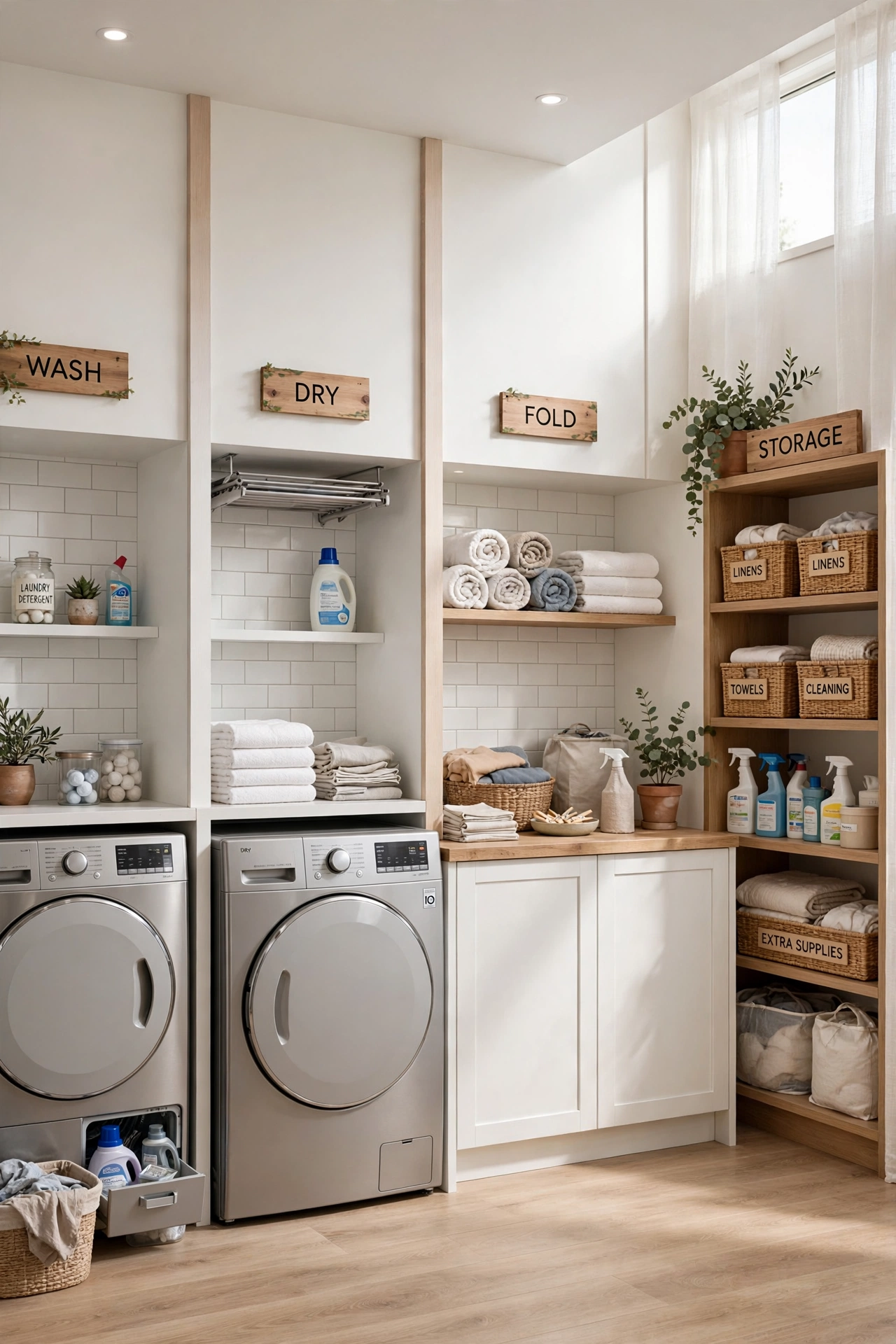
2. Create Zones: Wash, Dry, Fold, Store
Laundries work best with zones, just like kitchens. Set up four: washing (machine + detergents), drying (rack or dryer + pegs), folding (clear surface), and storage (cleaning supplies, spare linens). When every task has a zone, laundry flows instead of piling up.
Even a one-wall laundry can be zoned — stack the zones vertically if floor space is tight.
Try it: One afternoon of zoning saves you time on every single load.
3. Decant Detergents Into Matching Dispensers
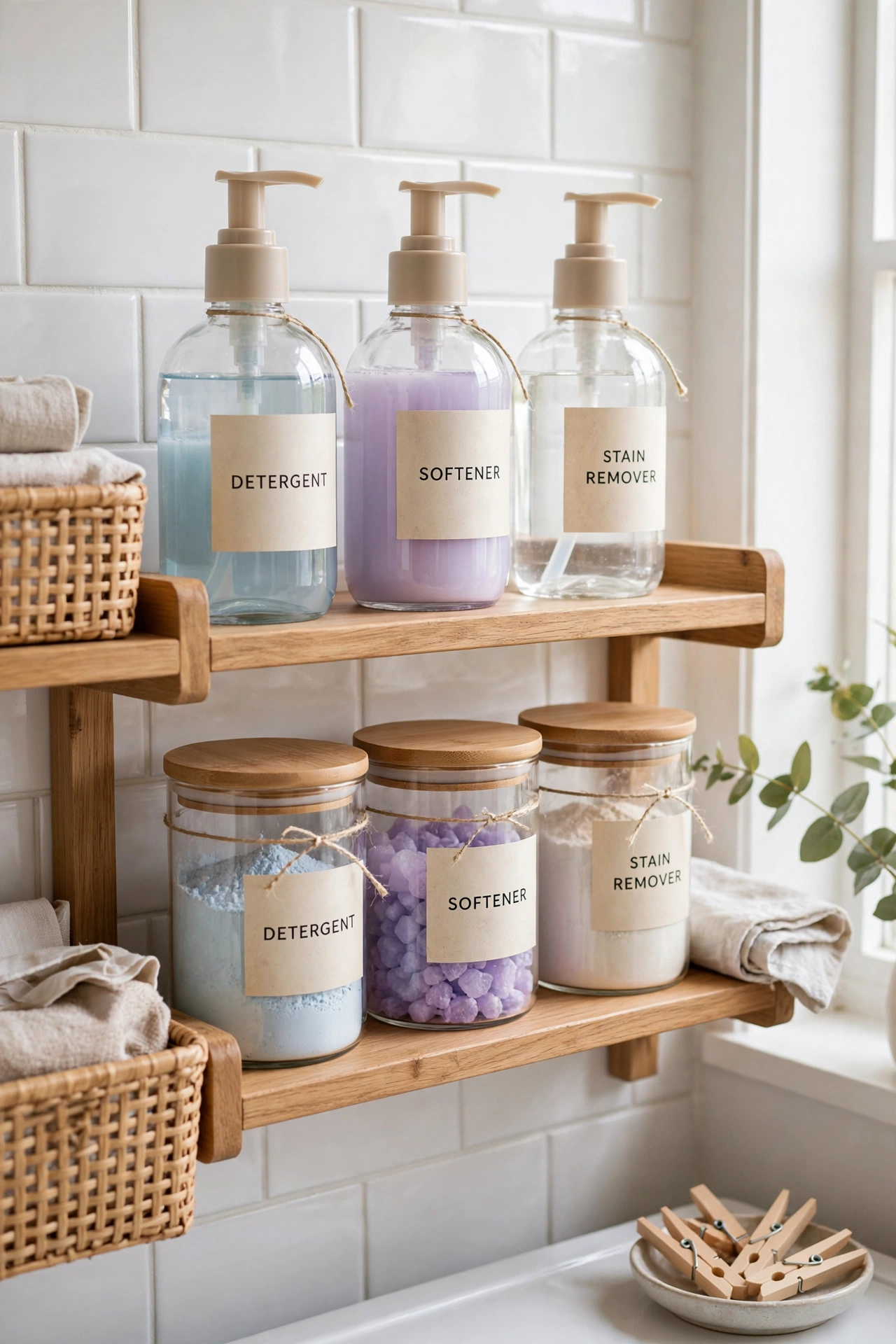
Mismatched bottles, boxes and bags are visual chaos — and bulky packaging wastes shelf space. Decant detergent, softener and stain remover into matching pump dispensers or jars. You see levels at a glance, pouring is easier, and the room looks instantly calm.
Label each dispenser so guests and family grab the right one.
Budget tip: Start with your three most-used products. You don’t need to decant everything on day one.
4. Label Every Bin, Basket and Jar
Unlabelled containers become mystery boxes within a week. Label everything — “whites”, “darks”, “delicates”, “cleaning”, “lost socks”. Labels keep the system running because everyone in the house knows where things belong.
A simple label maker or masking tape and a marker does the job beautifully.
The payoff: A labelled laundry stays organised by itself, load after load.
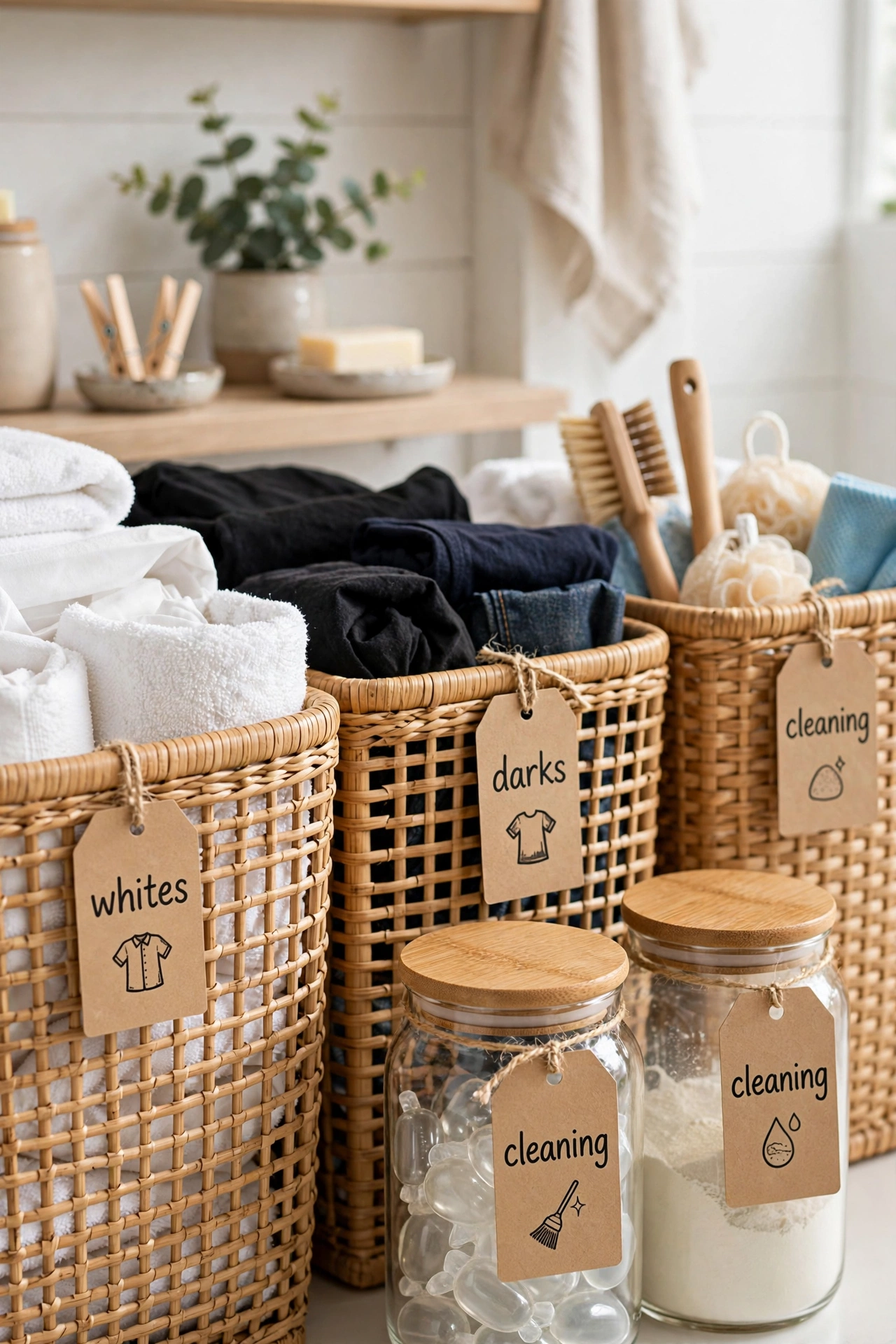
5. Sort-as-You-Go With Divided Hampers
Sorting laundry on wash day is a time sink. Use divided hampers or a row of labelled baskets so clothes get sorted the moment they go in — whites, darks, colours, delicates. When a section is full, it’s a ready-made load.
This one habit eliminates the biggest laundry bottleneck entirely.
Small space win: Stackable divided hampers sort vertically in a tiny footprint.

6. Add a Folding Surface (Even a Small One)
Folding on the bed or sofa means clean clothes migrate around the house. Add a dedicated folding surface — a countertop over the machines, a wall-mounted drop-down table, or even a sturdy board across the sink. Clothes get folded where they’re washed and put away faster.
Renter-friendly: A countertop board resting on the machines needs zero fixings.
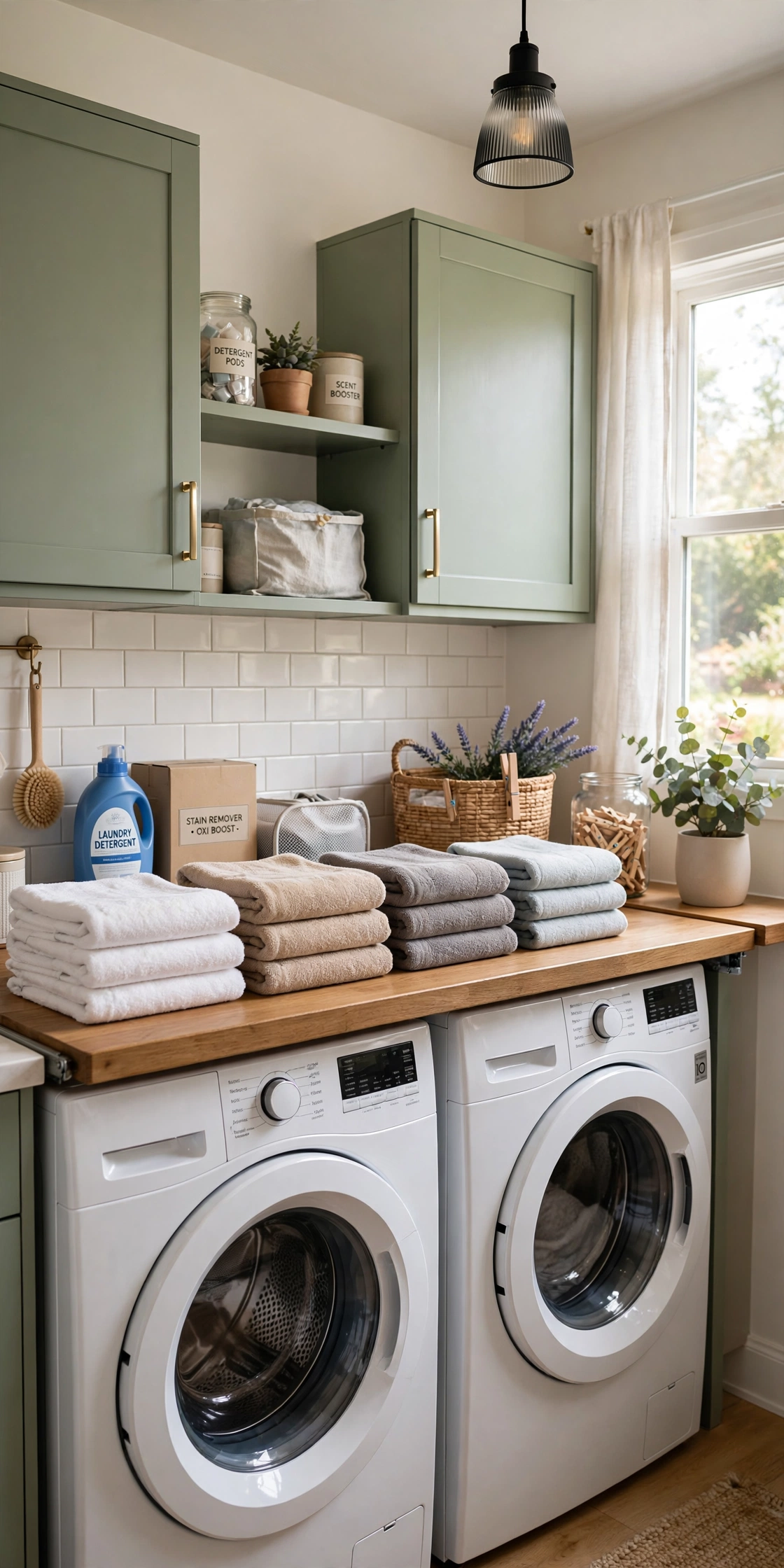
7. Use the Walls: Shelves, Rails and Hooks
Laundry rooms are small, so go vertical. Wall shelves hold detergents and baskets, a rail with hooks holds the ironing board and brooms, and peg rails take drying delicates. Walls are free storage — use every centimetre.
Keep daily items at arm’s reach and rarely-used items up high.
Try it: One shelf and one rail transform a cramped laundry corner.
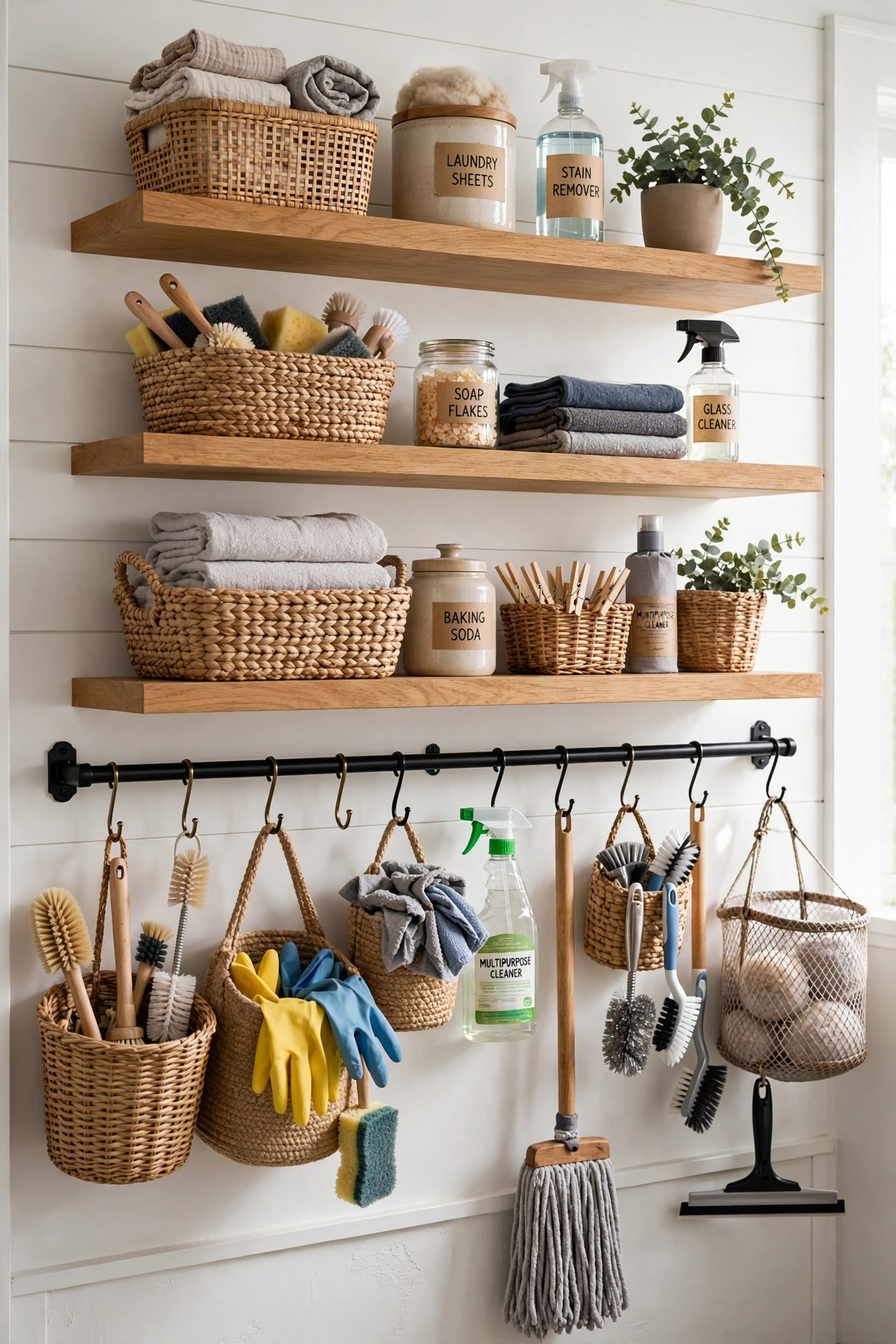
8. Hang a Retractable Washing Line
Not everything goes in the dryer — delicates, wool, and anything you want to last. A retractable washing line pulls out when needed and disappears when not. It costs very little and saves your clothes (and your energy bill).
Mount it over the bath, in the laundry, or on a balcony door frame.
Why it works: Drying space that exists only when you need it — zero permanent footprint.
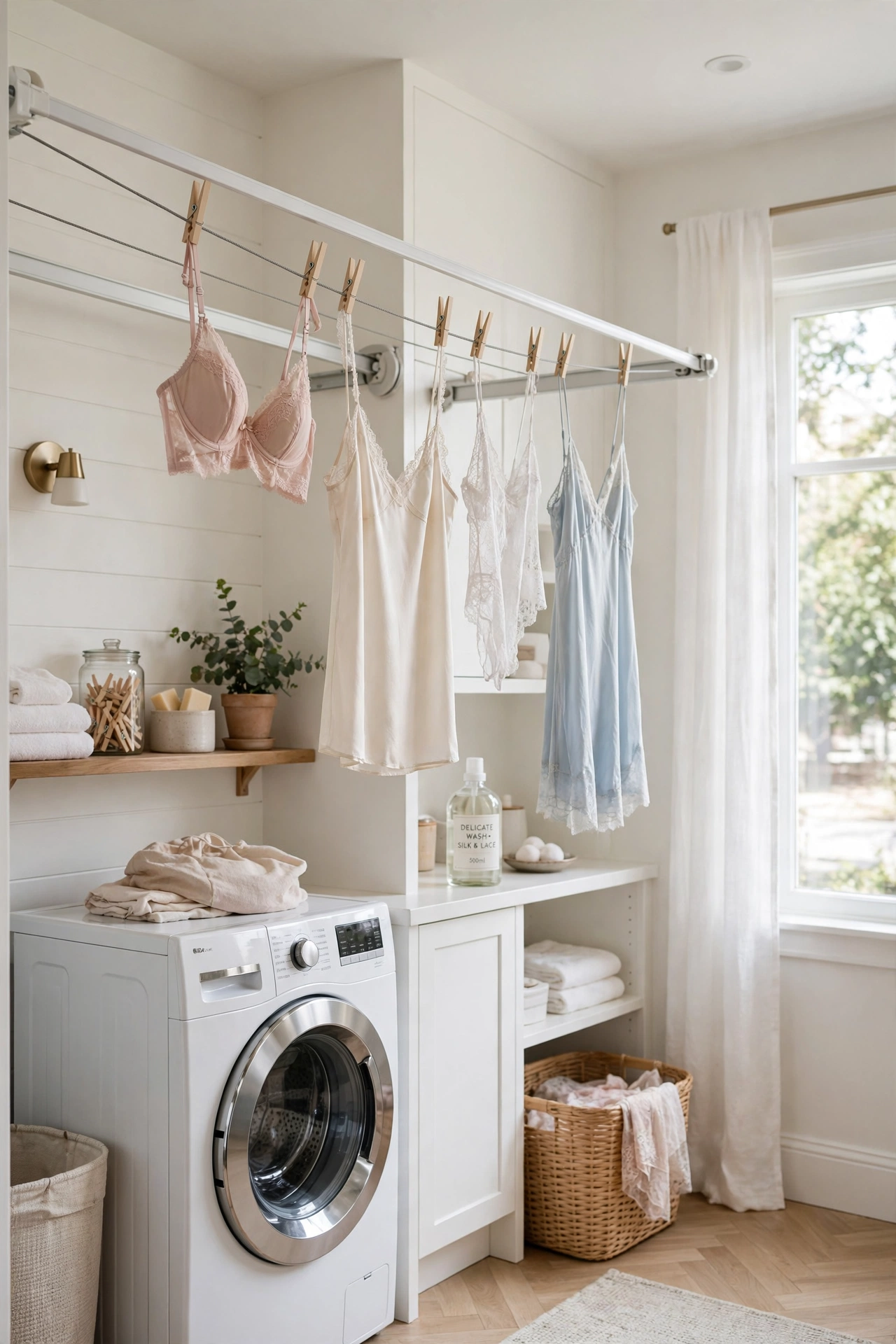
9. Corral Small Items in Baskets and Caddies
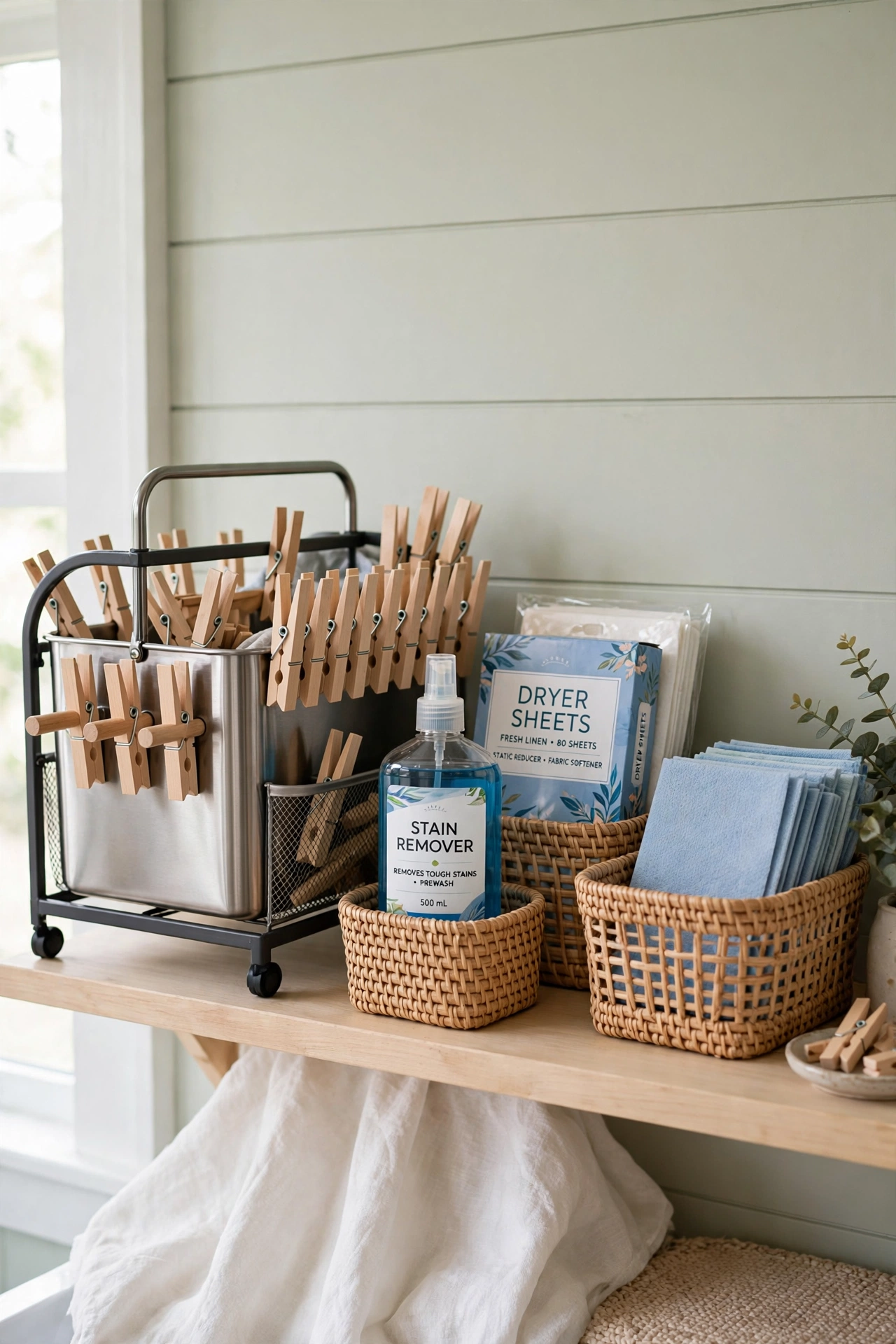
Pegs, stain sticks, dryer sheets, spare buttons and sewing kits scatter everywhere. Corral them into small baskets or a cleaning caddy — one per category. Grab the caddy, do the task, put it back.
Caddies also make the room portable: carry everything to the machine in one trip.
Try it: One caddy for “wash day tools” covers most laundries.
10. Create a Lost Sock Station
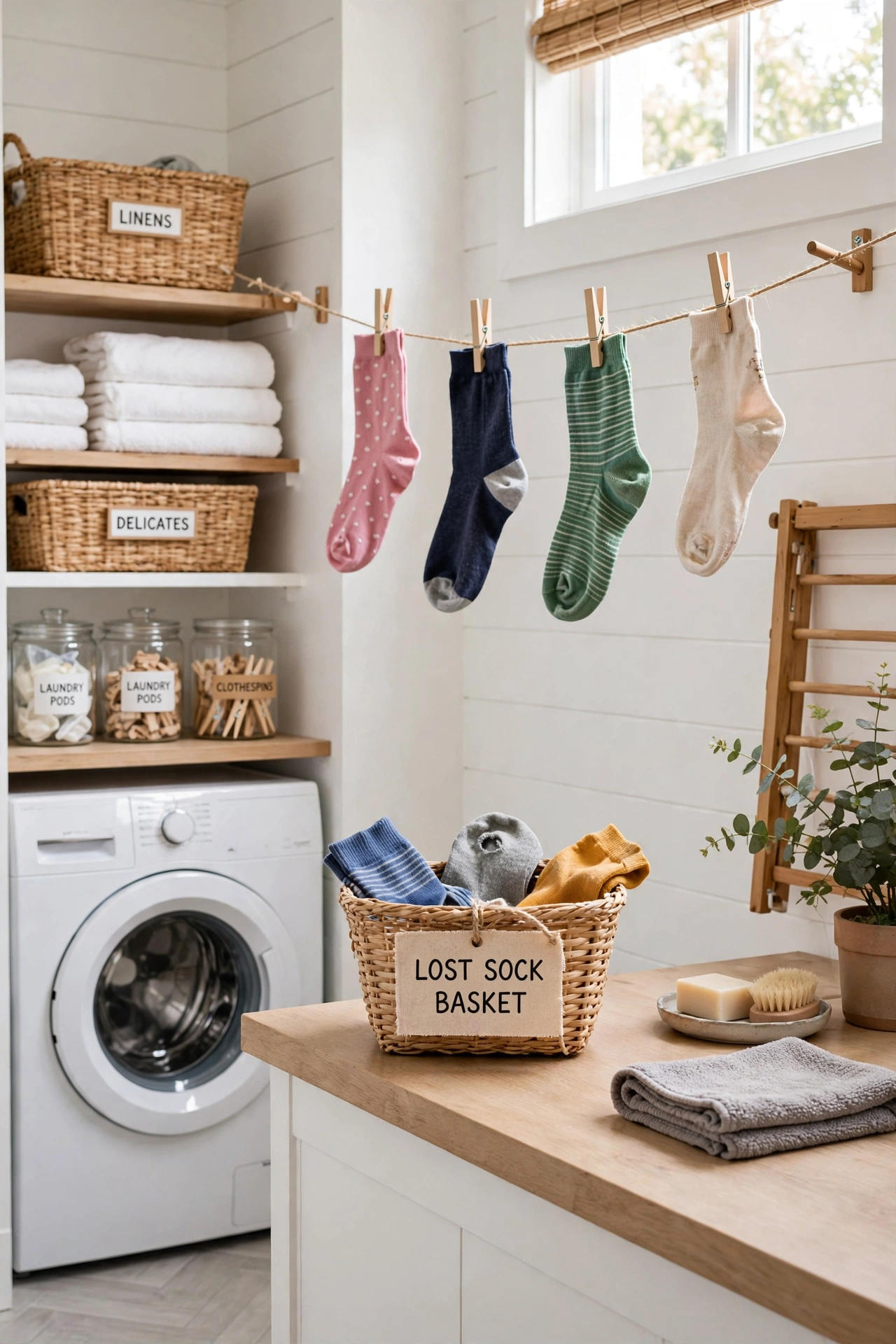
Every household has one — the mysterious single sock. Instead of letting them pile on the dryer, give them a home: a small labelled basket or a peg rail marked “lost socks”. When its partner appears, reunion is instant.
It’s a tiny system that removes a surprising amount of daily friction.
The rule: One sock in, one home. No more dryer-top sock graveyards.
11. Store the Ironing Board on the Door or Wall
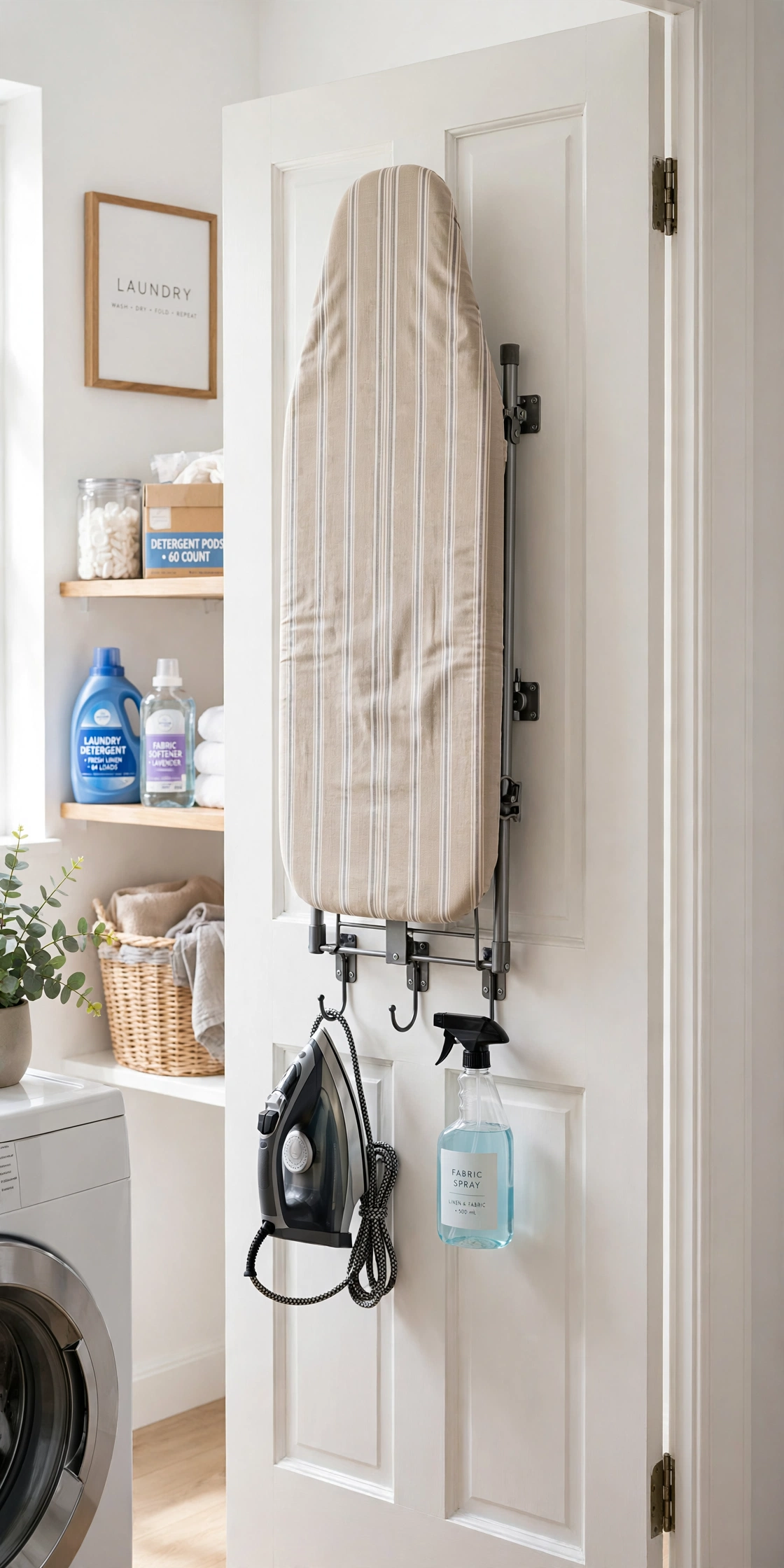
Ironing boards are awkward giants in small laundries. Mount yours on the back of the door or on a wall hook — off the floor, out of the way, but instantly accessible. The same hooks can hold the iron and a spray bottle.
Freed floor space makes the whole room feel bigger and easier to clean.
Renter-friendly: Over-door hooks need zero fixings and hold a standard board.
12. Keep a Stain Treatment Kit Within Reach
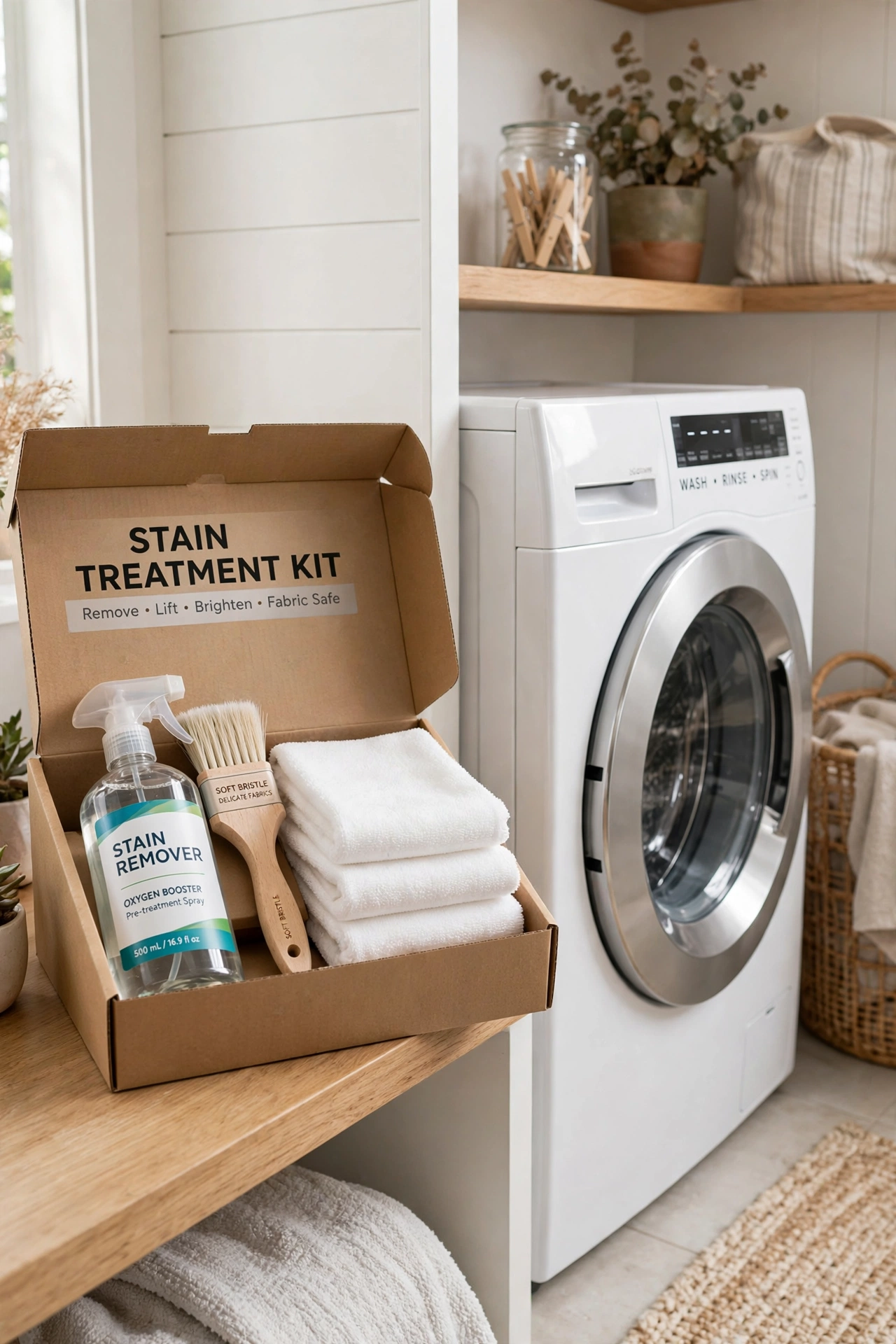
Treat stains fast or lose the garment — that’s the rule. Keep a small stain kit (stain remover, white cloths, a soft brush) right by the machine or in your wash-day caddy. When stains get treated immediately, they actually come out.
This tiny kit saves clothes that would otherwise be ruined.
Why it works: The kit lives where the stains happen. Speed is everything with stains.
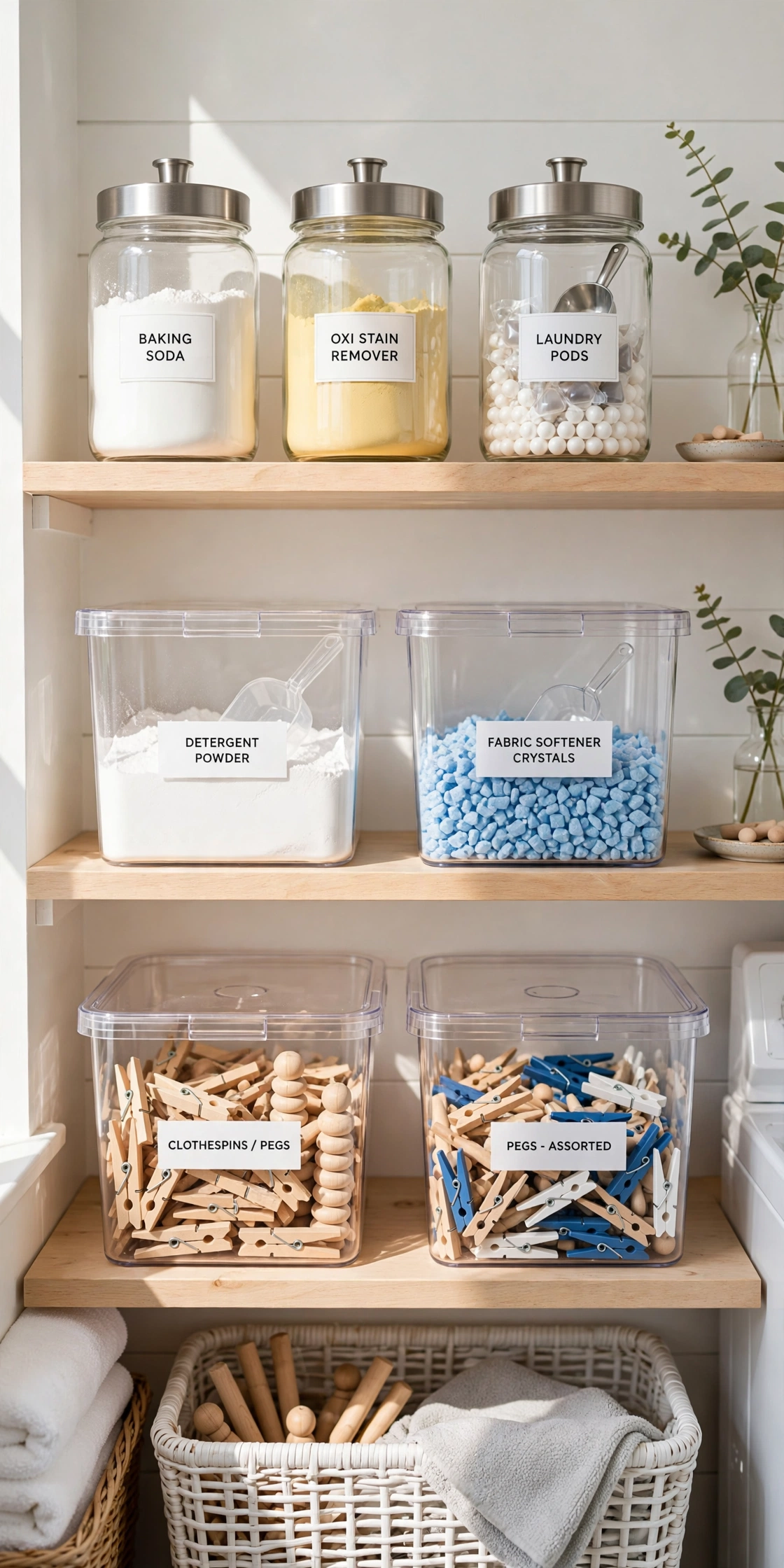
13. Use Clear Storage for Visibility
If you can’t see supplies, you buy duplicates. Favour clear jars, clear bins and open baskets for detergents, pegs, and cleaning products. Visibility prevents waste and the dreaded third bottle of fabric softener.
The one exception: one opaque bin is fine for the visually noisy bits and bobs.
The rule: Clear by default. If you can see it, you’ll use it before it expires.
14. Do a Monthly 10-Minute Laundry Reset
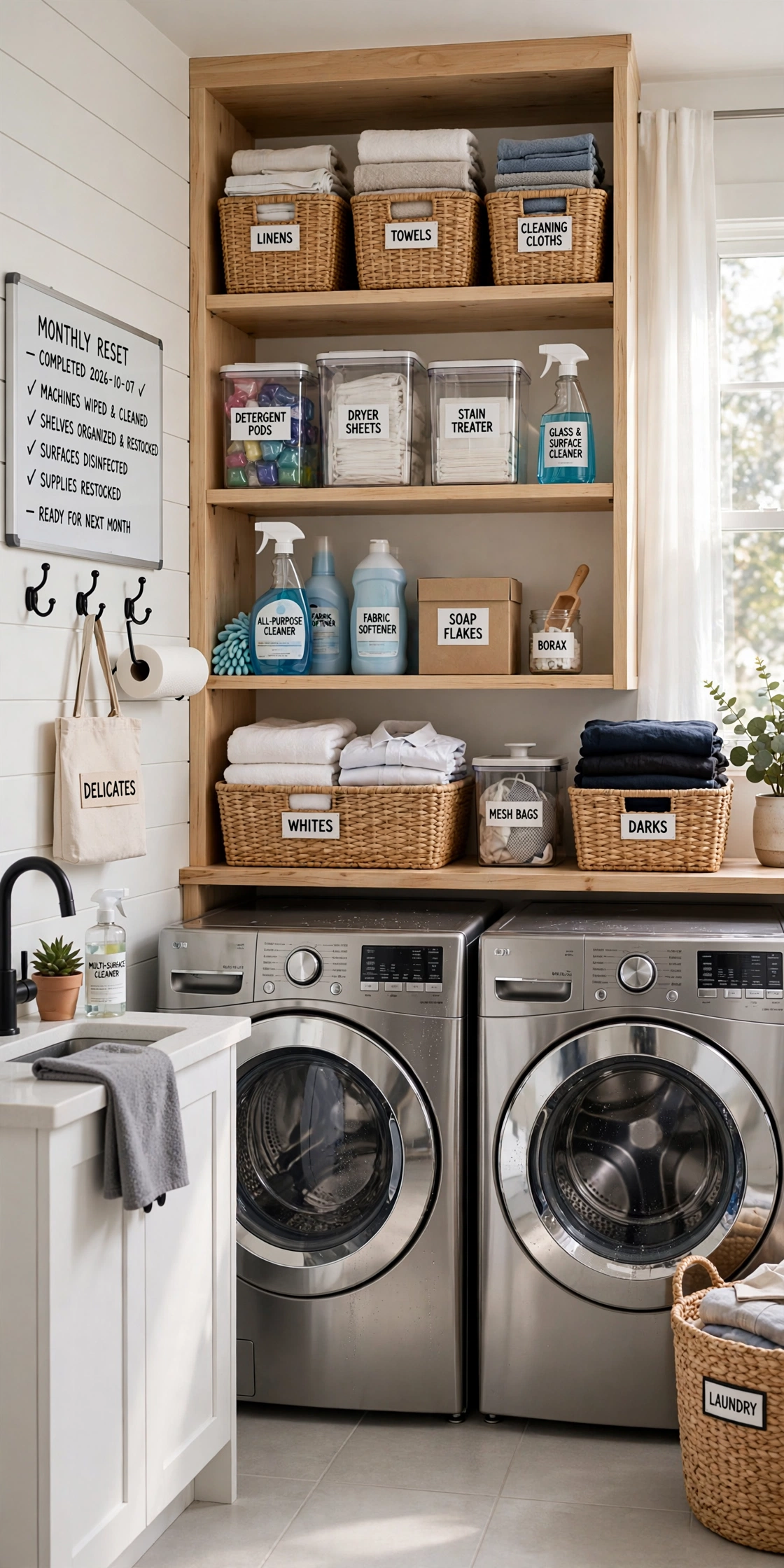
Laundries drift — new products get shoved in, lint builds up, the lost-sock basket overflows. Once a month, spend 10 minutes: toss the empties, wipe the machines and shelves, clean the lint filter properly, and return strays to their zones.
Small monthly corrections keep the laundry permanently under control.
Why it works: Ten minutes is short enough to actually happen, and regular beats heroic every time.
15. Follow One-In-One-Out for Cleaning Products
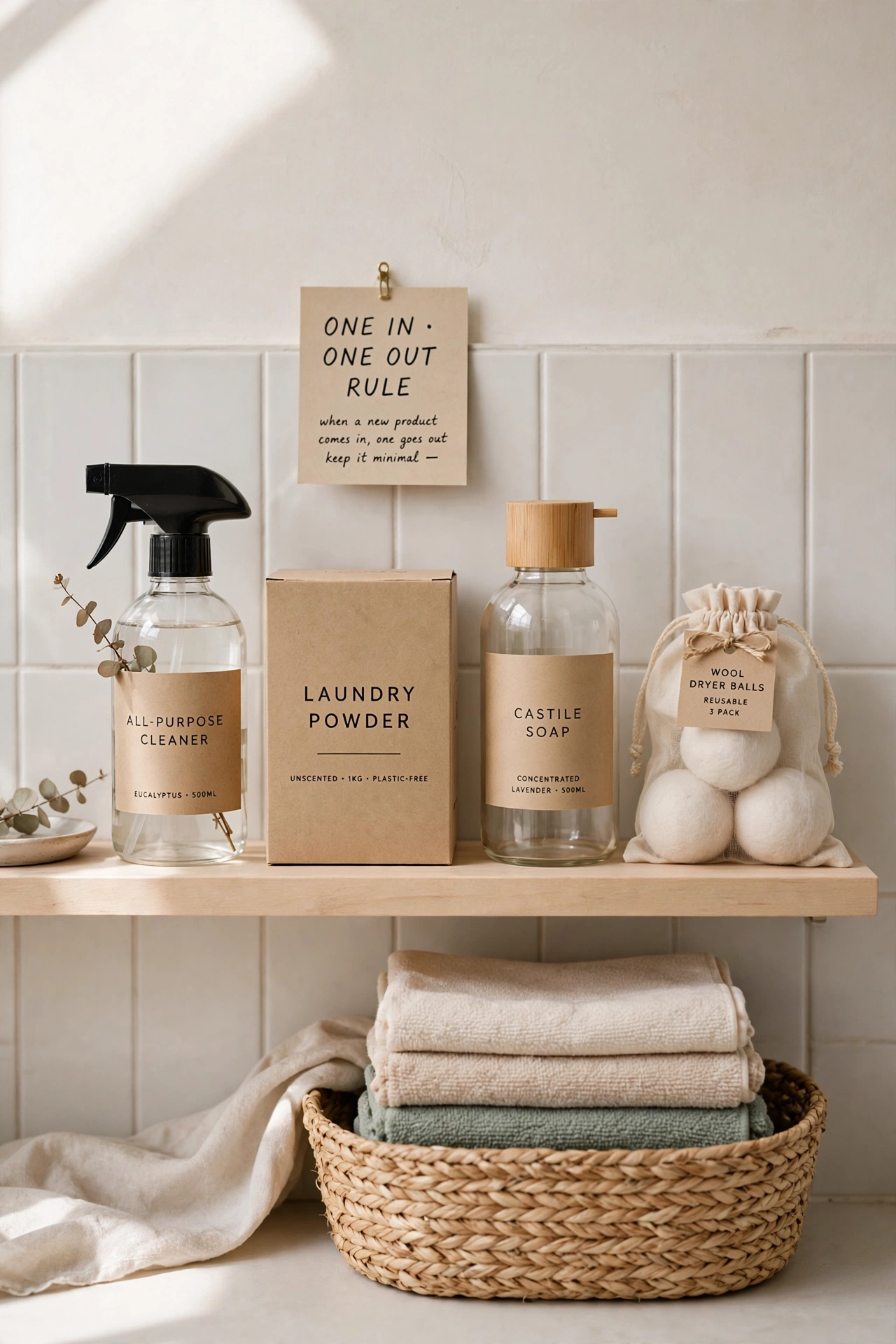
Cleaning products multiply silently — three half-used sprays, two ancient bleach bottles, a graveyard of “miracle” cleaners. Apply one-in-one-out: every new product means an old one gets used up or recycled.
This keeps your total supplies stable so your new laundry system never gets overwhelmed.
The one rule that makes it stick: If it doesn’t have a home in your new laundry zones, it doesn’t belong in the laundry.
Frequently Asked Questions
How can I organise a small laundry room on a budget?
Start free: empty it, toss the empties, zone by task. Then spend small amounts on matching dispensers, wall shelves and baskets — these three transform any laundry for very little.
How do I organise my laundry room like a professional?
Zone by task (wash, dry, fold, store), decant detergents into matching dispensers, label everything, and use the walls for storage. Professionals organise for workflow — copy that.
What storage works best in a laundry room?
Clear stackable bins for supplies, divided hampers for sorting, wall shelves and hooks for vertical storage, and a caddy for wash-day tools. Start with your biggest pain point.
How do I keep my laundry room organised long-term?
Sort-as-you-go with divided hampers, do a monthly 10-minute reset, and follow one-in-one-out for new products. Small regular habits beat big reorganisations.
Final Thoughts
An effortless laundry room isn’t about expensive systems — it’s about zones and workflow. Empty it, zone it by task, decant the essentials, label everything, and let simple systems do the rest.
Pick three ideas from this list and do them this weekend. By Monday, wash day will feel like a different chore — the easy kind.
For more home transformations, explore our Small Kitchen Organisation Ideas, Home Organisation Hacks and Pantry Organisation Ideas guides.