
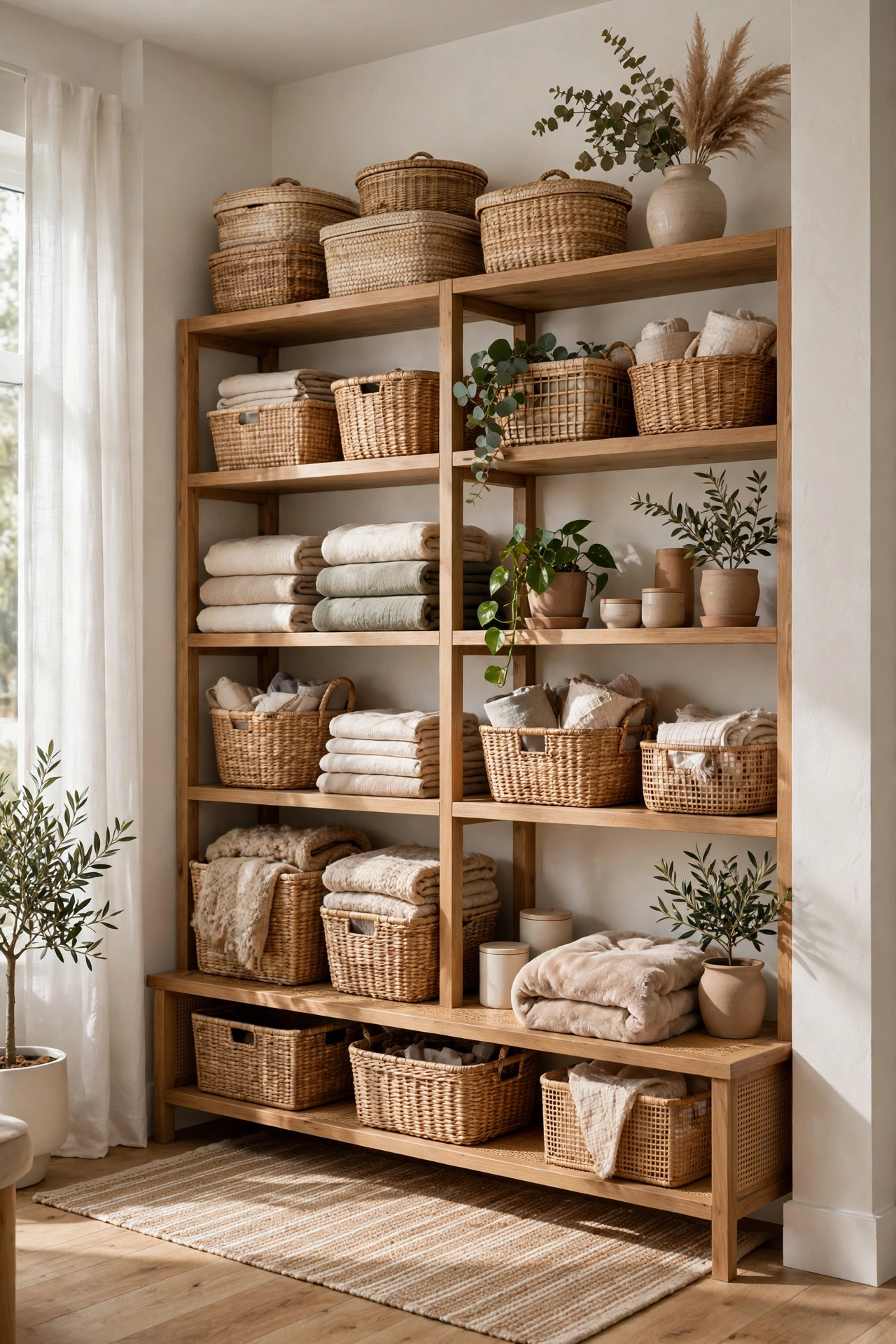
An organised home isn’t about perfection — it’s about systems. The homes that stay tidy aren’t cleaned more often; they’re organised smarter. These 15 home organisation hacks are the simple, budget-friendly systems that keep every room under control: the kitchen, the bedroom, the bathroom, the hallway and all the corners in between.
Every hack costs little or nothing, most take under 30 minutes, and none require a renovation. Pick three and start today — your whole house will feel different by the weekend.
1. Give Everything a Home (the One Rule That Changes Everything)
Clutter builds up when things have nowhere to live. The single most powerful organisation hack is simple: every object in your house gets a designated home. Keys go in the bowl by the door. Scissors live in the kitchen drawer. Chargers live in the charging station.
Once everything has a home, tidying becomes a 10-minute reset instead of an all-day ordeal — because you’re just returning things, not deciding where they belong.
Start here: Walk through one room and list everything that’s out of place. The pattern will show you exactly which homes are missing.
2. Use the One-In-One-Out Rule
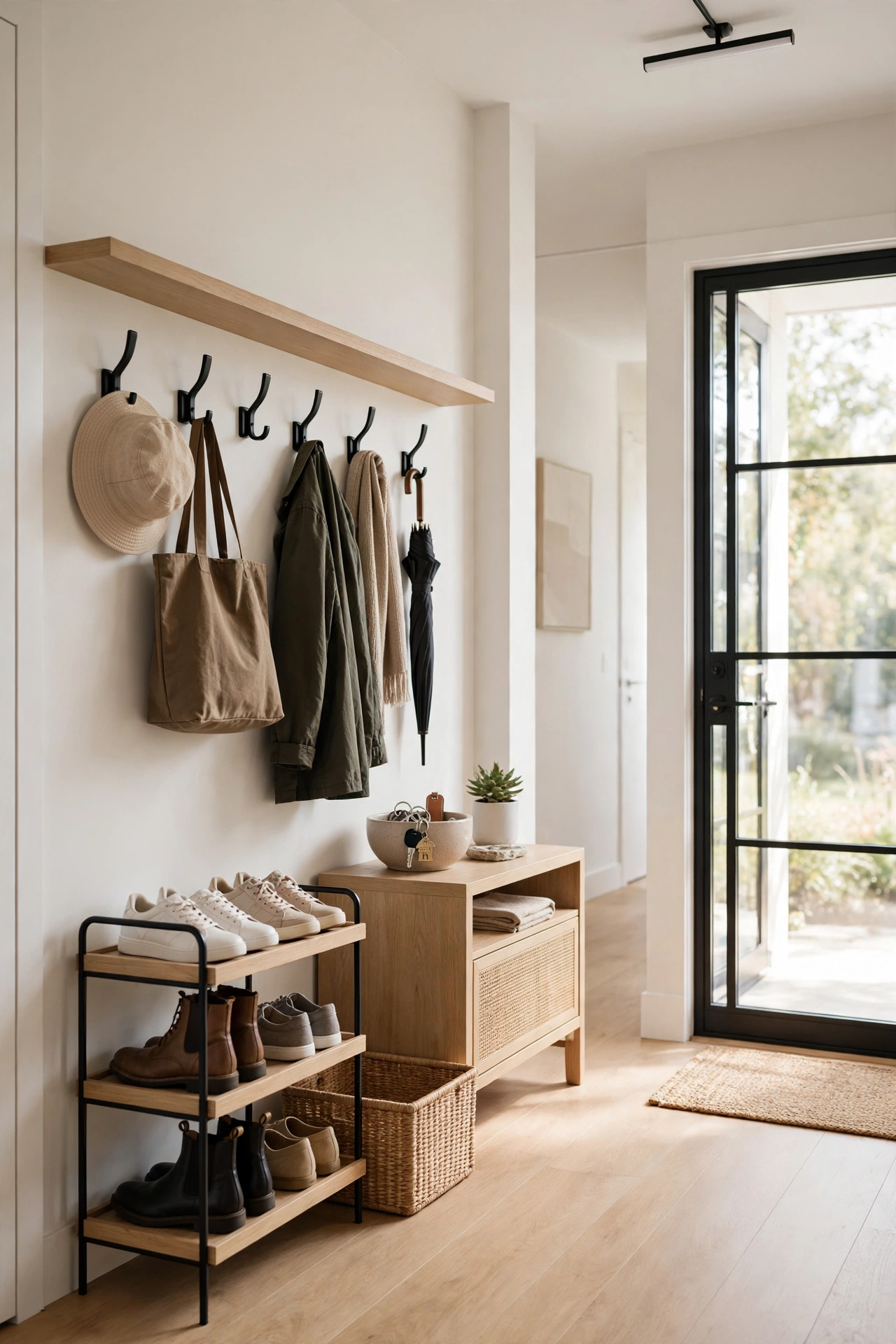
Organisation is a losing battle if stuff keeps flowing in unchecked. The one-in-one-out rule fixes that: every time something new enters your home, something old leaves. New shoes? An old pair gets donated. New mug? One goes to the charity box.
This simple rule keeps your total possessions stable, so your storage systems never get overwhelmed again.
Why it works: It’s automatic. No monthly purges, no guilt — just a standing rule the whole household follows.
3. Create Landing Zones at Every Entrance
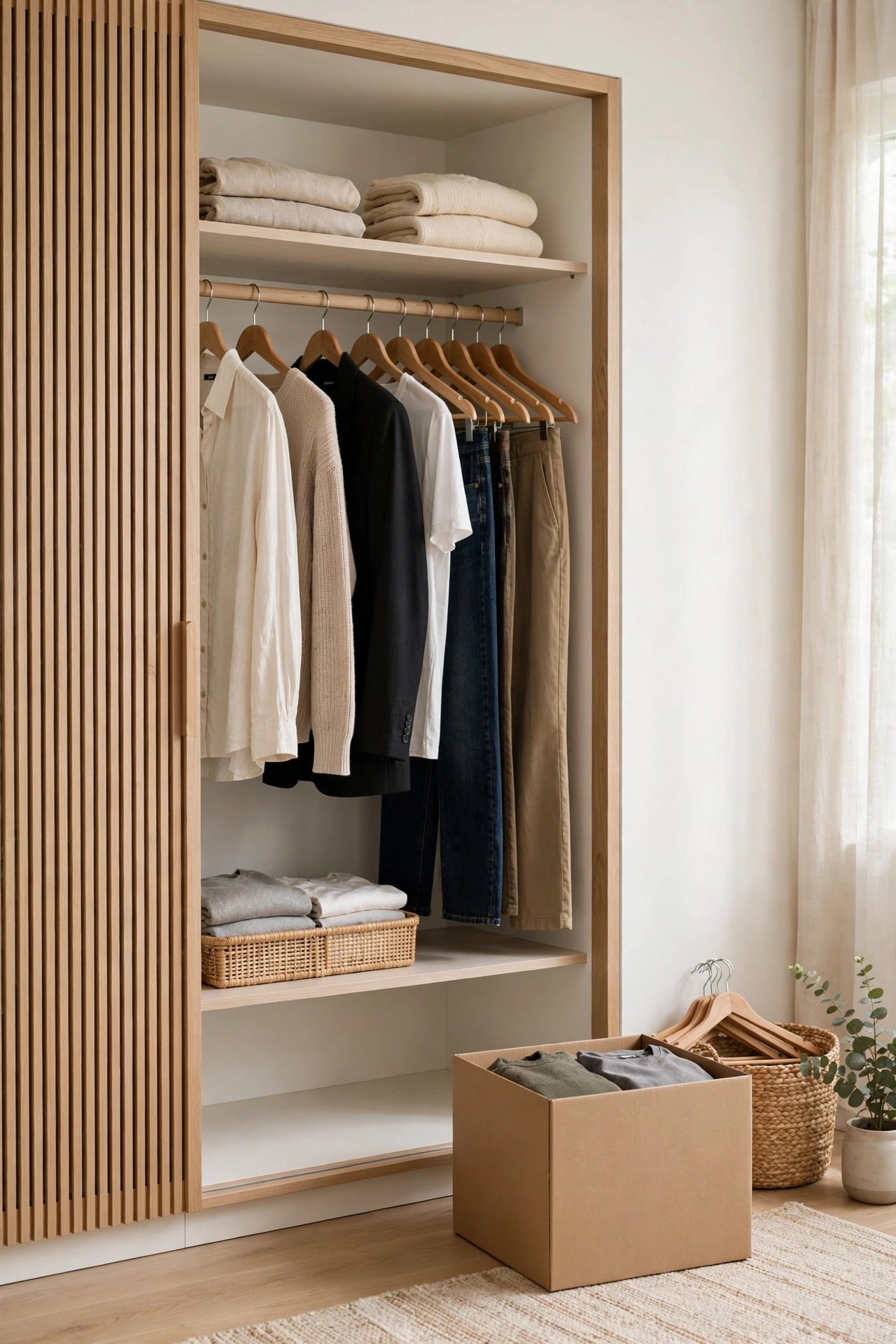
Most household clutter is born at the front door — bags, shoes, keys, post, coats. A landing zone (a small tray for keys, hooks for coats, a basket for post, a shoe rack) catches it all before it migrates into the house.
Even a hallway corner counts. The key is that the zone exists and the whole household knows where things land.
Budget tip: A wall-mounted key holder, three sturdy hooks and a basket cost very little and take 20 minutes to set up.

4. Decant and Label Everything
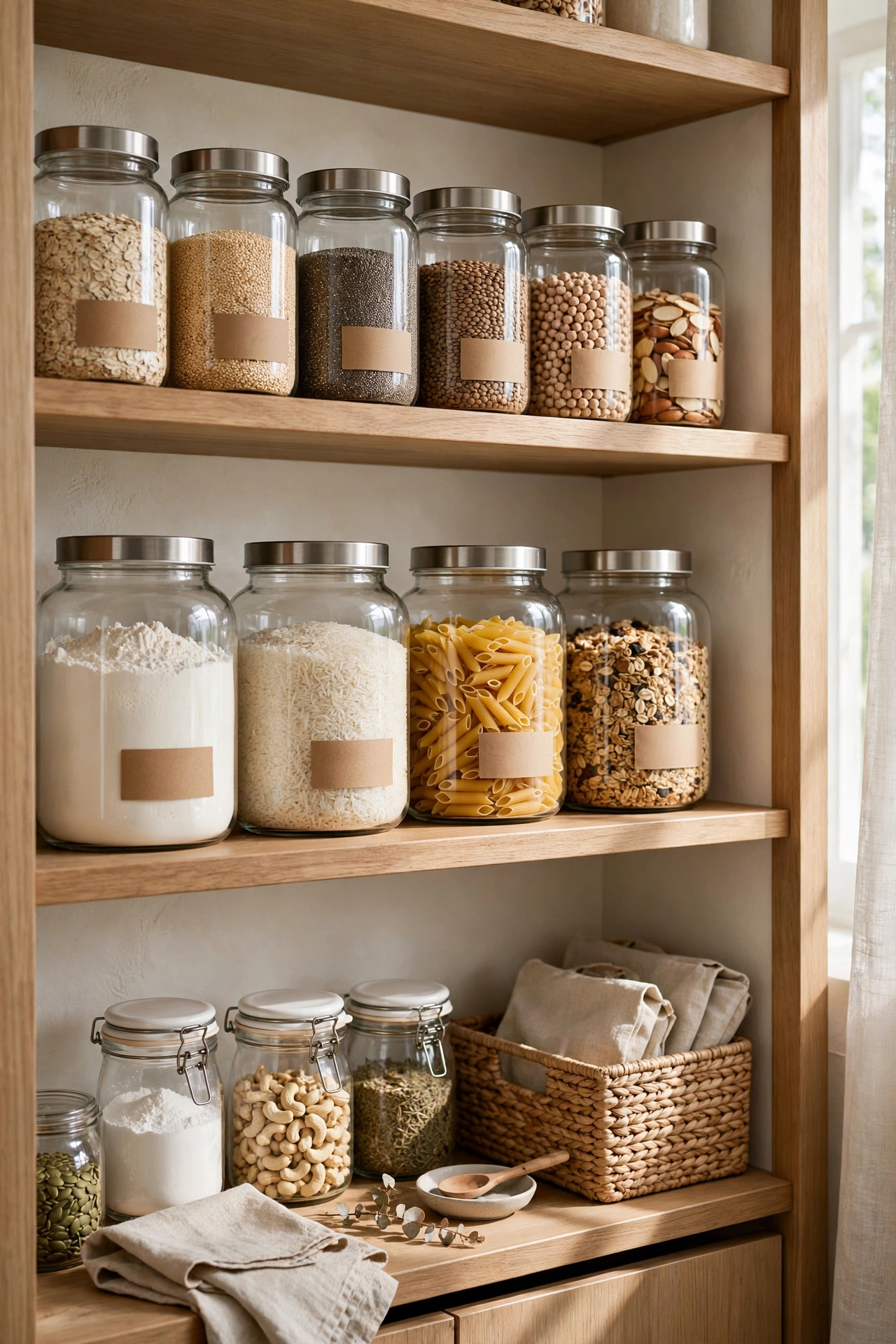
Mismatched packaging is visual clutter. Decanting pantry staples, bathroom products and cleaning supplies into matching containers — and labelling them — instantly makes shelves look calm and intentional.
Labels do double duty: they look good and they tell everyone in the house where things go, which keeps the system running without you policing it.
The payoff: Your cupboards look like a boutique shop for the price of a few jars and a label maker.
5. Zone Your Kitchen Like a Chef
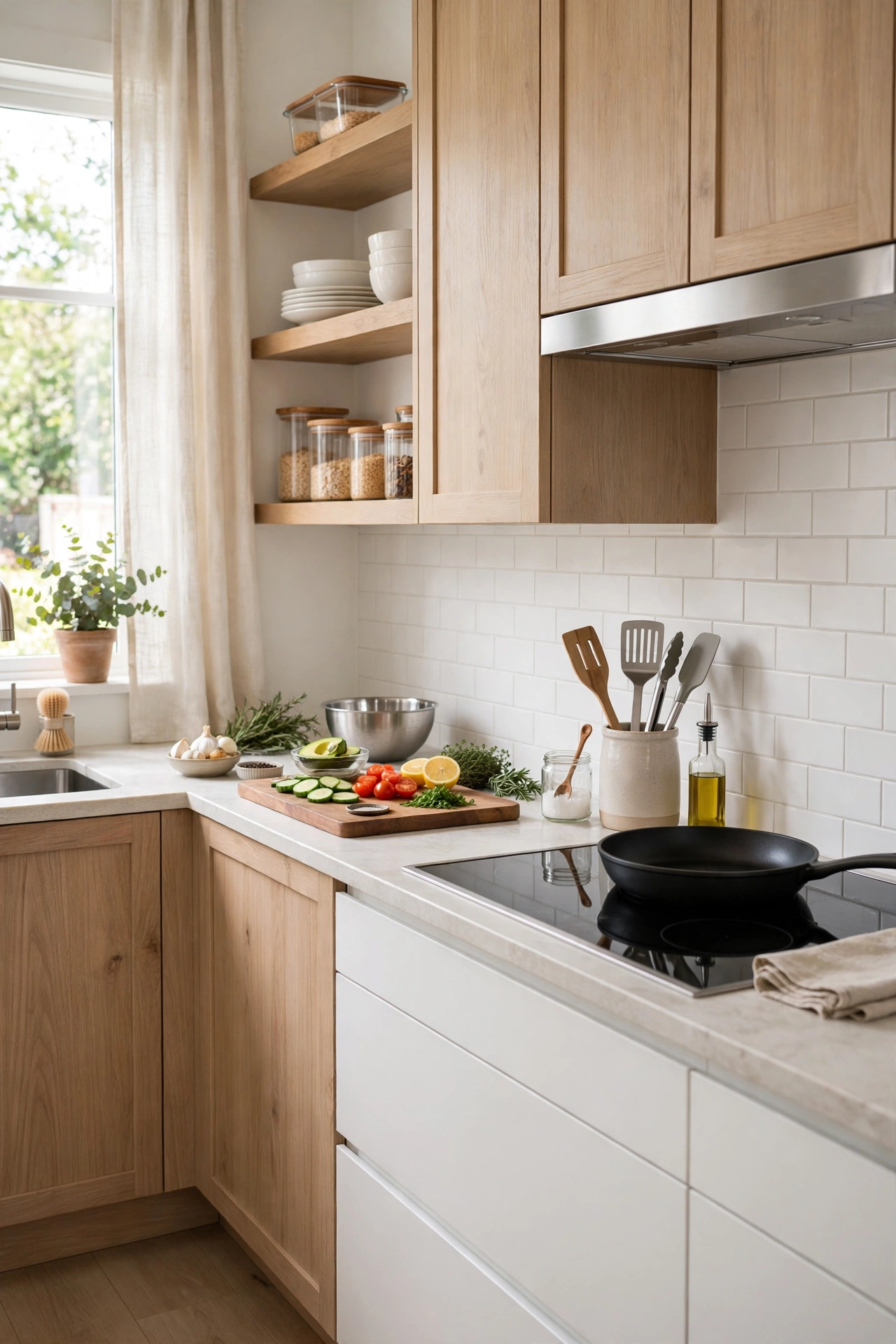
Kitchens stay tidy when everything lives where it’s used: cooking tools by the cooker, prep items by the worktop, cleaning supplies under the sink, daily dishes near the dishwasher. This is called zoning, and it’s how professional kitchens stay organised under pressure.
Walk your kitchen and move anything that lives more than a step from where you use it. The daily friction disappears overnight.
Small kitchen win: Zoning matters even more in a small kitchen — see our small kitchen organisation ideas for space-saving systems.
6. Run a 10-Minute Nightly Reset
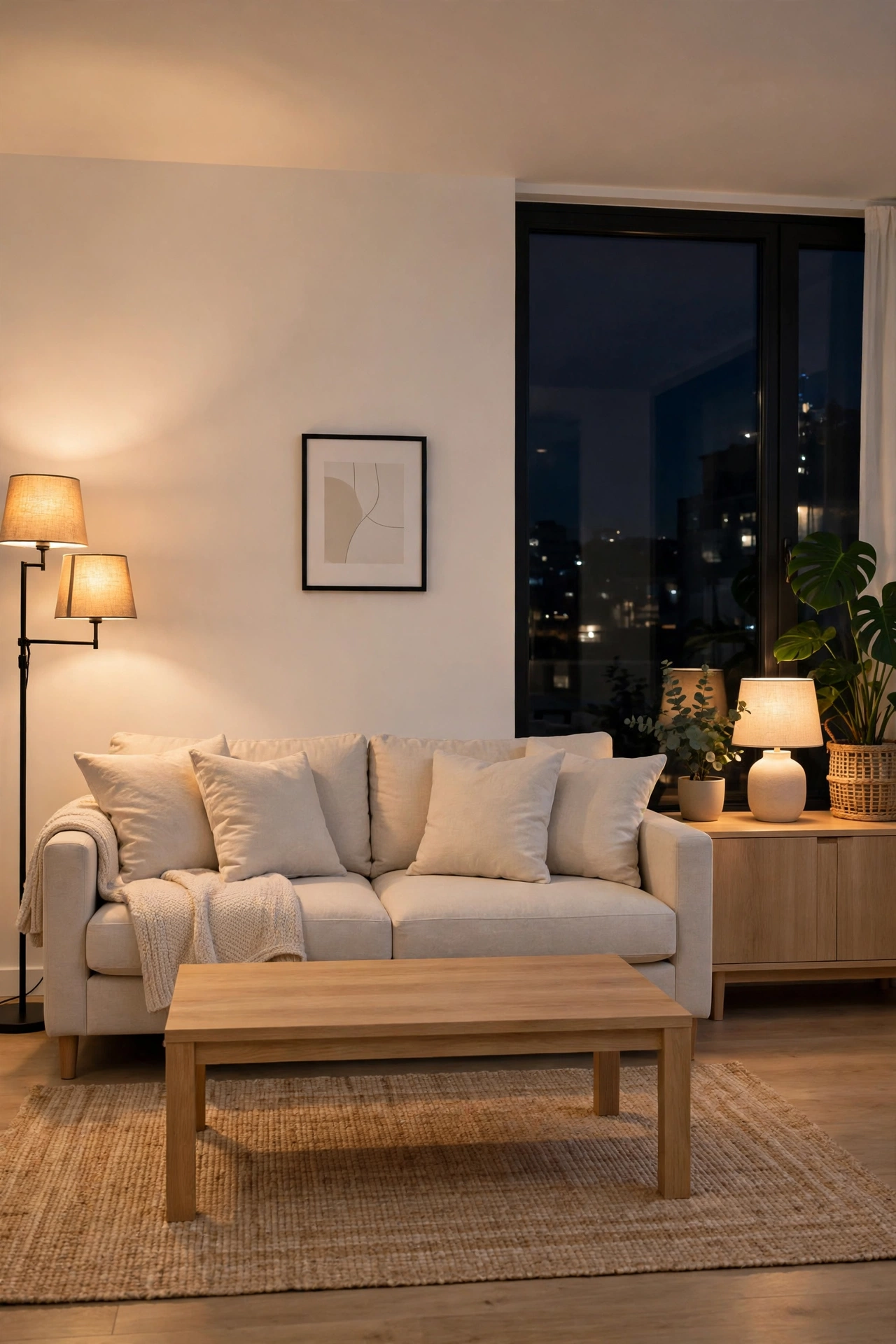
Homes don’t get messy all at once — they get messy 10 minutes at a time. A nightly reset (dishes in the dishwasher, cushions plumped, things returned to their homes, surfaces wiped) stops clutter from compounding.
Set a timer. Put on music. The whole household joins in. Ten minutes tonight saves an hour on Saturday.
Why it works: It’s a rhythm, not a chore. Miss a night and you just reset the next one — no guilt spiral.
7. Tame Cables With One Charging Station
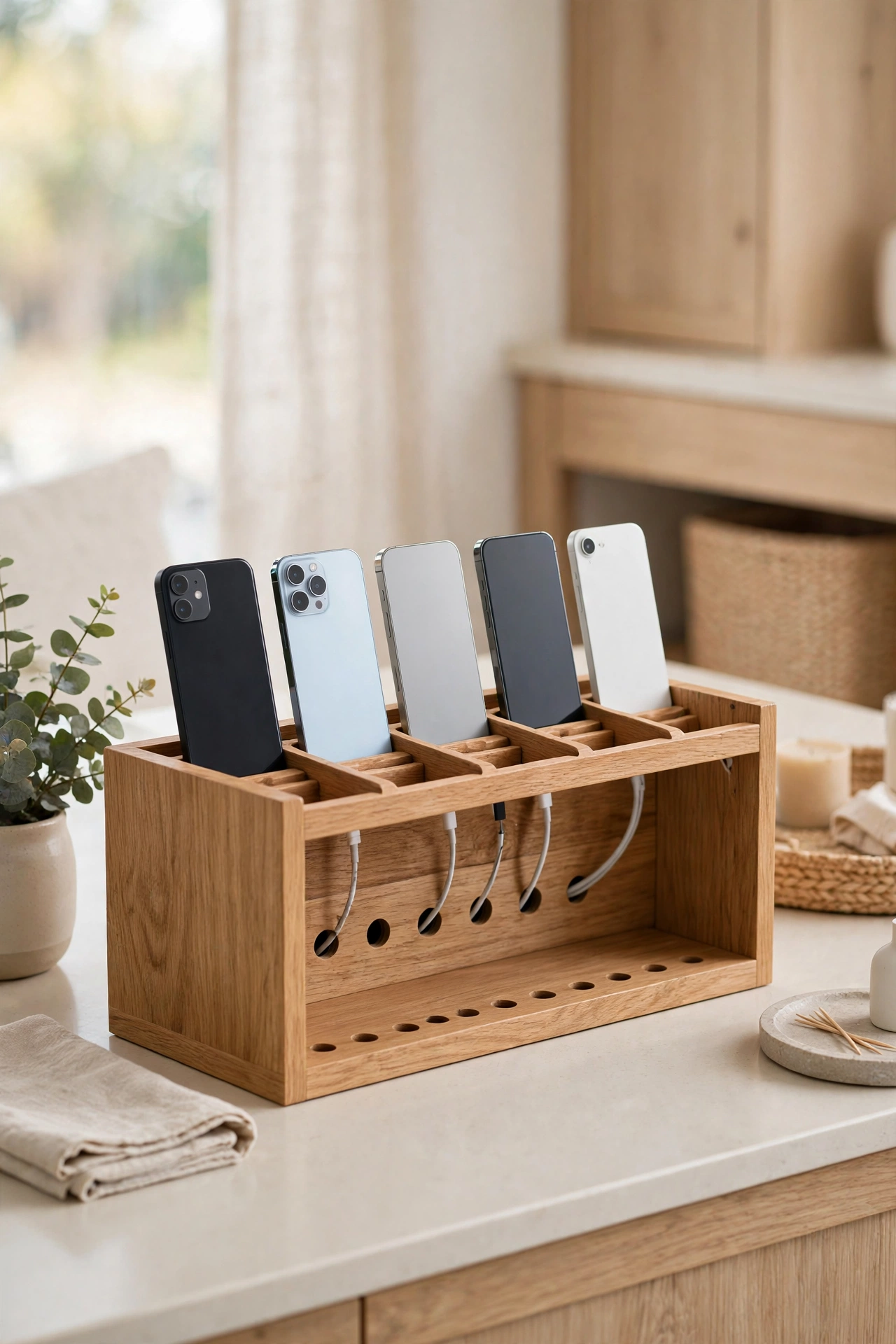
Loose cables are instant visual chaos. Gather every charger into one charging station — a small box or tray with a multi-plug inside — and the tangle of cables across every room disappears.
Route cables through a hole in the back, label each charger, and banish stray cables from every other surface in the house.
Budget tip: A simple cable box and a pack of cable ties solve the problem for less than the price of a takeaway.
8. Use Vertical Space in Every Room
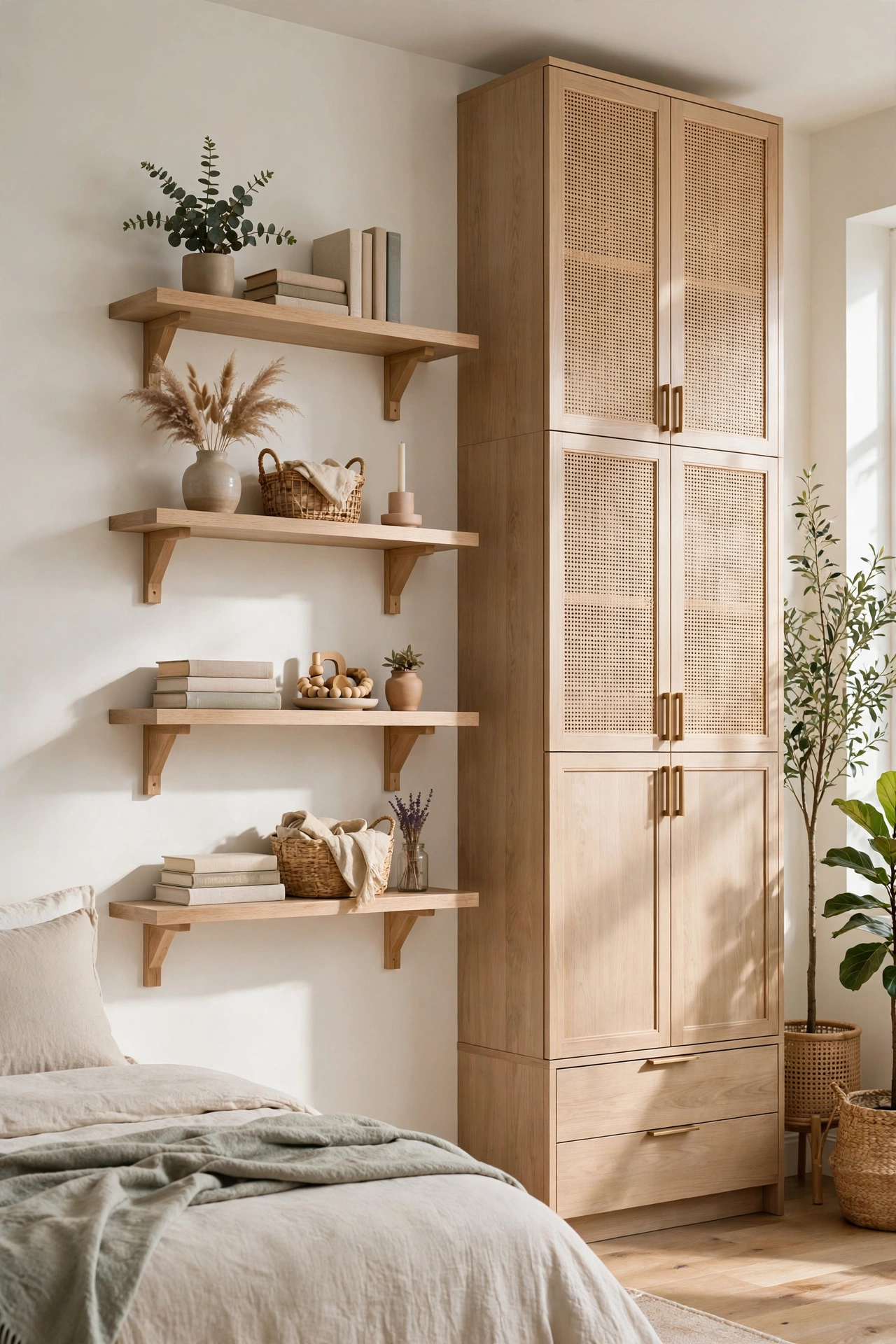
Floor and shelf space is limited; walls are everywhere. Floating shelves, over-door racks, wall hooks and tall bookcases move storage upward in every room — bedrooms, bathrooms, kitchens and hallways alike.
Audit each room for one empty wall. That wall is free storage waiting to happen.
Try it: One set of floating shelves above a desk or dresser can hold what an entire drawer used to.
9. Corral Small Items With Trays and Baskets
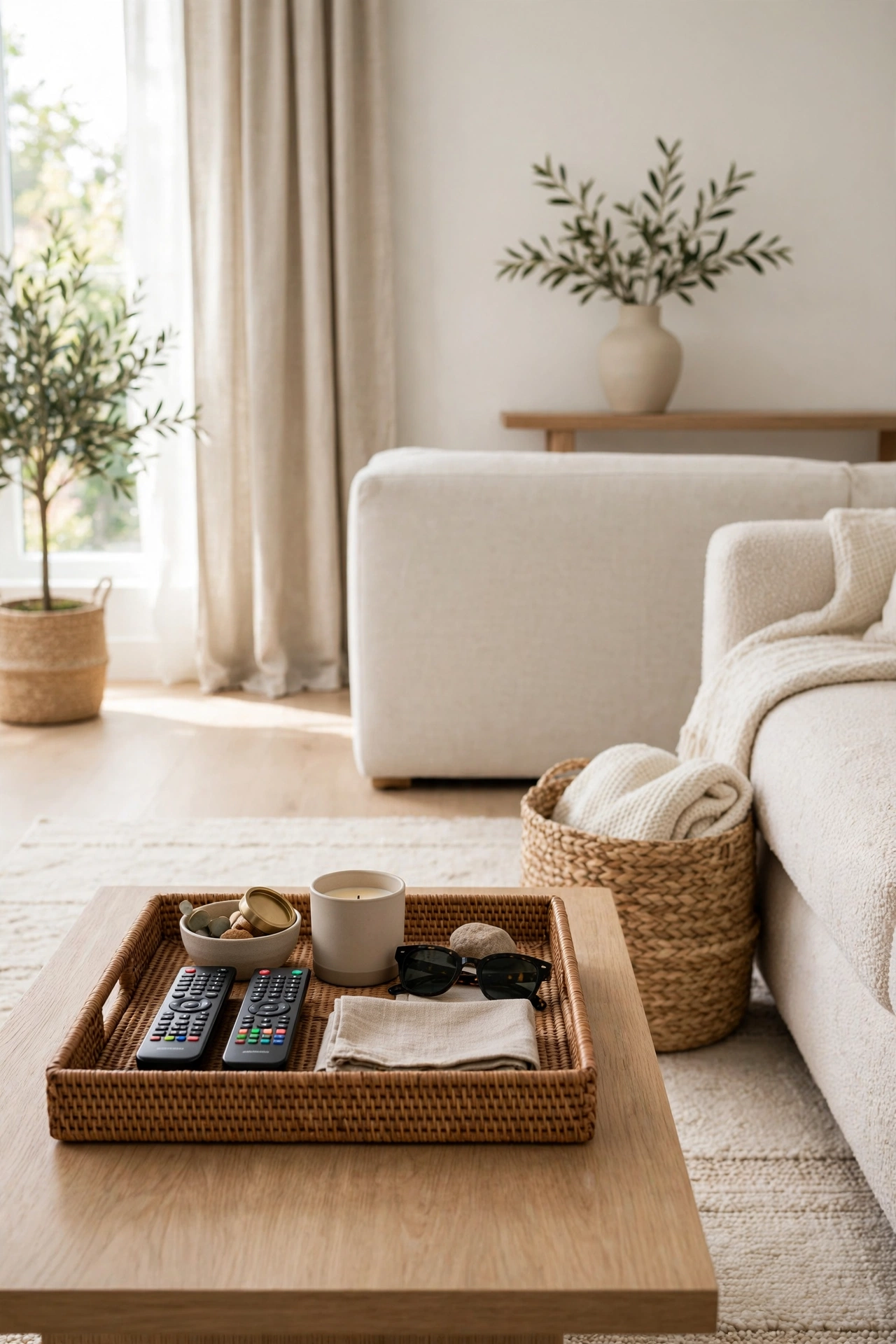
Small items scattered on surfaces are what make a room feel messy even when it’s clean. Trays and baskets group them into single visual units: a tray for the coffee table clutter, a basket for the remotes, a bowl for the loose change.
The rule: nothing small sits directly on a surface. It sits in something.
Budget tip: Charity shops and discount stores are full of trays and baskets for pennies — they all work the same.
10. Rotate Seasonal Items Out of Prime Storage
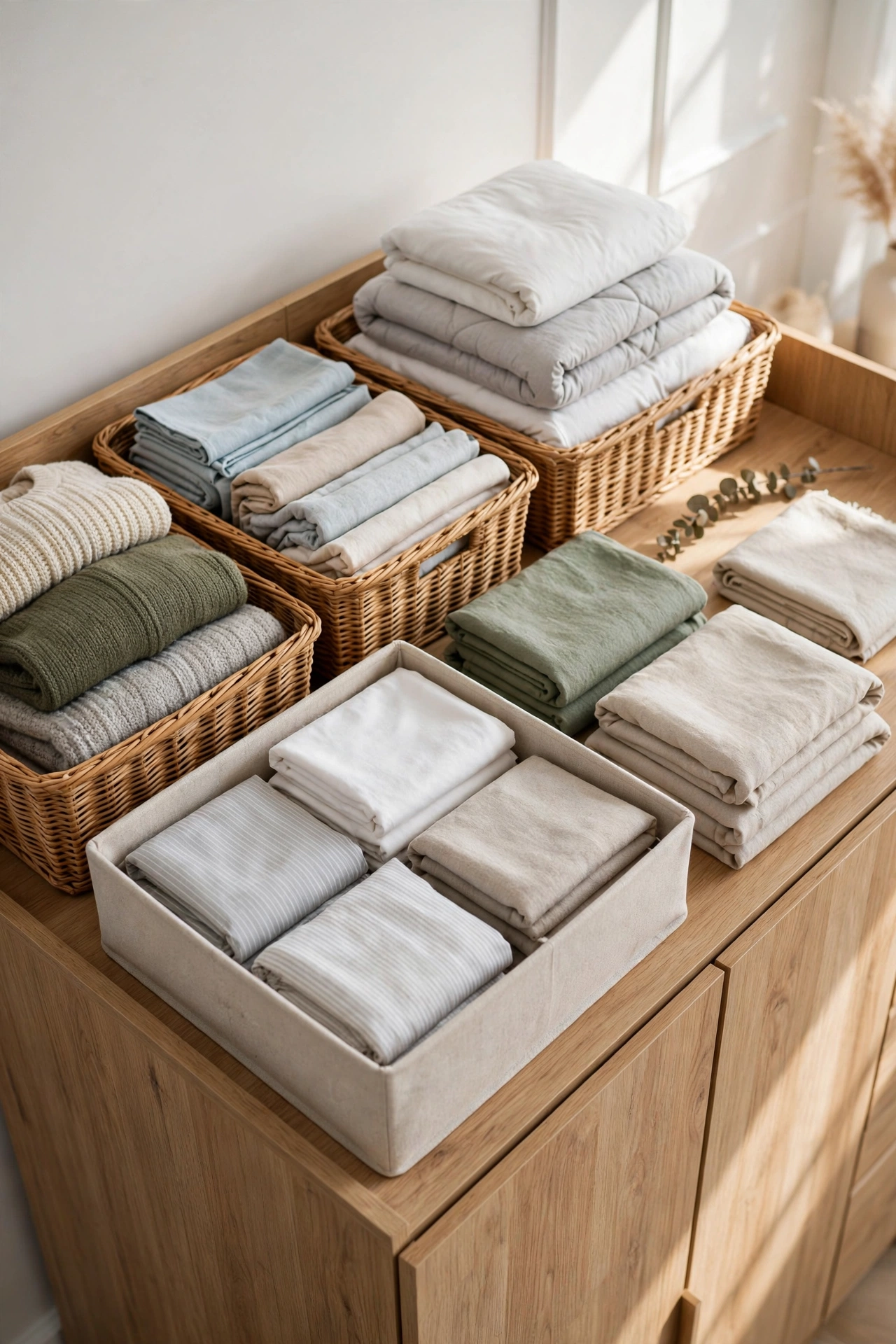
Prime storage — the easy-to-reach shelves and drawers — should hold what you use now. Seasonal items (winter coats in July, beach gear in December, holiday decorations) belong in harder-to-reach spots: top shelves, under beds, the loft.
Twice a year, swap the seasons. Everything you reach for daily stays within reach; everything else stays out of the way.
Small home win: This one habit makes a small home feel dramatically bigger without buying a thing.
11. Make Your Wardrobe Work With the Capsule Method
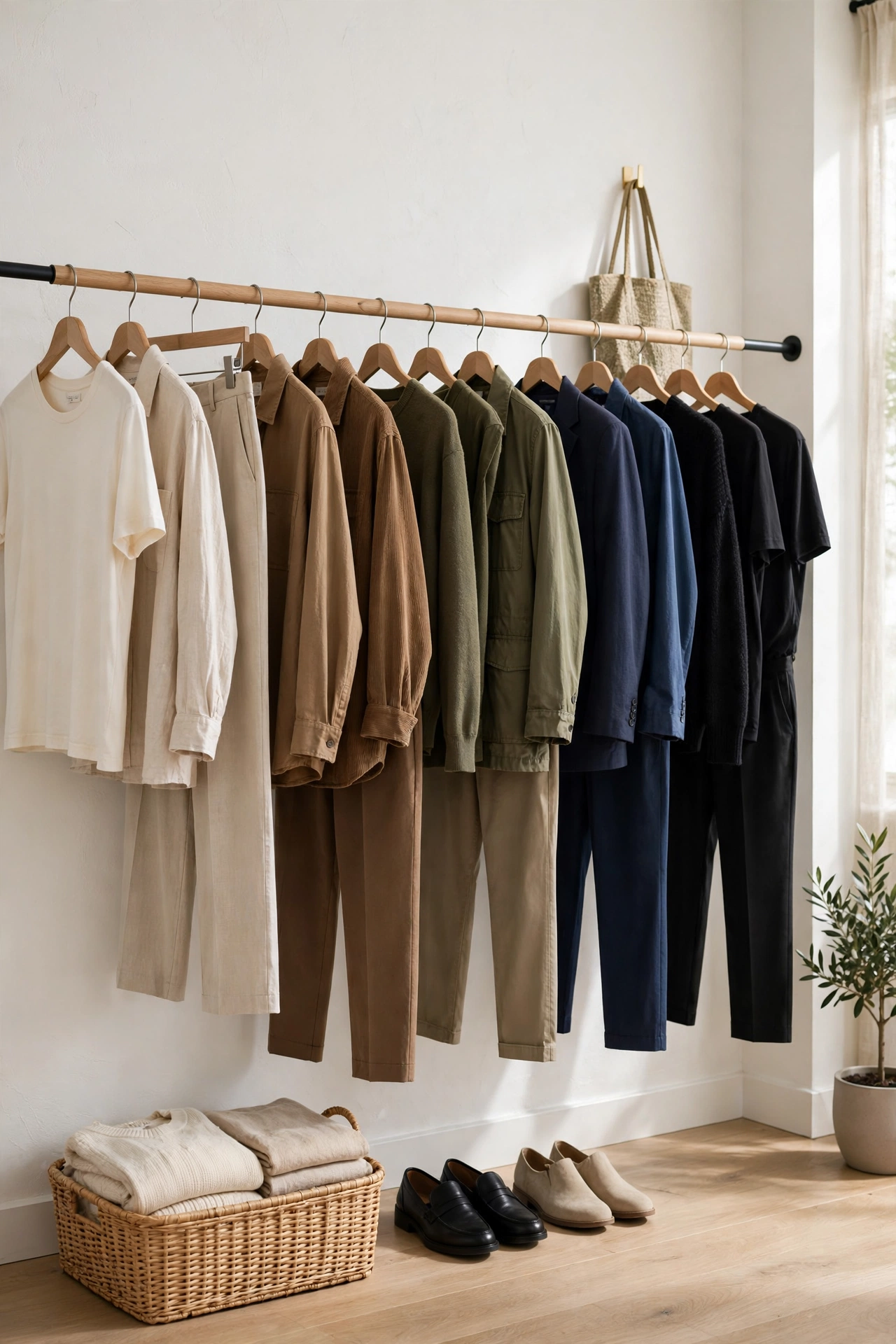
Most wardrobes hold clothes you never wear, which makes getting dressed chaotic. The capsule method — keeping a smaller rotation of clothes you actually love, stored by category and colour — turns the wardrobe into a calm, easy system.
Donate or store the rest. You’ll wear more of what you own and spend less time staring at a full wardrobe with “nothing to wear.”
The test: If you haven’t worn it in a year and it isn’t occasion-specific, it doesn’t earn wardrobe space.
12. Organise the Bathroom by Zones Too
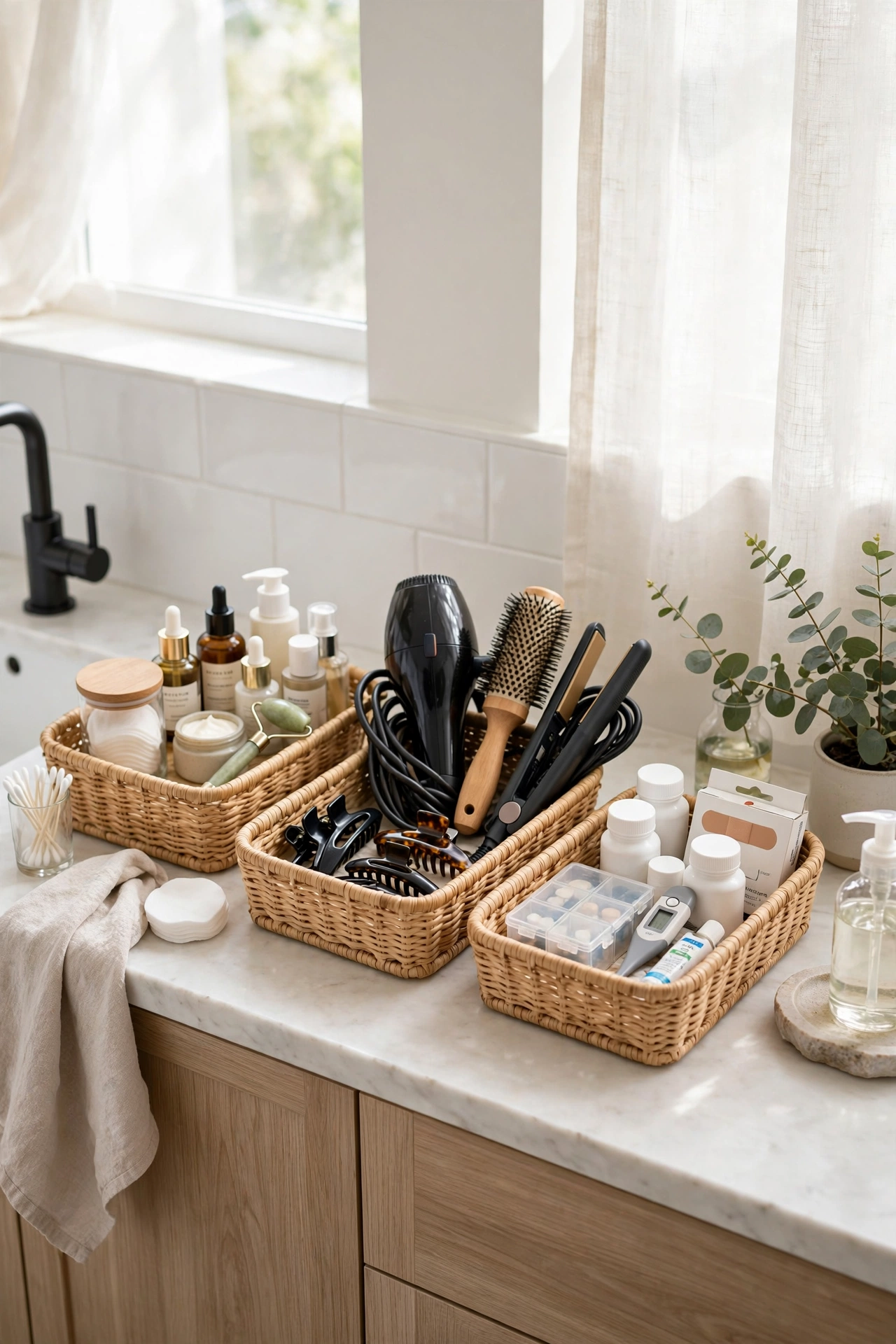
Bathrooms are tiny but mighty clutter magnets. Zone yours: daily skincare by the mirror, hair tools in one basket, medicines in a cabinet, cleaning supplies under the sink. When each zone has its own container, the counter stays clear on its own.
Our under-sink bathroom organisation and small bathroom storage guides go deep on bathroom-specific systems.
Why it works: Bathroom clutter is mostly duplicates and empties. Zone it once, then toss the extras.
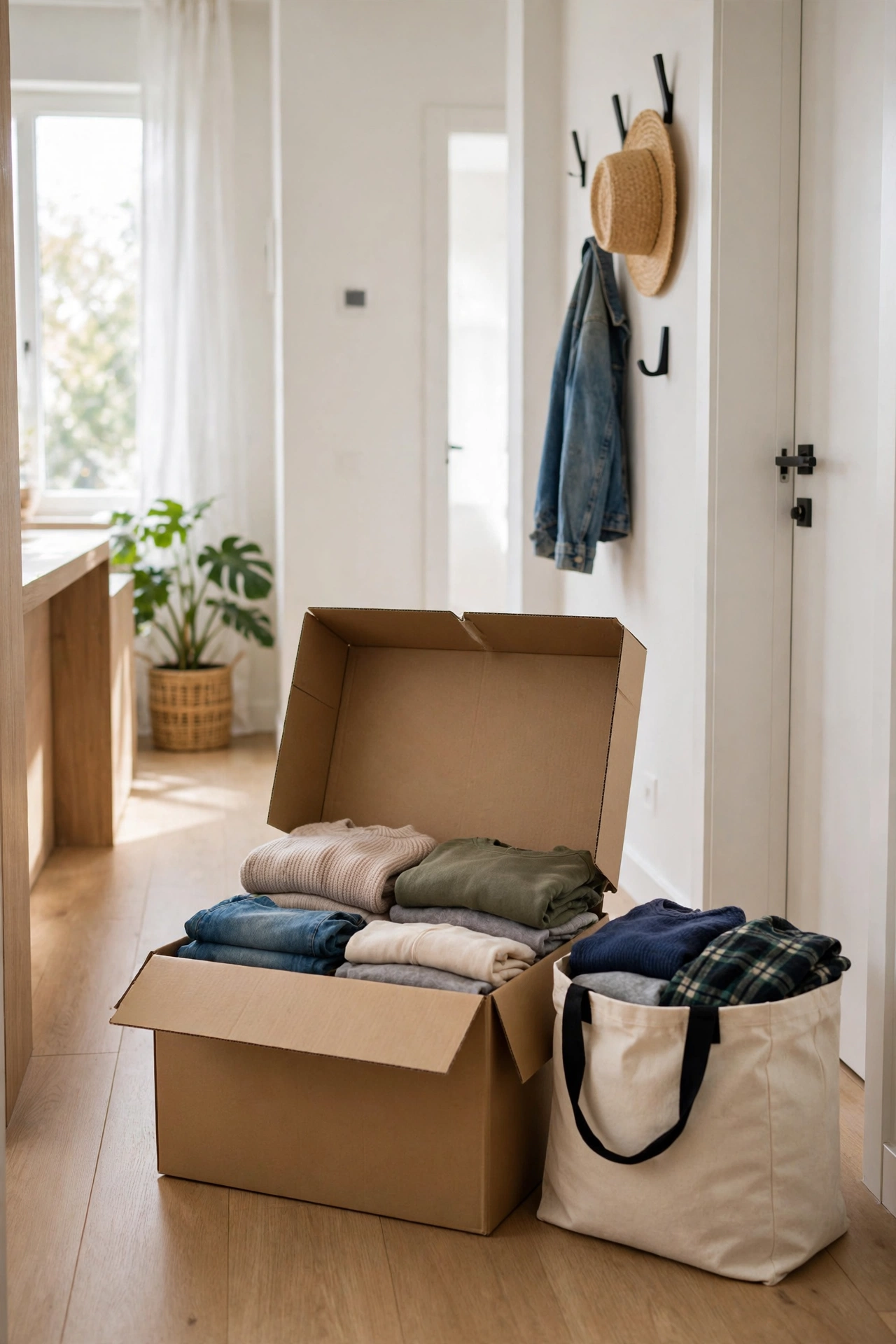
13. Keep a Donation Box Permanently Open
Decluttering fails when it requires a special event. Keep a donation box (or bag) permanently open in a wardrobe or hallway — and drop things in the moment you notice you don’t need them.
When it’s full, it goes to the charity shop. No sorting marathons, no guilt, no “I’ll do it later.”
The rule: If you pick something up and think “I don’t use this,” it goes in the box immediately.
14. Digitise the Paper Mountain
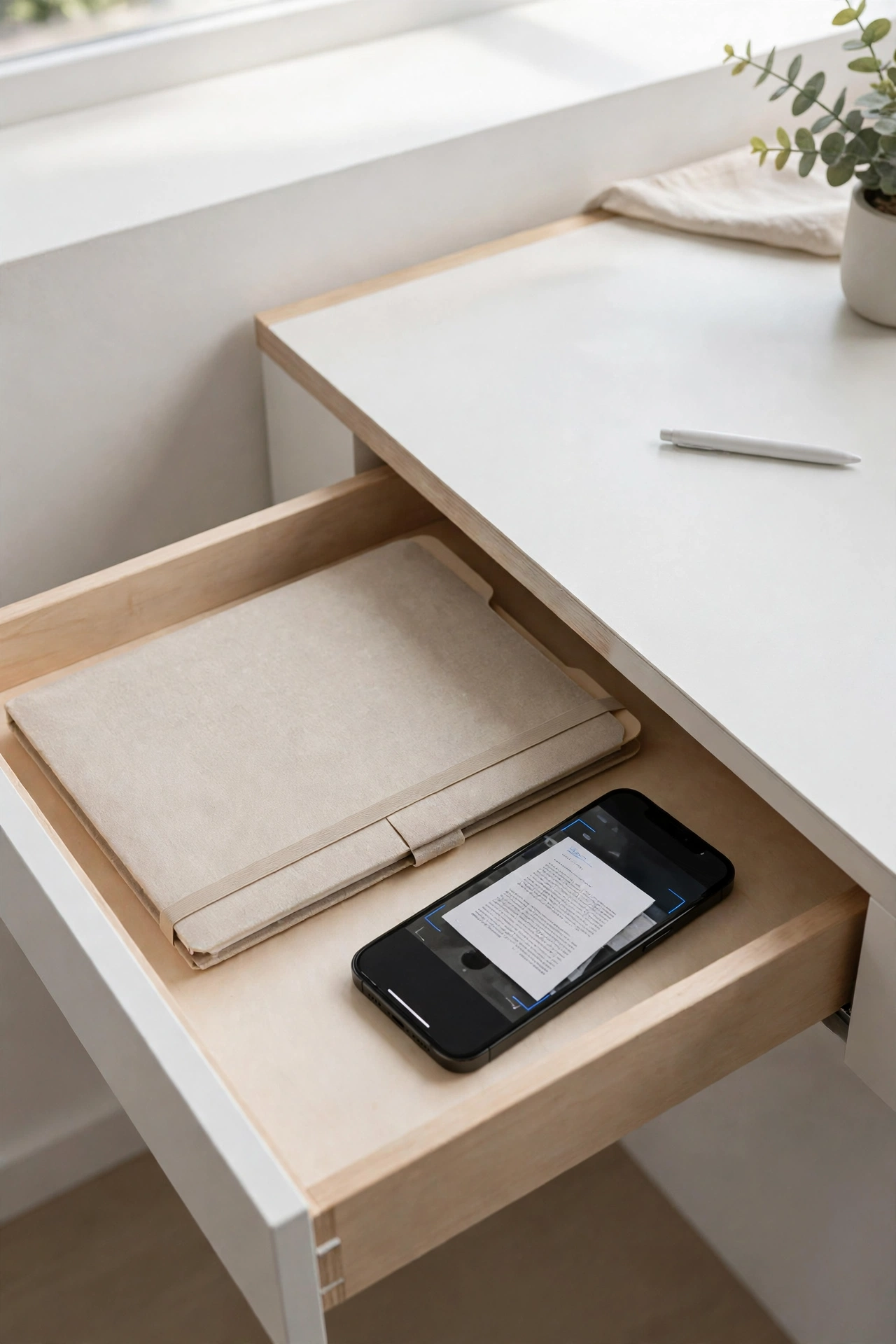
Paper is the silent clutter king — bills, school letters, manuals, receipts. Digitise it: photograph or scan anything you need to keep, file it in named folders, and recycle the physical copy.
Keep one slim folder for the few things that must stay physical (passports, deeds, certificates). Everything else lives in the cloud.
The payoff: One drawer instead of three filing cabinets — and you can actually find things.
15. Schedule a Monthly 20-Minute Whole-House Sweep
Even the best systems drift. Once a month, walk the whole house for 20 minutes with a basket: return strays to their homes, toss the expired and broken, and note any system that’s stopped working.
Fix one broken system per month. In a year, your whole house runs on systems that actually fit your life.
Why it works: Small, regular corrections beat annual overhauls — and 20 minutes is short enough to actually happen.
Frequently Asked Questions
What are the best home organisation hacks for beginners?
Start with the one rule: give everything a home. Then add a landing zone at the entrance, a nightly 10-minute reset, and the one-in-one-out rule. These four habits do most of the work.
How do I organise my home on a budget?
Use what you have first, then spend small amounts on trays, baskets, hooks and labels. Most home organisation hacks cost nothing — they’re systems and habits, not products.
How do I keep my house organised with a busy schedule?
The nightly 10-minute reset and the permanent donation box are built for busy lives. Small daily rhythms beat big weekend overhauls every time.
Where do I start when my whole house is messy?
Start at the entrance with a landing zone, then do one room at a time using the “everything gets a home” rule. Don’t try to organise the whole house in a day.
Final Thoughts
An organised home isn’t bought — it’s built, one small system at a time. Start with a home for everything, add a landing zone and a nightly reset, and let the habits do the heavy lifting.
Pick three hacks from this list and set them up this weekend. By next week, your house will already feel calmer.
For room-by-room systems, explore our Kitchen Organisation, Bedroom Ideas and Bathroom Organisation guides.
9 thoughts on “15 Home Organisation Hacks That Will Transform Your House (on a Budget)”