
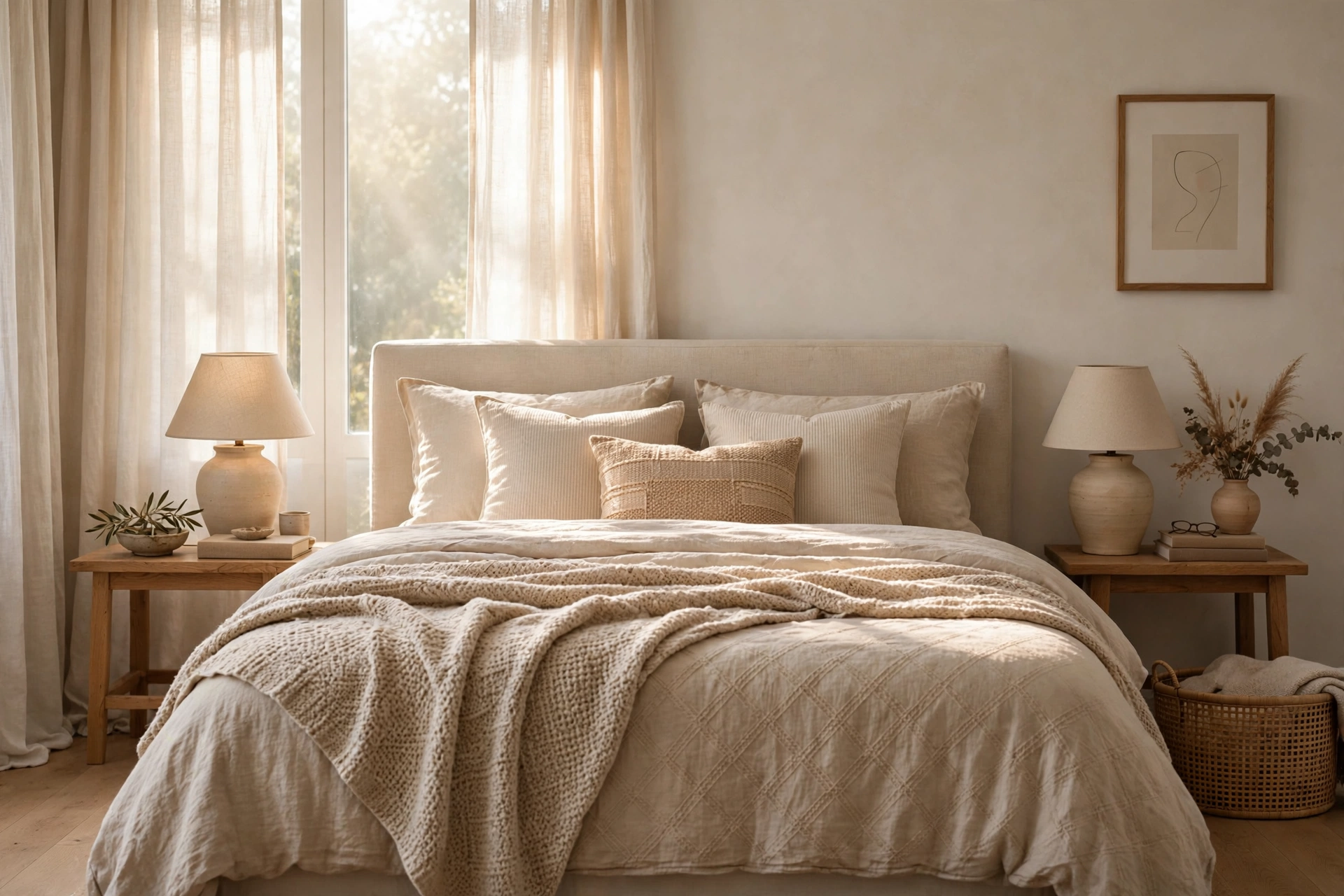

Your bedroom should be the calmest room in your home — the place where the day softens and you can properly rest. Yet for many of us, it becomes a dumping ground for laundry, paperwork and half-finished projects. The good news? You don’t need a luxury budget or a full renovation to change that.
With thoughtful changes to colour, lighting, bedding, storage and those small sensory details, you can create a peaceful, sanctuary-like feel that works in real homes, rented flats and busy family houses alike. These 12 ideas are practical, mostly renter-friendly, and designed to be done one at a time. Let’s go through them step by step.
1. Start with a Proper Declutter
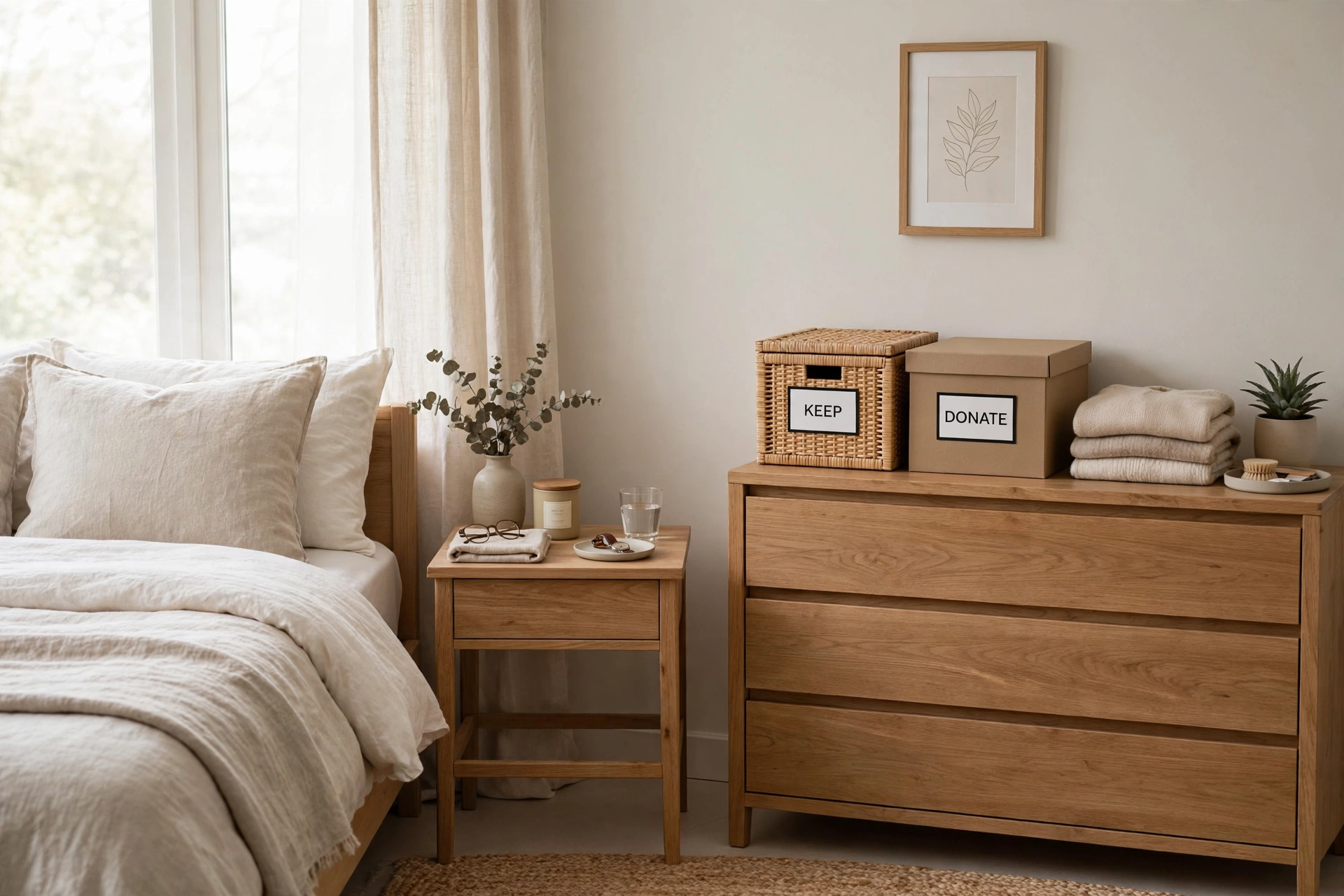
Before you spend a penny, clear the visual noise. Clutter is one of the biggest enemies of a restful bedroom: every pile of clothes, stack of unread books and dusty surface sends your brain a subtle signal that there is unfinished business, making it harder to switch off at night. A proper declutter costs nothing and often makes the single biggest difference of all twelve ideas.
Work one surface at a time so the job never feels overwhelming. Grab three boxes or bags and label them:
- Keep — things you use daily, genuinely love, or find calming to look at.
- Relocate — items that belong in another room, like chargers, paperwork or gym kit.
- Donate or discard — anything broken, duplicated or untouched for a year.
Start with the bedside tables, then the tops of dressers, then the infamous chair that collects clothes. Be honest about the maybe pile — if you haven’t worn it in twelve months, it goes. Once surfaces are clear, give everything a quick dust and open the window for ten minutes. You’ll be amazed how much calmer the room feels already, and you haven’t spent a thing.
2. Choose a Calm, Restful Colour Palette

Colour has a remarkable effect on how a room feels — and on how easily you unwind in it. Soft, muted tones such as warm white, oatmeal, sage, dusty blue and muted clay help the nervous system wind down, while bold, high-contrast colours can feel energising in exactly the way you don’t want at bedtime.
You don’t need to repaint the whole room, which is good news for renters. A tighter palette across bedding, curtains and cushion covers can transform the feel of the space on its own. Try the 60-30-10 approach: roughly 60 per cent of the room in your main neutral (walls and large furniture), 30 per cent in a secondary tone (bedding and curtains), and 10 per cent in a gentle accent (a throw, artwork or a plant pot).
Before committing, test paint or fabric swatches in the actual room and view them in both daylight and lamplight — colours shift dramatically between the two. If your walls are a rental magnolia you can’t change, lean into warm textiles and wooden tones to soften it. Small tester pots cost very little and save expensive mistakes.
3. Layer Your Bedding

That inviting, hotel-style bed isn’t about expensive bedding — it’s about layers. Layers add visual softness and physical comfort, and they let you adjust your warmth through the night, all of which contribute to genuinely better sleep.
Build yours like this. Start with breathable cotton or linen sheets in a plain, calming colour. Add a lightweight duvet — you can swap its tog rating with the seasons rather than buying a whole new set. Fold a textured throw or quilt across the foot of the bed, then finish with pillows: two for sleeping plus two slightly smaller cushions is plenty. Any more and making the bed becomes a chore you’ll resent.
Wash your bedding weekly if you can; there’s genuine research linking fresh, clean sheets to better sleep quality. And here’s a budget tip: charity shops and end-of-line sales are brilliant for quality throws and cushion covers. Focus on how fabrics feel against your skin rather than thread counts or brand names — the cosiest bed is simply the one you look forward to climbing into.
4. Get the Lighting Right
Overhead lighting alone is the fastest way to make a bedroom feel stark and unwelcoming. Bedrooms need layers of soft, warm light that you can adjust as the evening winds down — bright enough to read by, dim enough to tell your brain that sleep is on its way.
- A warm bedside lamp for reading, ideally with a fabric shade that diffuses the glow.
- A floor lamp or wall light to lift a dark corner and add depth to the room.
- A low, decorative glow — fairy lights, a small LED strip behind the headboard or a candle-style LED — for the last half hour before sleep.
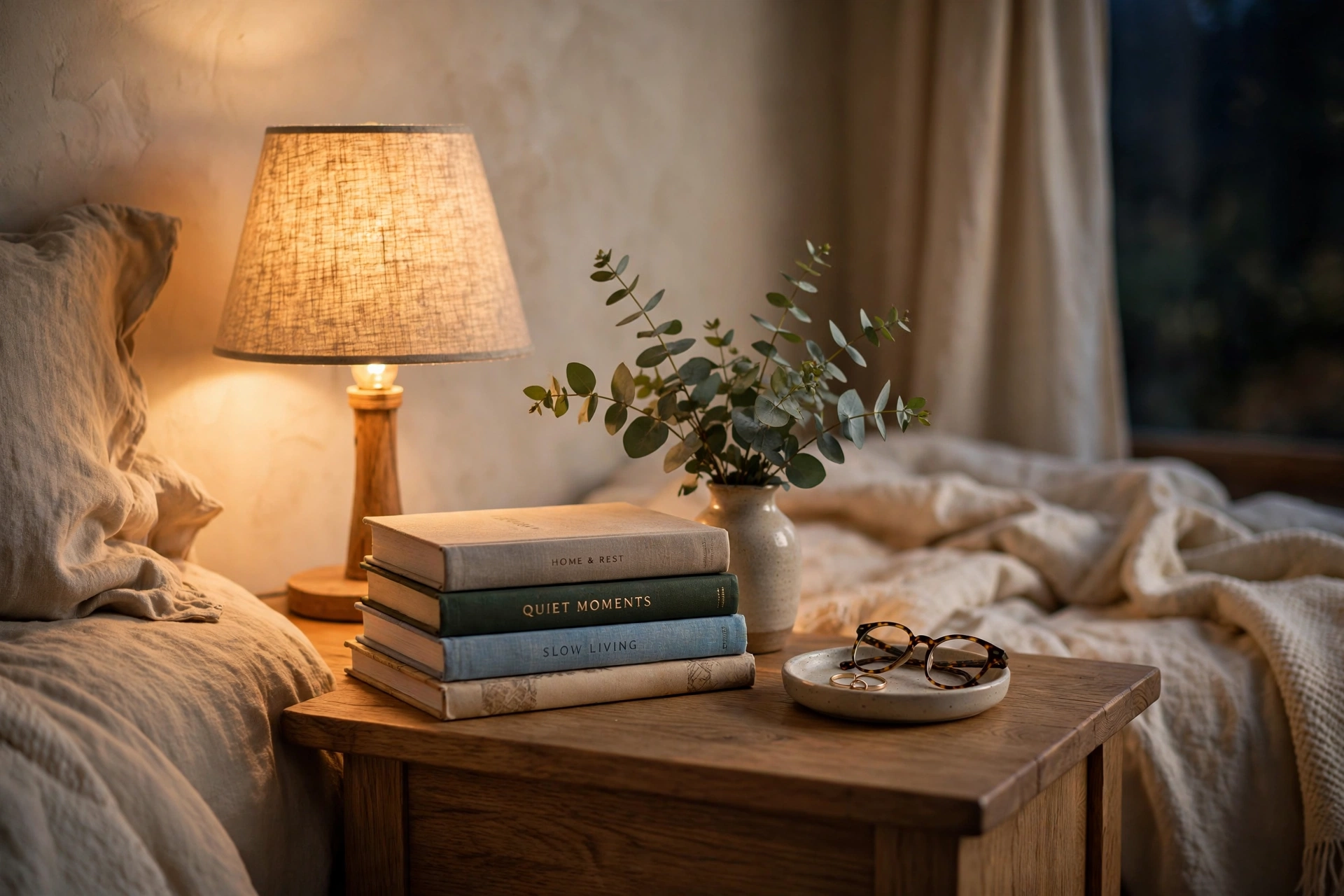
Choose warm white bulbs around 2700K; anything cooler can feel clinical. If your budget stretches to one upgrade, a dimmer switch or smart bulbs you can dim from bed are worth every penny. Keep the brightest light out of your direct eyeline when lying down — you want pools of gentle light, not a spotlight.
5. Make Your Bedside Table Work Harder
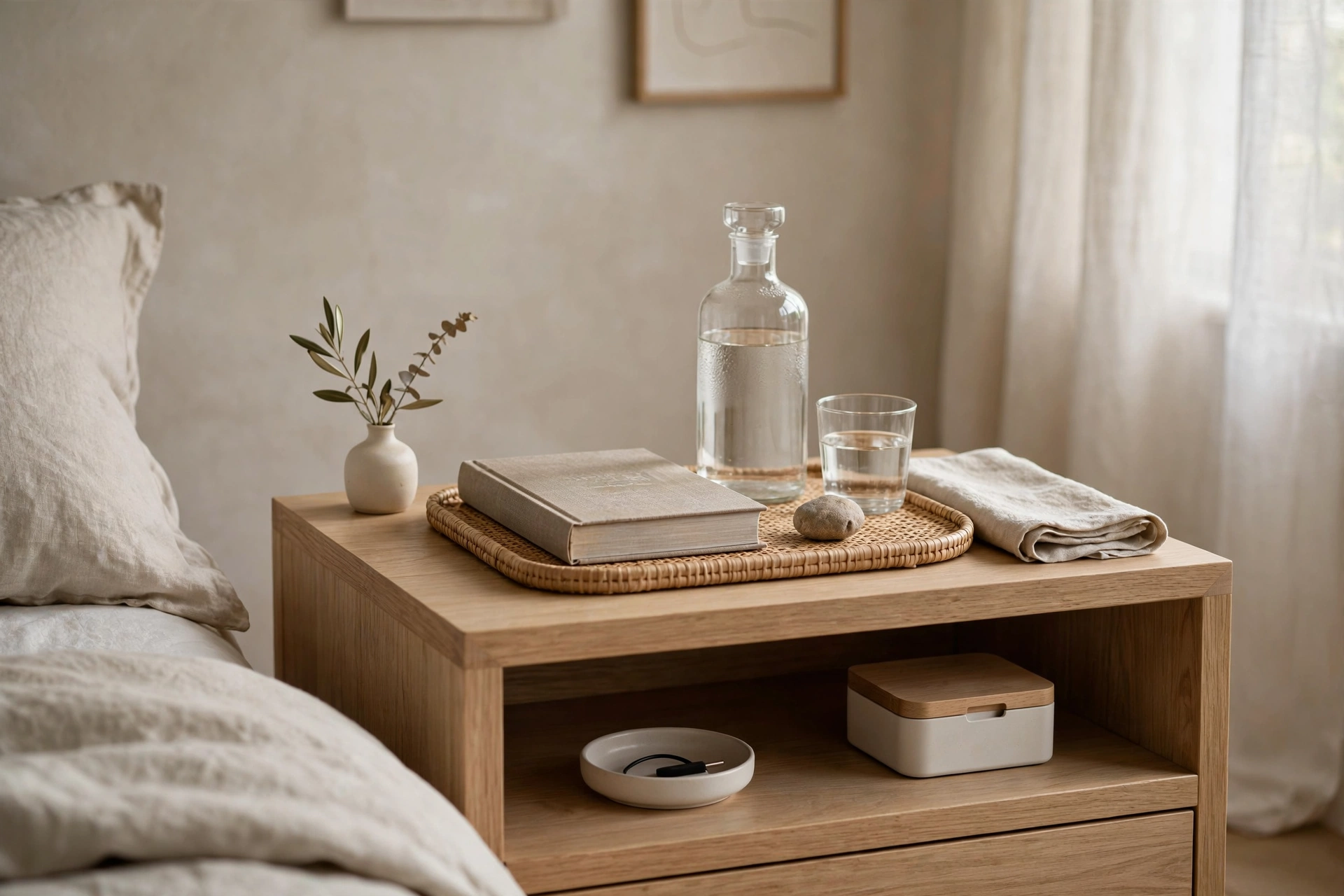
Your bedside table sets the tone for your evenings and mornings, yet it’s often the most cluttered spot in the room. The rule is simple: keep only what serves your rest. A lamp, water, your current book and one small decorative piece — a tiny vase with eucalyptus, a framed photo — is the ideal line-up.
Corral smaller items on a tray or in a shallow dish so the surface looks intentional rather than scattered. Chargers are the usual culprit for bedside chaos; a drawer, lidded box or even a cable tidy behind the table keeps them out of sight but within reach. If your table has no drawer, a small lidded basket underneath does the same job.
Match the table’s scale to your bed — too tall or too tiny looks off balance. A small stack of two books can act as a riser for a lamp that’s slightly too short. Keep a coaster or dish for jewellery and glasses; giving them a dedicated spot stops them migrating across the room. A calm bedside table means the last thing you see at night — and the first thing you see each morning — is order, not clutter.
6. Add Clever Storage Where You Can’t See It

Most bedrooms aren’t short on space — they’re short on the right kind of storage. The trick is to hide the practical stuff so the visible room stays serene. Anything you don’t use daily should live behind a door, under the bed or inside something beautiful.
- Under-bed boxes or vacuum bags for out-of-season clothes and spare bedding.
- Baskets on top of wardrobes for things you rarely need.
- A storage ottoman at the foot of the bed — seating, surface and hidden storage in one.
- Floating shelves for books, keeping the bedside table clear.
Where storage is visible, use matching boxes or baskets; uniformity reads as calm, while mixed containers read as clutter. Label anything you can’t see into — future you will be grateful. And once a season, do a ten-minute audit: if something hasn’t been touched in months, it doesn’t need prime bedroom real estate. Good storage isn’t about clever products; it’s about giving everything a home so your bedroom can stay peaceful.
7. Soften Hard Surfaces with Texture

Texture is what separates a flat, uninspiring bedroom from one that feels genuinely cosy. When the colour palette is calm and simple, texture does the heavy lifting — adding warmth, depth and that tactile invitation to sink in and relax.
Aim to mix two or three different textures rather than matching everything. Try a linen or washed-cotton duvet cover, a chunky knit throw folded at the foot of the bed, a velvet or boucle cushion, a jute or wool rug underfoot, and a wooden tray on the dresser. Each material catches the light differently, which stops neutral rooms feeling one-dimensional.
You don’t need to buy it all at once — building texture slowly leads to a more personal result. Start with whatever you touch most: bedding first, then a rug if your floors are bare (cold floors are the enemy of cosiness). Charity shops are excellent for textured pieces with character. And remember texture isn’t only fabric: a woven basket, a ceramic vase or a raw wooden frame all count.
8. Bring in Something Natural
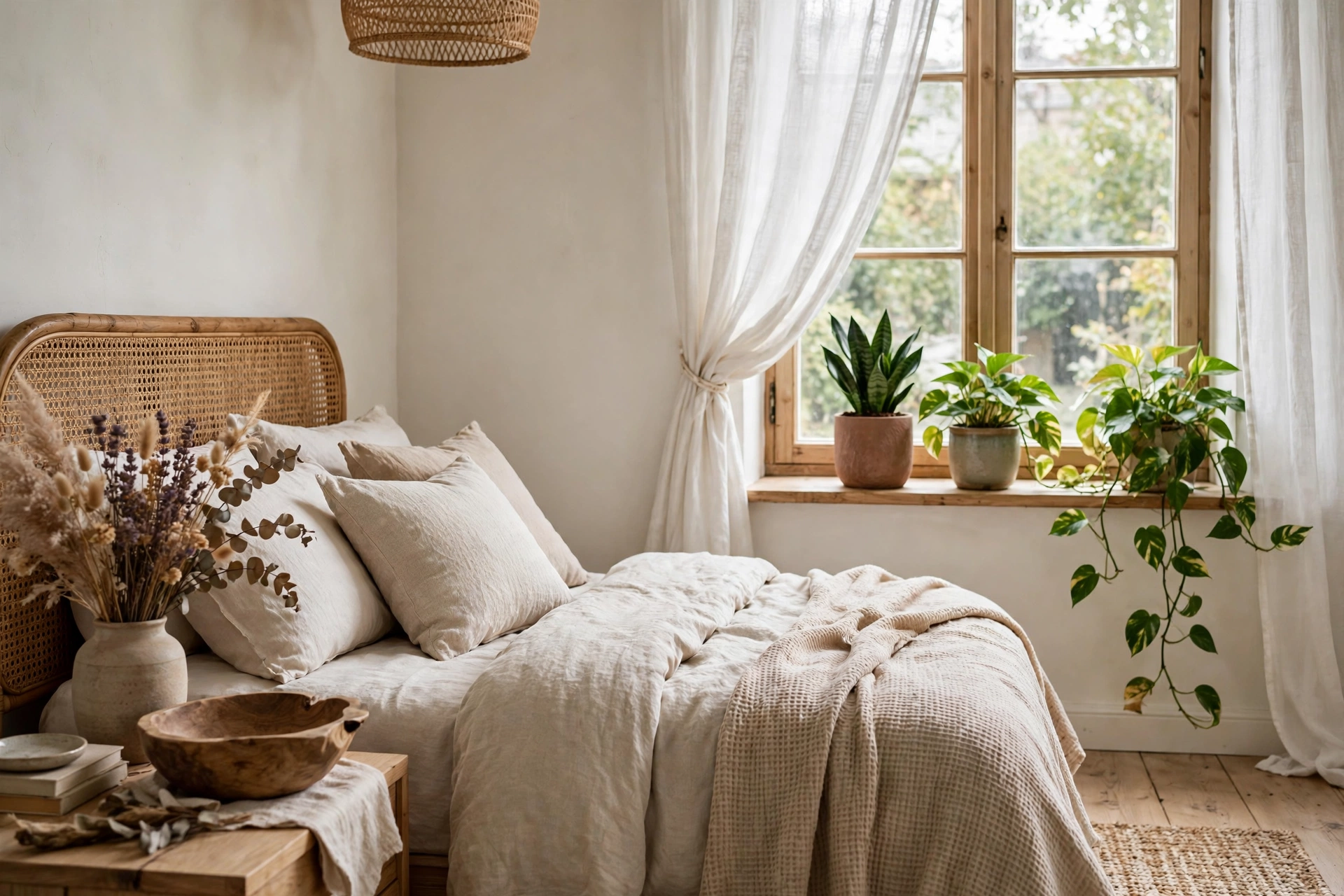
Bringing a little of the outdoors in is one of the simplest ways to make a bedroom feel alive and calming. Natural elements — plants, wood, stone, dried flowers — soften hard edges and connect the room to something slower and steadier than screens and schedules.
If you’re new to houseplants, start with forgiving varieties: a snake plant or pothos tolerates low light and occasional neglect, and both help the air feel fresher. A small vase of dried flowers or eucalyptus needs no maintenance at all while adding gentle shape. A wooden bowl, woven basket or stone coaster introduces natural materials with zero upkeep.
Keep it simple — one or two plants and a couple of natural accessories are plenty. Too much greenery starts to feel like another chore, which defeats the purpose. Position plants where you’ll see them from bed; that first glimpse of green in the morning is a small but genuine mood lift. If you have pets, check that your chosen plants are non-toxic before you buy.
9. Control Light for Better Sleep
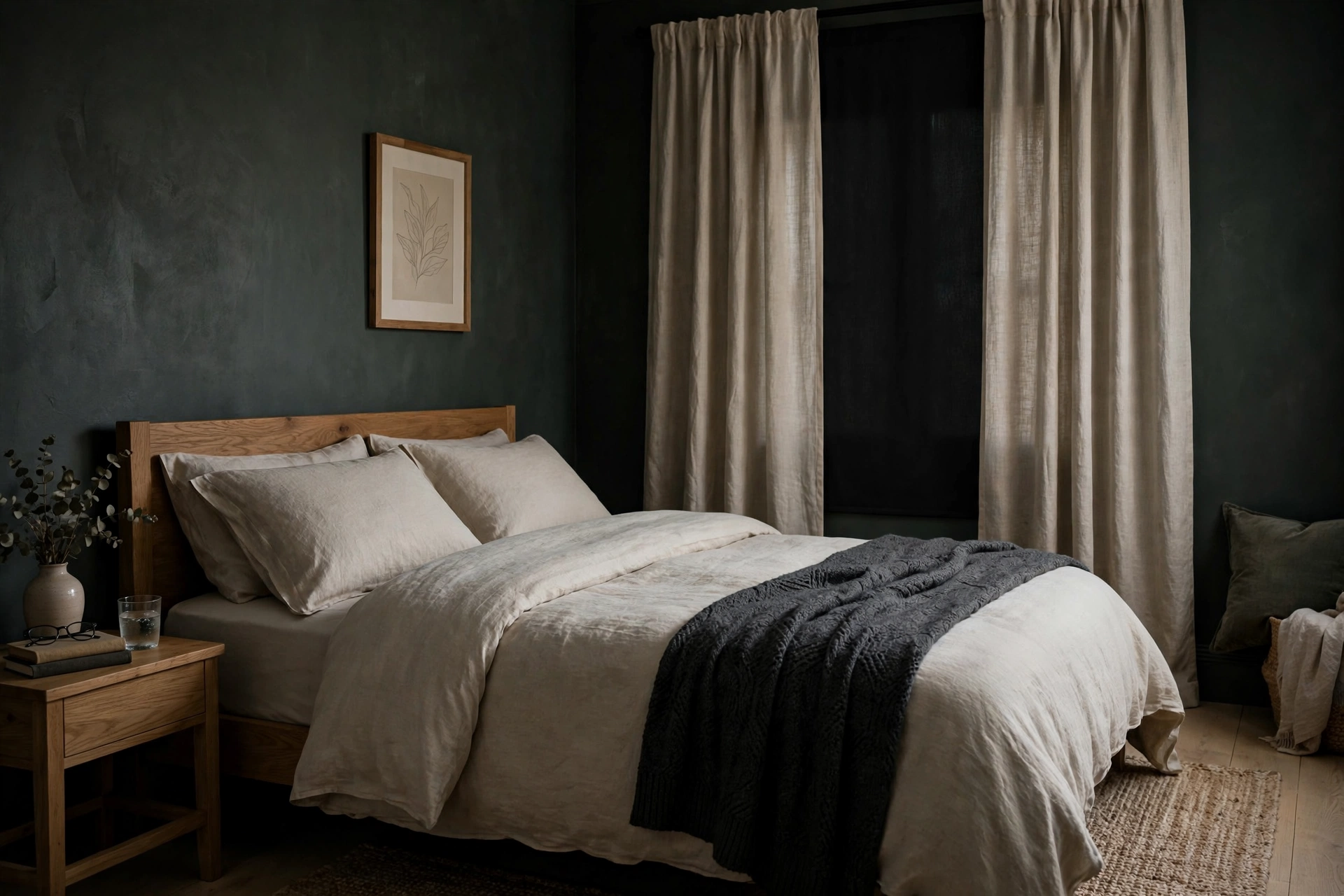
Light is the single biggest external factor in sleep quality, yet it’s the one most bedrooms get wrong. Even small amounts — a hallway glow under the door, a street lamp through thin curtains — can disrupt the deep sleep your body needs to recover properly.
The most effective fix is also the simplest: make the room genuinely dark. Blackout liners hung behind your existing curtains work brilliantly and are renter-friendly, attaching with hooks or tension rods. If new curtains are on the cards, choose a wraparound track or pelmet that stops light leaking in at the edges.
Don’t forget the small sources: cover or turn around standby LEDs, and keep screens out of arm’s reach at night — the temptation to scroll weakens dramatically when the phone is across the room. In the morning, do the reverse: open the curtains wide as soon as you wake. That daylight resets your body clock and makes the next night’s sleep come more easily. Darkness at night, brightness in the morning — that’s the rhythm your bedroom should support.
10. Create a Small Comfort Corner
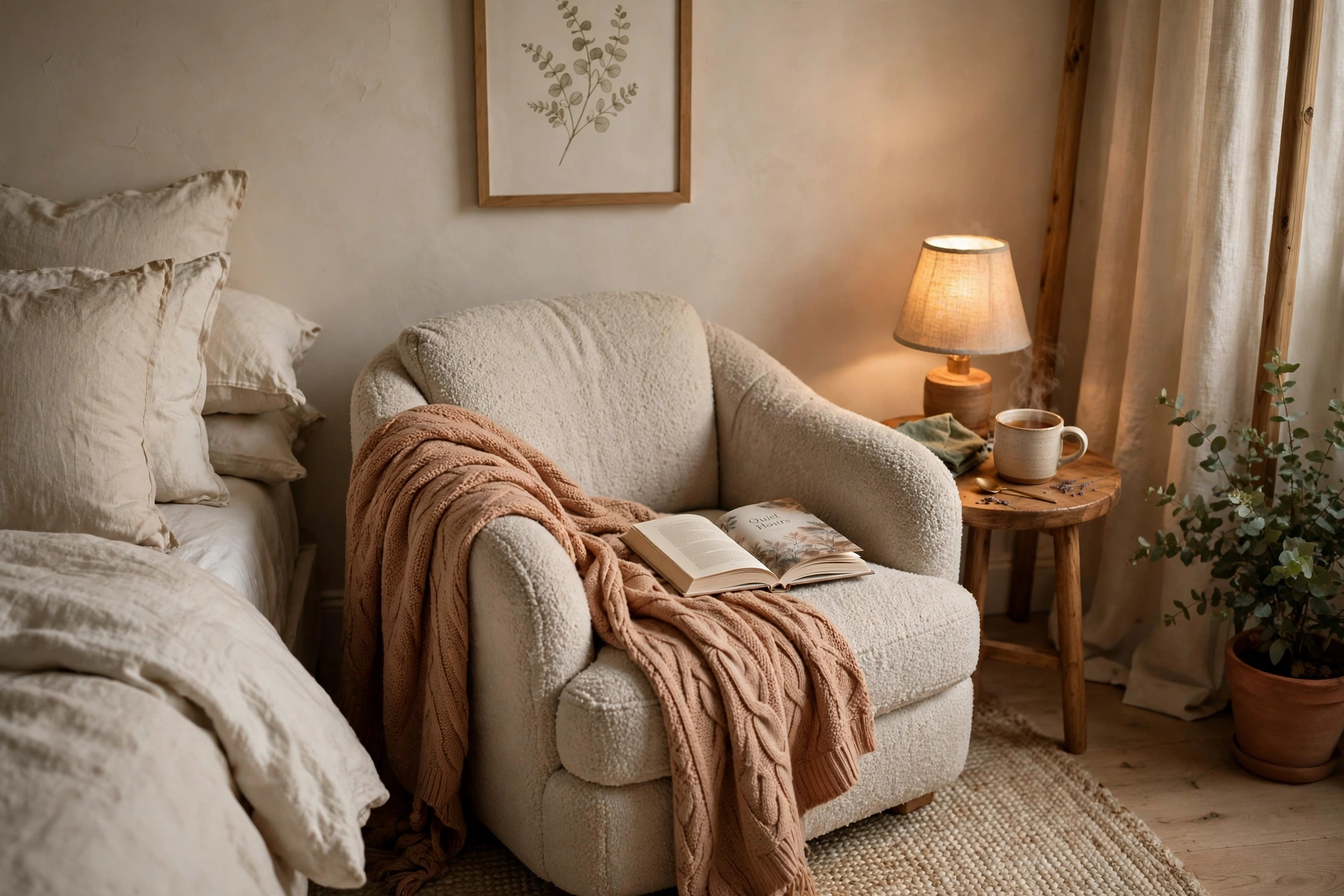
You don’t need a spare room to have a reading nook — just a corner and a little intention. A dedicated comfort corner gives your bedroom a purpose beyond sleep: somewhere to unwind with a book, a journal or a quiet cup of tea before bed.
All you need are three things: something comfortable to sit on, a surface for a drink, and soft light. That could be a second-hand armchair, a large floor cushion, or a pile of plush cushions in an empty corner. Add a small side table or stool, a soft throw for chilly evenings, and a warm lamp or fairy lights nearby.
Keep the corner tech-free if you can — that’s what makes it feel like a retreat rather than another seat. A small basket for your current book and a candle-style LED complete the picture. It doesn’t need to be big or expensive; it just needs to feel like yours. Even in the smallest bedroom, claiming one corner for comfort sends a powerful message: this room is for resting, not just sleeping.
11. Keep Decor Personal but Edited
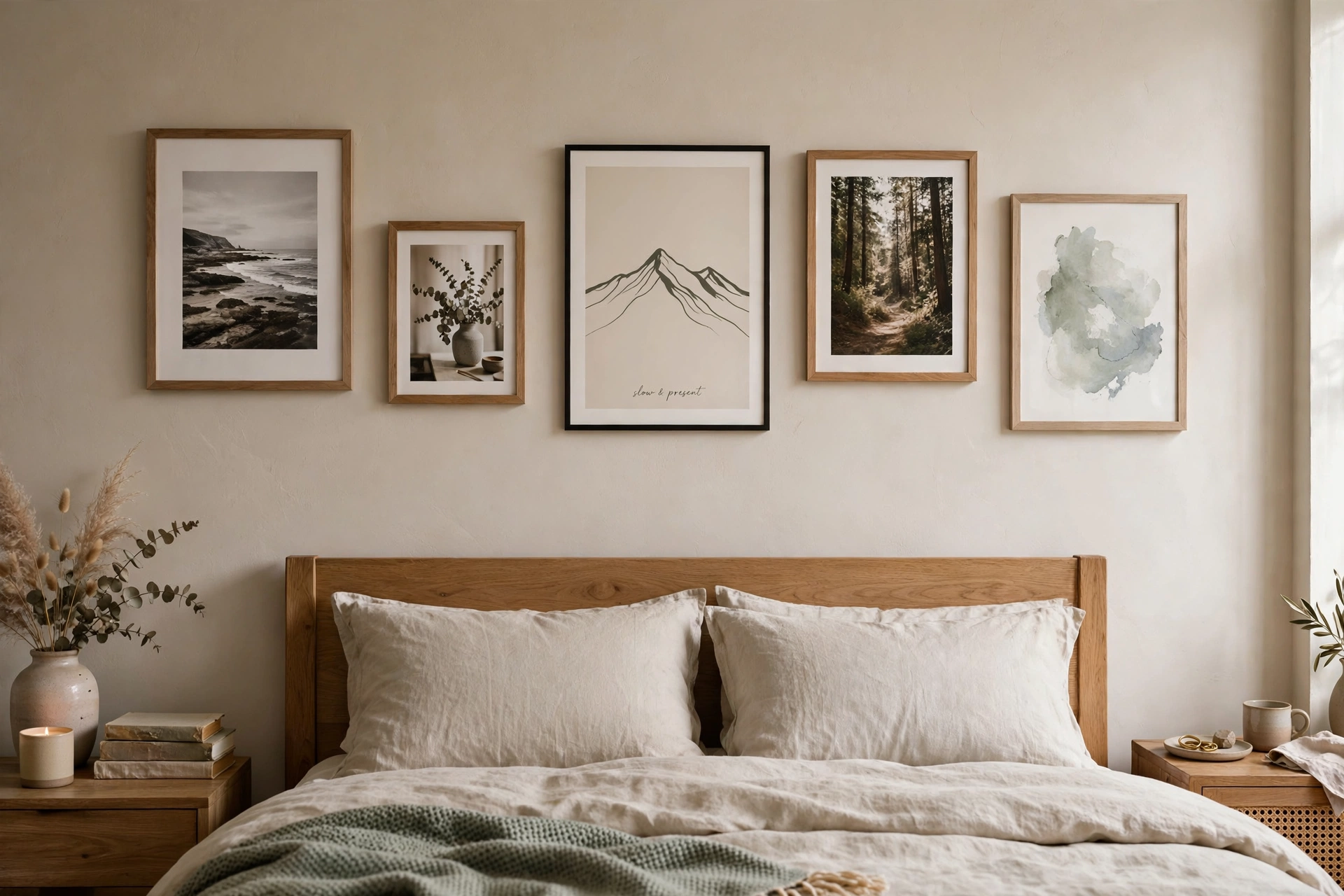
A sanctuary should feel like you — but the key word is edited. A few meaningful pieces, given space to breathe, have far more impact than shelves crowded with ornaments. This is about curation, not minimalism for its own sake.
Choose the items that genuinely make you happy: a framed print from a favourite trip, a handmade vase, a photo that makes you smile. Then give each one room — a single piece on a clear surface draws the eye, while ten pieces on the same surface become visual noise. Group smaller items in odd numbers on a tray to make them feel intentional.
Rotate rather than accumulate: store some pieces away and swap them seasonally, and everything feels fresh again. Keep frames and artwork loosely within your room’s palette so the decor enhances the calm rather than fighting it. And be honest about anything kept from guilt rather than love — gifts you’re keeping out of obligation don’t belong in your most restful room. Fewer, better-loved things: that’s the whole philosophy.
12. Finish with Scent and Sound
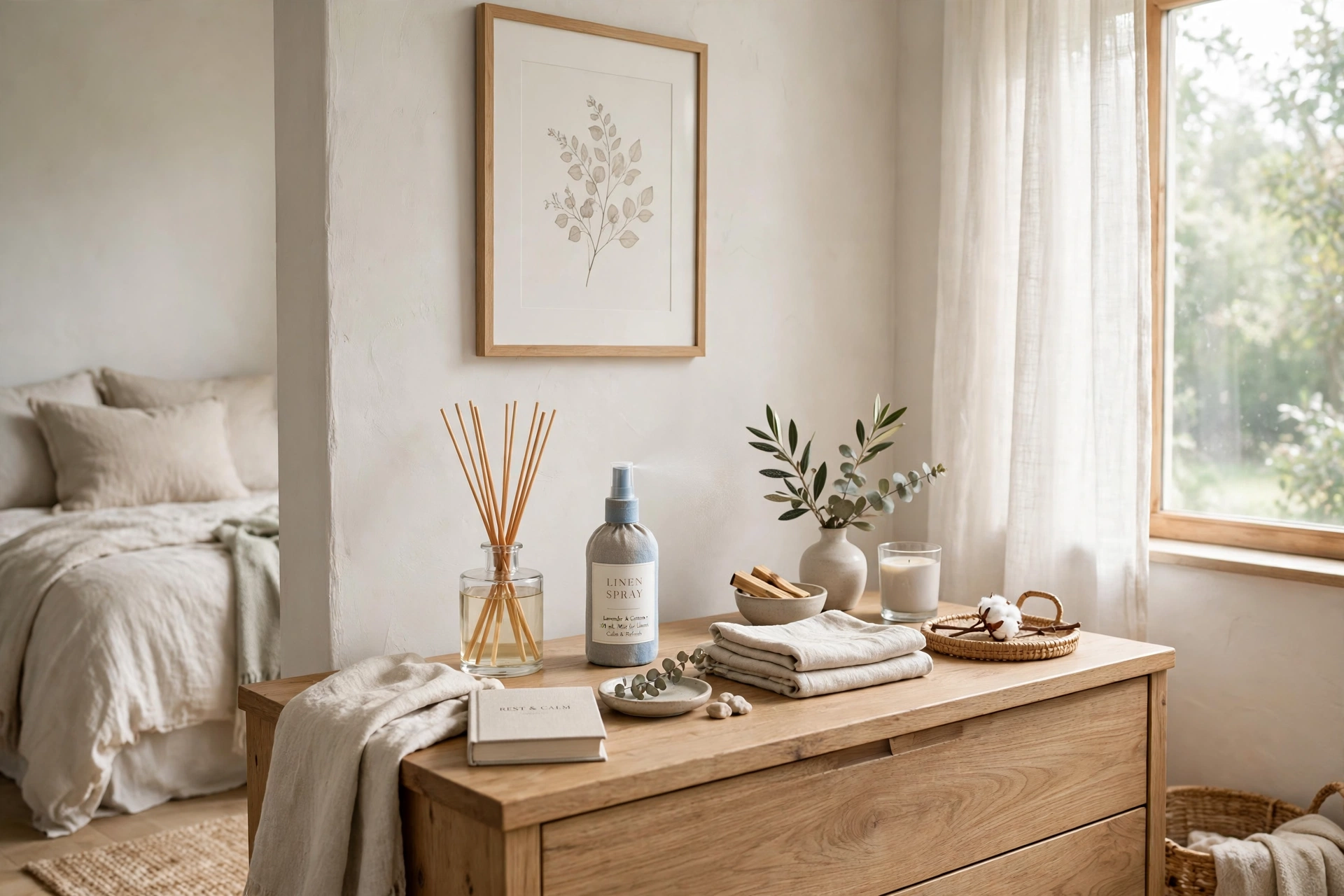
The final layer of a sanctuary bedroom is invisible: scent and sound. These sensory details work directly on your nervous system, signalling that the busy day is over and it’s safe to unwind.
For scent, keep it subtle — bedrooms should whisper, not shout. A linen spray on pillows, a reed diffuser with lavender or chamomile, or a few drops of essential oil on a cotton ball near the bed all work beautifully. If you use candles, choose soy or beeswax and never leave them burning unattended; a candle-style LED gives the glow without the worry.
For sound, consider what your nights actually sound like. If traffic or housemates intrude, a white noise machine or a fan masks irregular sounds far better than earplugs for many people. A short calming playlist or sleep story can become a powerful wind-down ritual. And don’t underestimate fresh air: opening the window for ten minutes each day clears stale air and resets the room. Scent and sound are the finishing touches that turn a nice bedroom into a true sanctuary.
A Calm Bedroom Is a Habit, Not a Purchase
You don’t need to do all twelve ideas at once — in fact, please don’t. Pick two or three to start: a proper declutter, softer lighting and layered bedding make a wonderful first trio. Live with the changes for a week and notice how the room feels, and how you sleep.
Then add the next idea whenever you have an hour to spare. A calm bedroom isn’t bought in a single shopping trip; it’s built slowly, through small, thoughtful choices that turn your room into the peaceful sanctuary you deserve. The goal was never perfection — it’s a bedroom that helps you rest.