
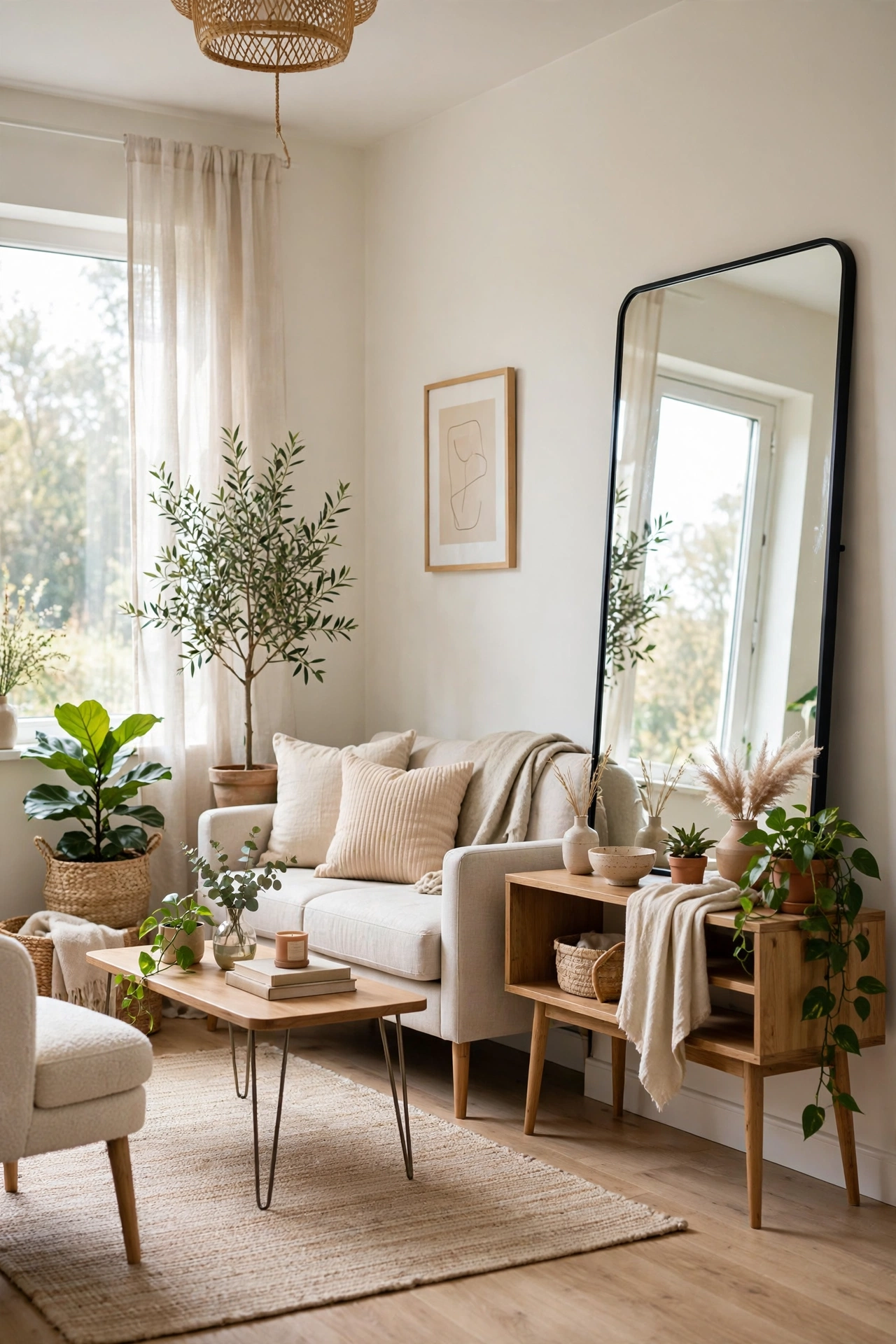
A small living room isn’t a limitation — it’s an invitation to be clever. The cosiest, most characterful lounges are often the compact ones, because every choice matters. These 15 living room decor ideas for small spaces make tiny rooms feel bigger, brighter and more inviting — without knocking down a single wall.
Every idea is budget-friendly, most are renter-friendly, and all of them work in real, lived-in homes. Let’s make your small living room feel like the best room in the house.
1. Float Your Furniture (Yes, Really)
Pushing every piece of furniture against the walls actually makes a small room feel smaller — it emphasises the perimeter and leaves a dead zone in the middle. Instead, float your sofa a few centimetres off the wall or angle an armchair into the room.
Even a small gap behind furniture creates breathing room and makes the walls feel further away than they are.
The rule: Furniture needs air around it. Pull pieces just 5–10 cm from the wall and the room instantly feels less boxed-in.
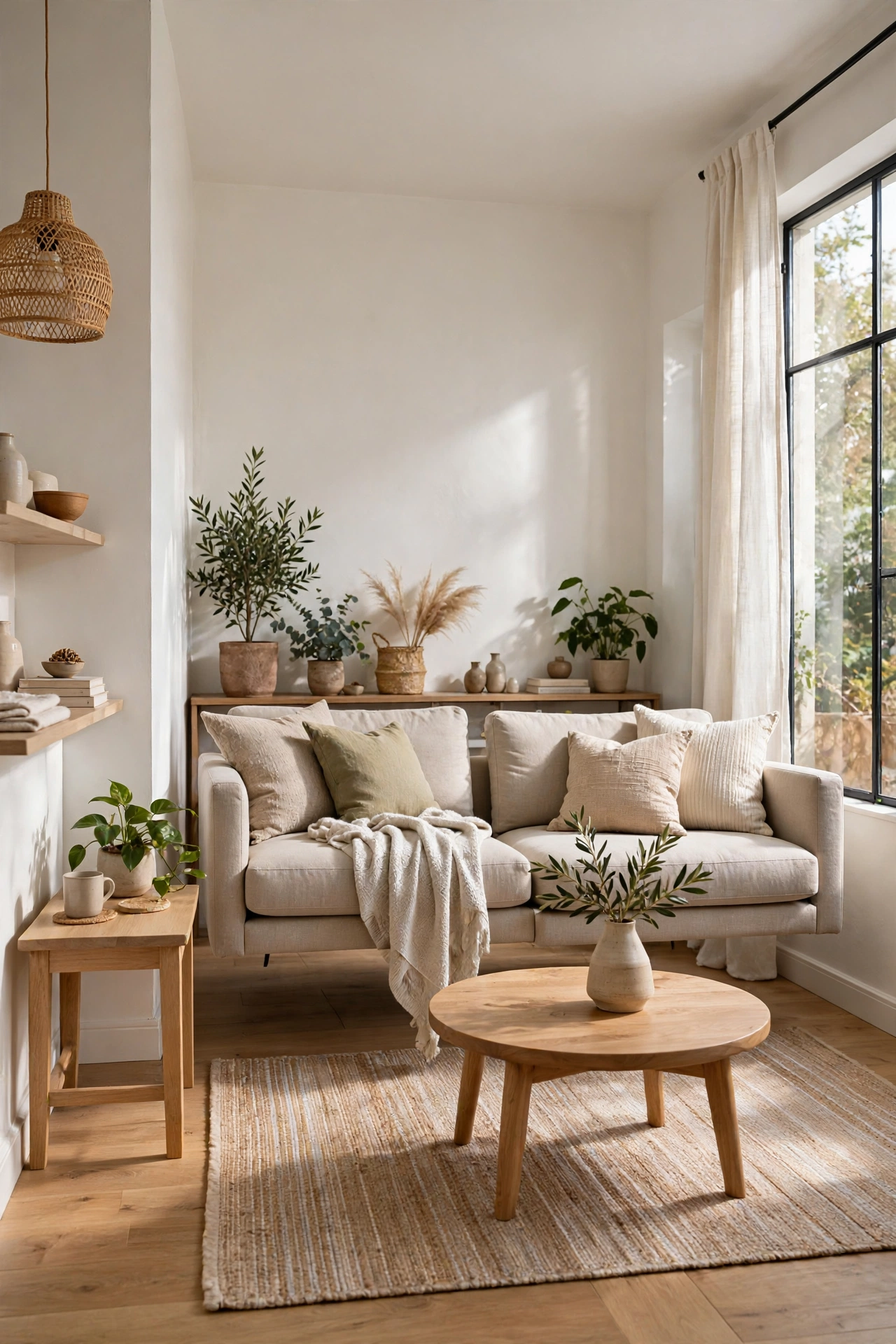
2. Choose Leggy Furniture Over Blocky Pieces
Furniture you can see under feels lighter and takes up less visual space. Sofas, armchairs, TV units and coffee tables on slim legs let light and sightlines flow underneath, which makes the floor feel bigger.
Blocky, floor-hugging furniture chops the room into visual chunks. Leggy pieces keep it open.
Budget tip: You can buy inexpensive furniture risers or replacement legs to give existing pieces an instant lift — literally.
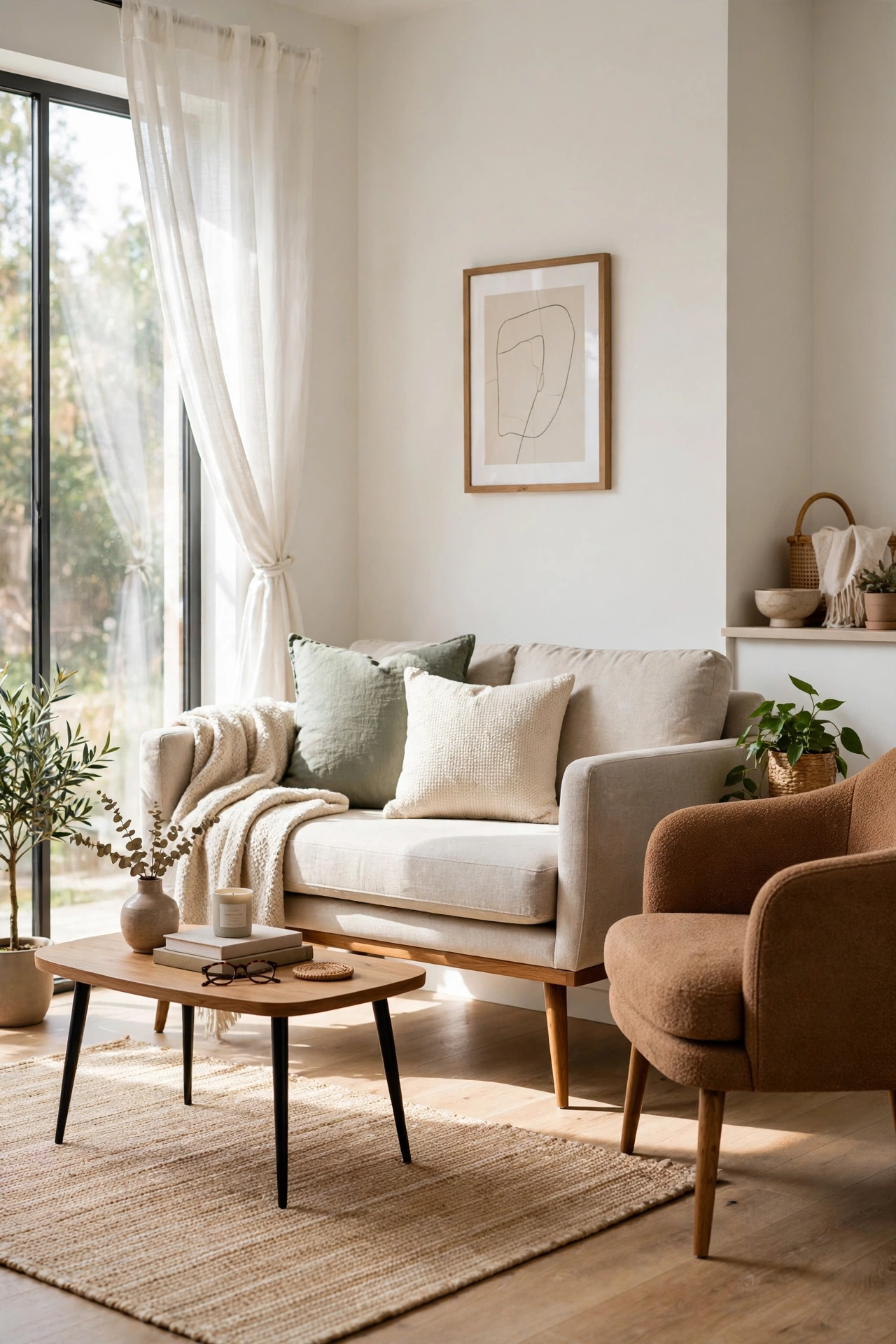
3. Hang Curtains High and Wide
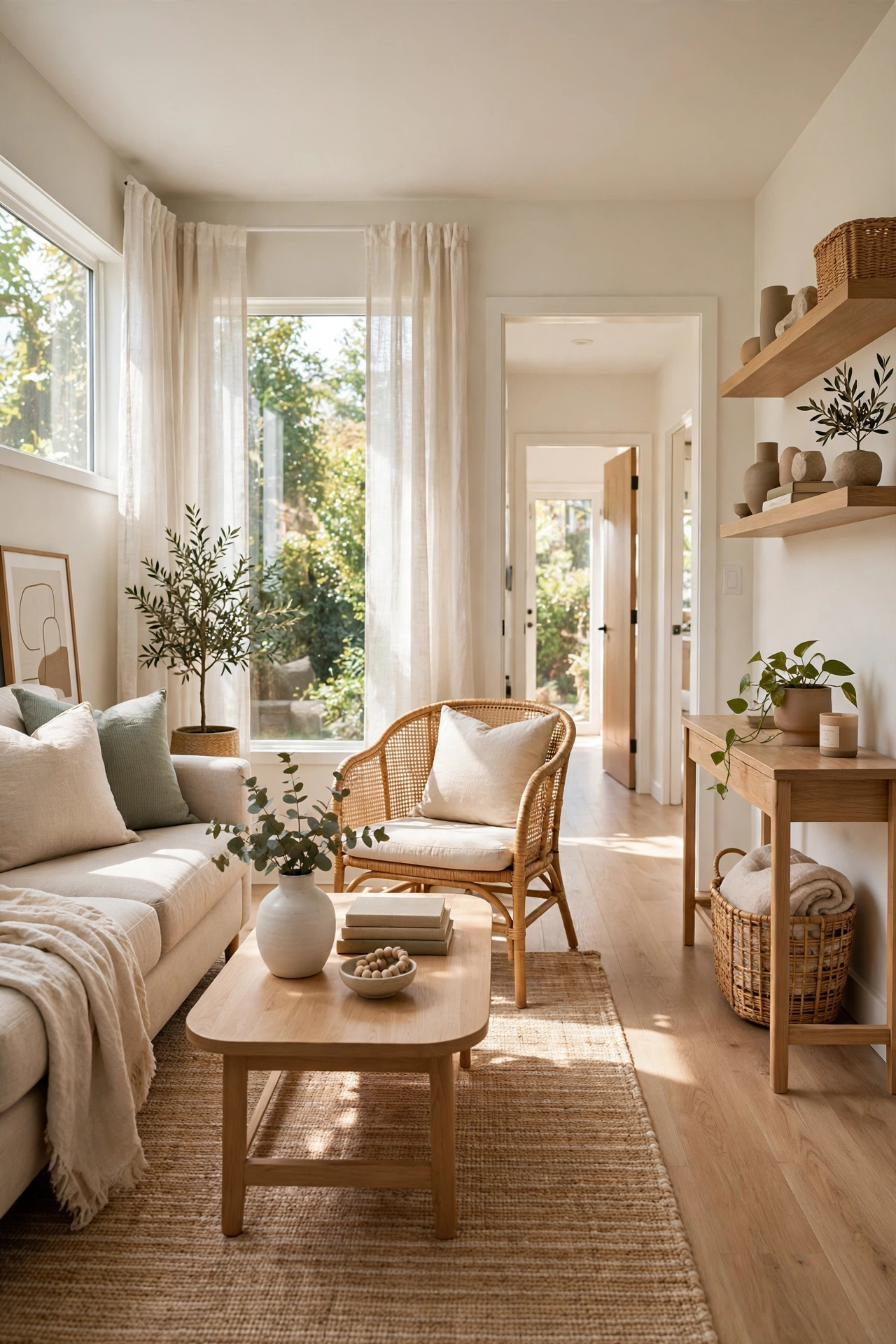
Curtains hung just below the ceiling and extended well past the window frame make windows look dramatically larger — and bigger windows mean a bigger-feeling room. The fabric draws the eye upward, stretching the walls.
Use lightweight, light-coloured fabrics that let daylight through rather than heavy dark drapes that close the room in.
Renter-friendly: Tension rods or adhesive hooks hold lightweight curtains with zero damage to walls.
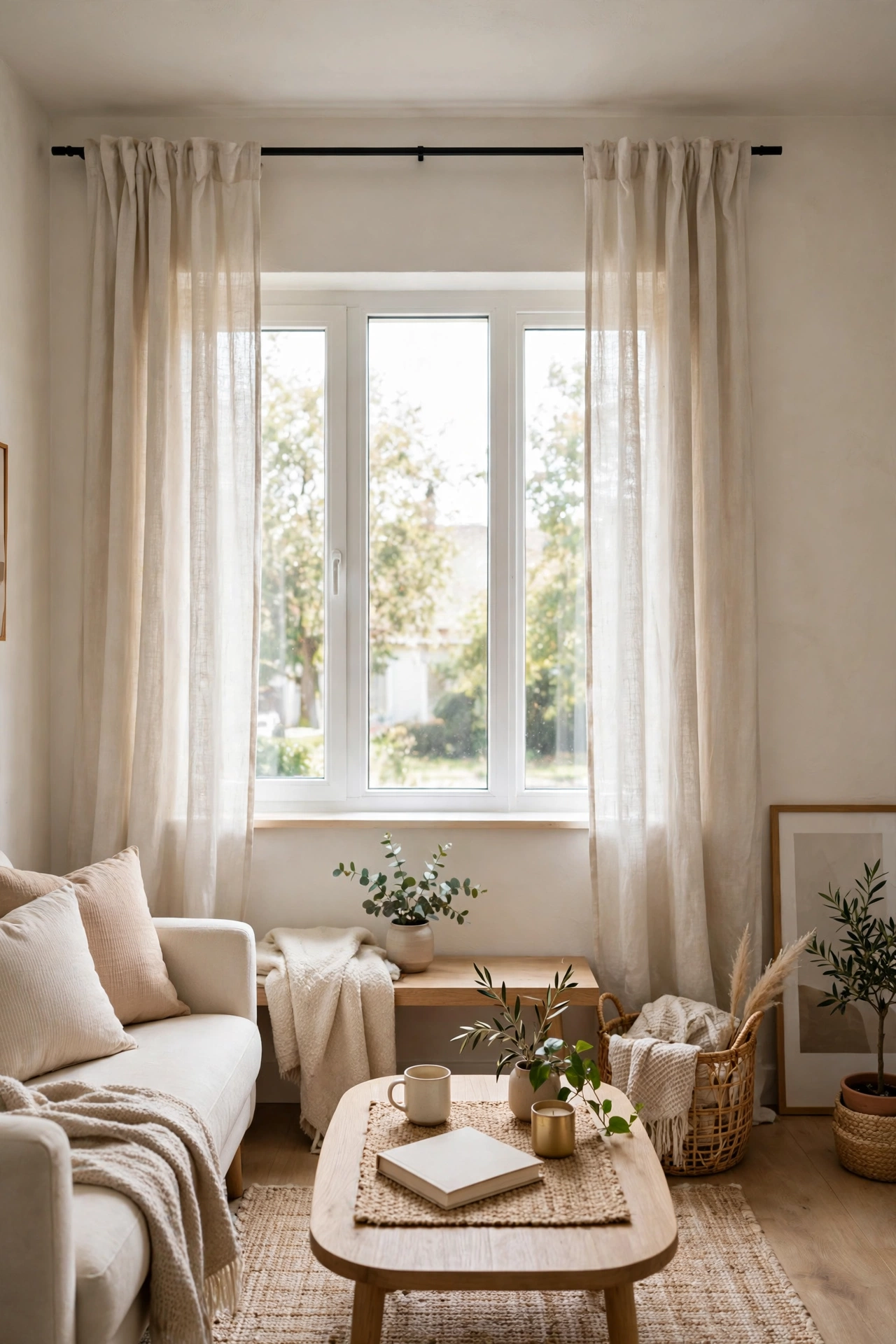
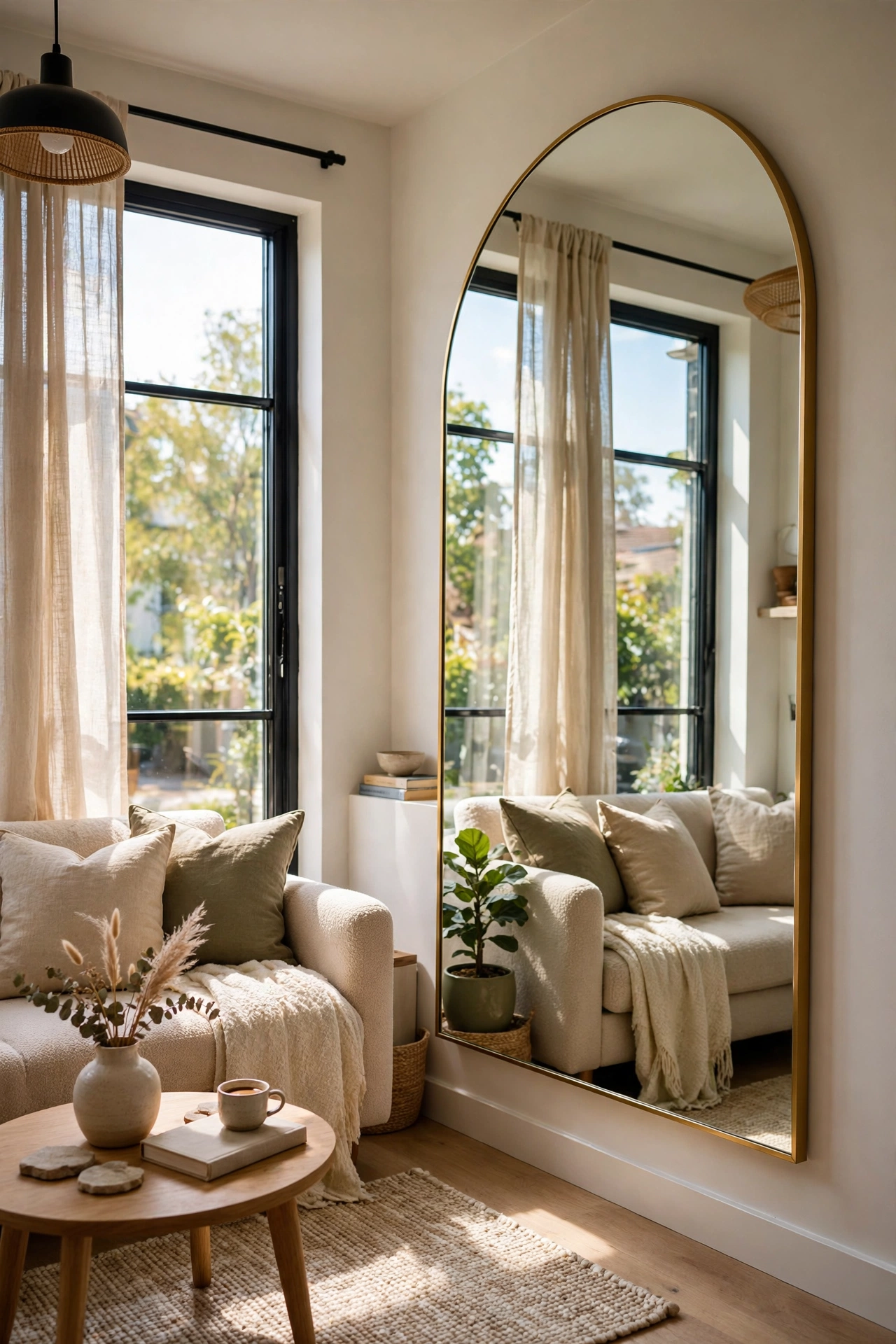
4. Use Mirrors to Double the Light
Mirrors are the oldest small-space trick in the book because they work. A large mirror opposite a window bounces daylight around the room and visually doubles the space.
One big statement mirror beats a gallery of small ones — a single large reflection reads as “more room,” while lots of small reflections read as clutter.
Budget tip: Charity shops and second-hand marketplaces are full of large mirrors for a fraction of retail price.
5. Stick to a Light, Cohesive Colour Palette
Dark, busy colour schemes chop a small room into visual fragments. A light, cohesive palette — warm whites, soft neutrals, one or two accent colours — lets the eye glide across the room without stopping, which reads as spacious.
This doesn’t mean boring. Texture (linen, wool, rattan, wood) adds all the interest that colour used to carry, without the visual weight.
Try it: Paint the walls, skirting and even the ceiling the same soft shade for a seamless, room-expanding envelope.
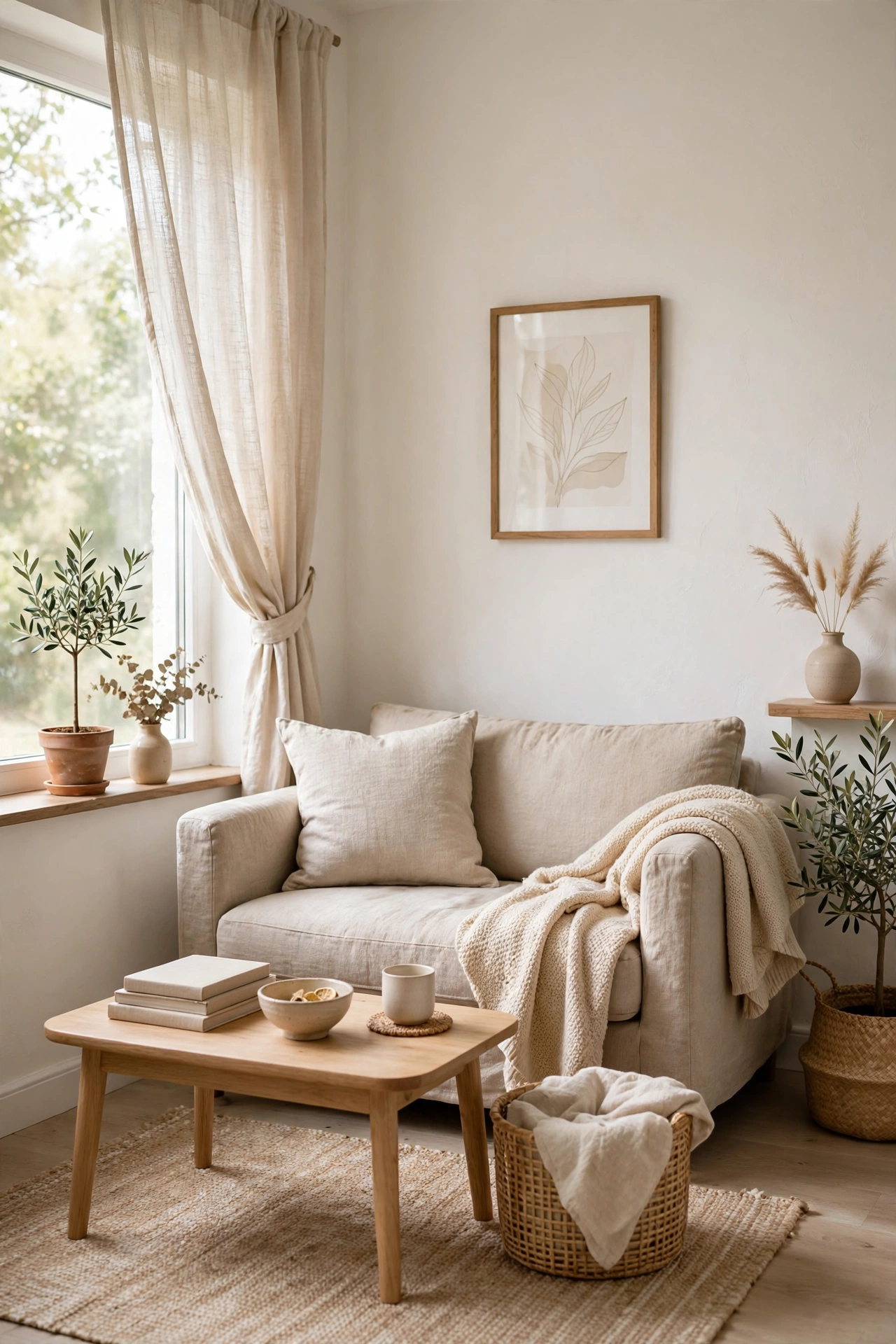
6. Go Big With the Rug (Counterintuitive but True)
A tiny rug floating in the middle of the floor makes a small room feel smaller — it visually shrinks the floor area. A large rug that sits under the front legs of the sofa and chairs unifies the seating area and makes the floor feel expansive.
The rug should be big enough that all the main furniture touches it. When in doubt, size up.
The rule: In a small living room, the rug is almost always bigger than you think it should be.

7. Choose Multi-Functional Furniture
Every piece in a small living room should earn its place twice. Storage ottomans hold blankets and double as footrests. Nesting side tables expand when guests arrive. A daybed works as sofa by day, guest bed by night.
Before buying anything for a small room, ask: what two jobs can this do?
Budget tip: A storage ottoman is the single best-value multi-functional buy for a small lounge — seating, storage and a footrest in one.

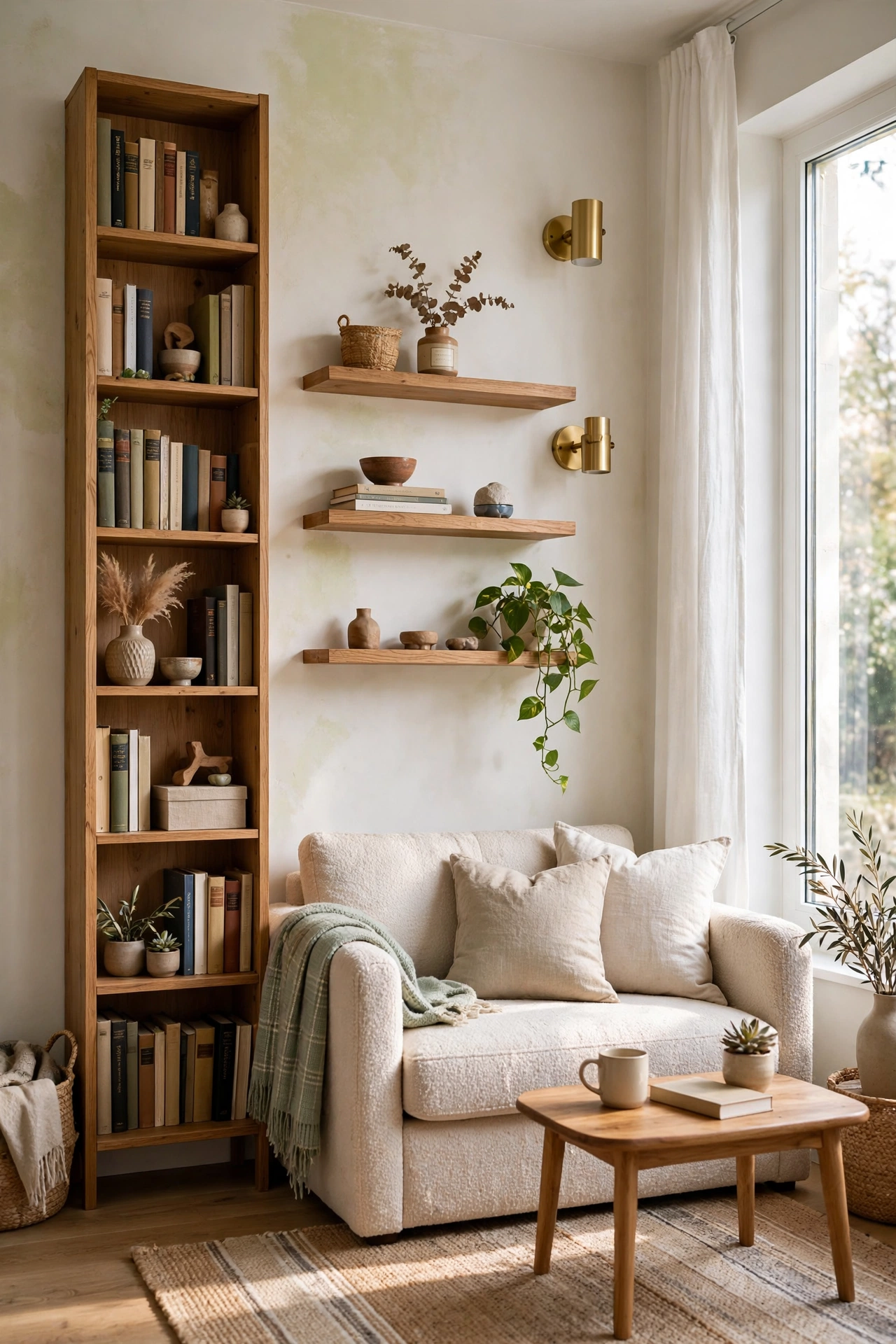
8. Use Vertical Space — Walls Are Free Real Estate
Floor space is precious; walls are free. Floating shelves, tall bookcases and wall-mounted lighting move storage and function upward, keeping the floor clear.
A tall, narrow bookcase holds as much as a wide low one while using half the floor space. Wall-mounted lights free up the side tables that floor and table lamps would occupy.
Small space win: Go tall everywhere — height is the one dimension small rooms have in abundance.
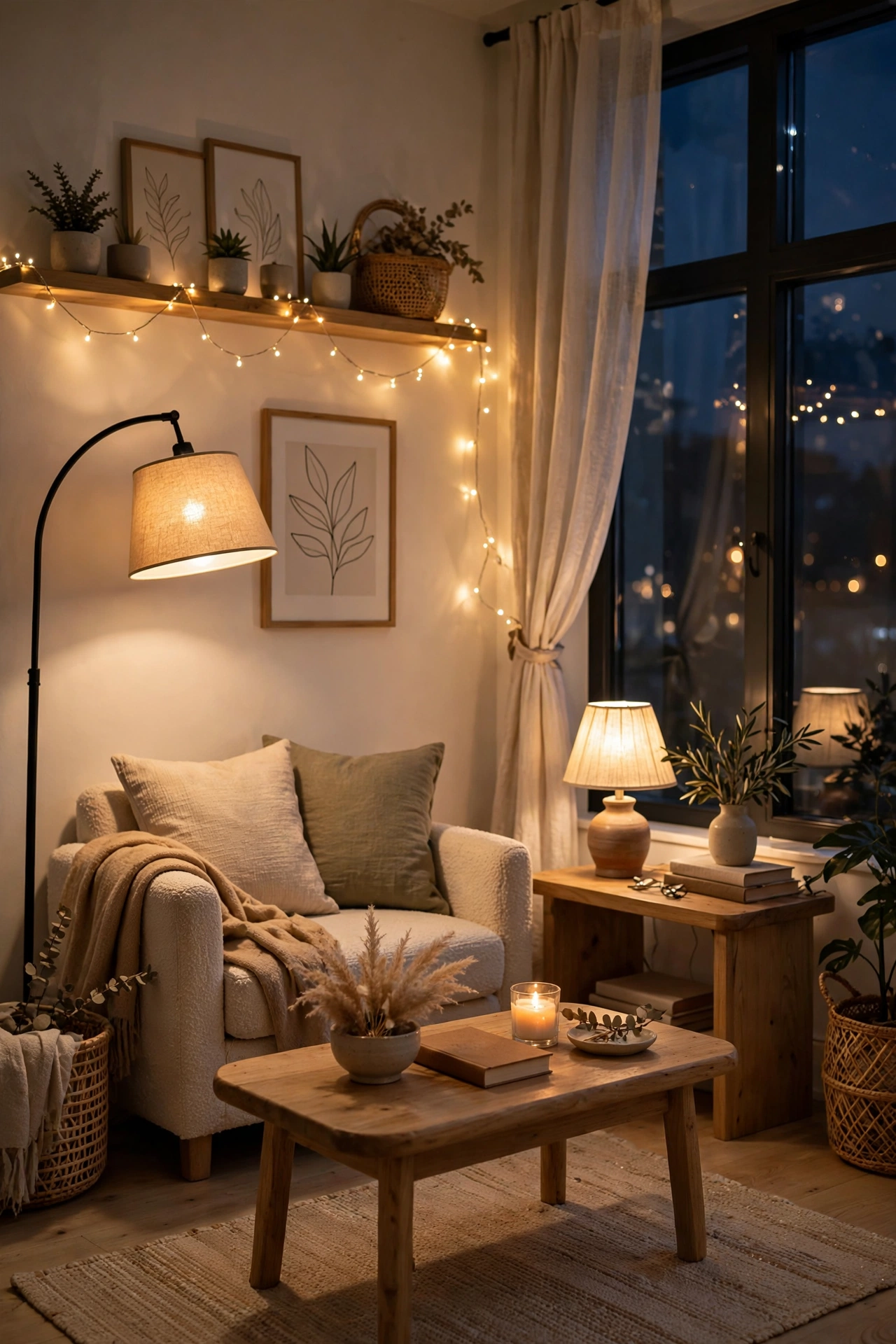
9. Layer Lighting at Three Heights
One overhead light flattens a small room and creates harsh shadows. Layered lighting — ambient (ceiling), task (reading lamp) and accent (a candle cluster or LED strip) — adds depth that makes the room feel larger and infinitely cosier.
Warm-toned bulbs (2700K) make small rooms feel inviting rather than clinical.
Budget tip: A plug-in wall sconce and a string of warm fairy lights cost very little and transform evening ambience completely.
10. Keep the Coffee Table Slim and Light
A chunky coffee table dominates a small seating area. Swap it for a slim, leggy design — or skip the traditional table entirely in favour of a C-shaped side table that slides over the sofa arm, or a lidded ottoman.
Round tables are kinder to small rooms than rectangular ones: no sharp corners jutting into walkways, and they seat the eye more softly.
Try it: If your coffee table feels like it owns the room, it probably does. Downsize it.
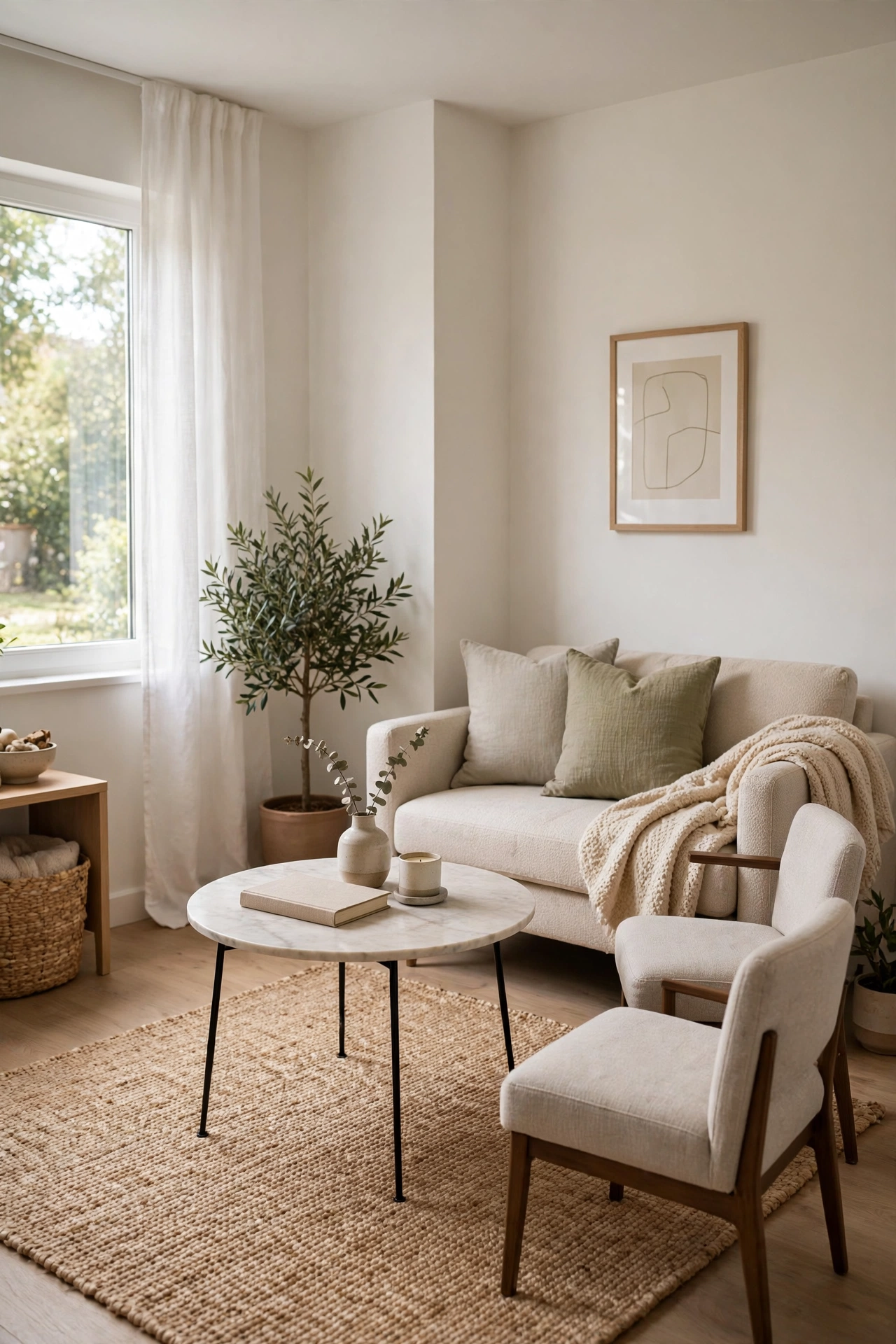
11. Add Greenery — Plants Make Small Rooms Feel Alive
Plants add life, colour and height without visual weight. A tall plant in an empty corner fills dead space beautifully; trailing plants on a high shelf draw the eye upward; a cluster of small pots on the windowsill adds charm for pennies.
If you kill plants, start with the unkillable: snake plants, pothos and ZZ plants forgive almost everything.
Why it works: Greenery softens all the hard edges of furniture and tech, making a small room feel like a home rather than a storage unit.
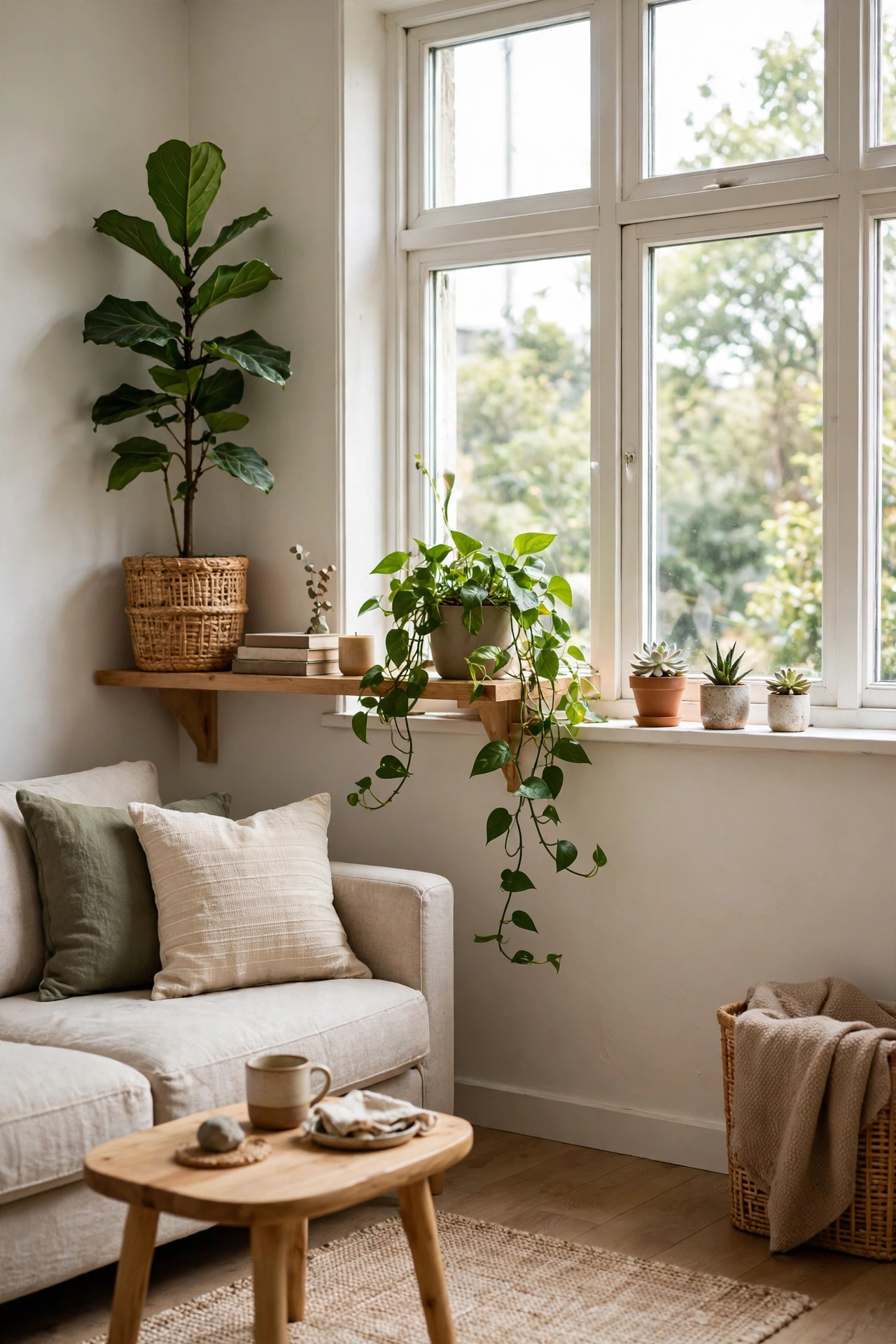
12. Declutter Ruthlessly — Less Stuff, More Room
Nothing makes a small living room feel smaller than clutter. Every surface covered, every shelf crammed, every corner filled — the room can’t breathe. A ruthless declutter is the fastest, cheapest room-expander there is.
Keep the surfaces clear, the shelves edited and the floor visible. The room you already have will feel twice the size.
Start here: Our home organisation hacks guide has 15 systems for keeping the clutter away for good.
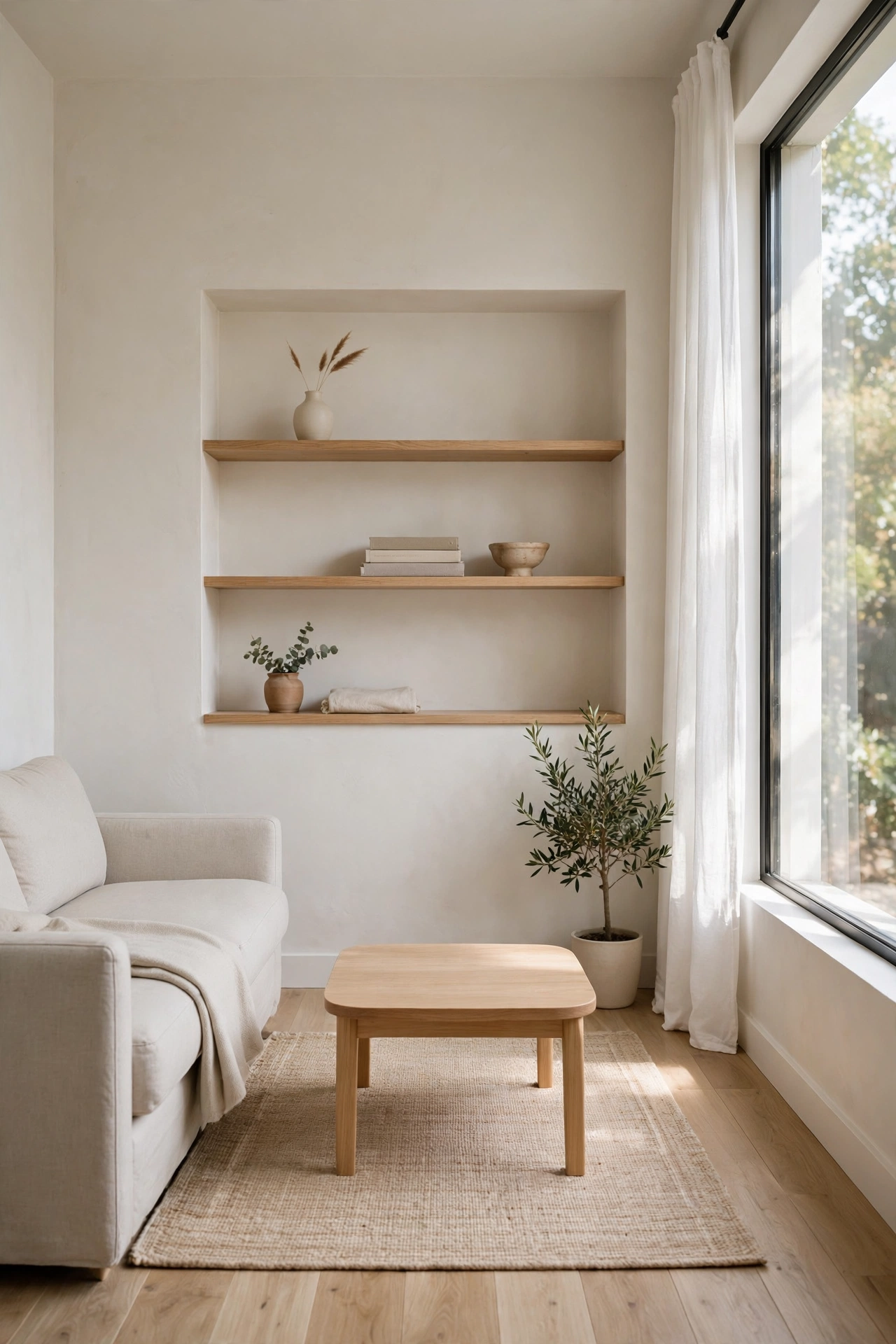
13. Create Zones in an Open-Plan Space
Small open-plan rooms feel chaotic when everything bleeds together. Create zones: a rug defines the seating area, a bookshelf marks the reading corner, a floor lamp anchors the workspace.
Zoning gives a small room structure and purpose — it feels like several intentional spaces rather than one cramped one.
Budget tip: Rugs, lighting and furniture arrangement create zones for free. No dividers or screens needed.
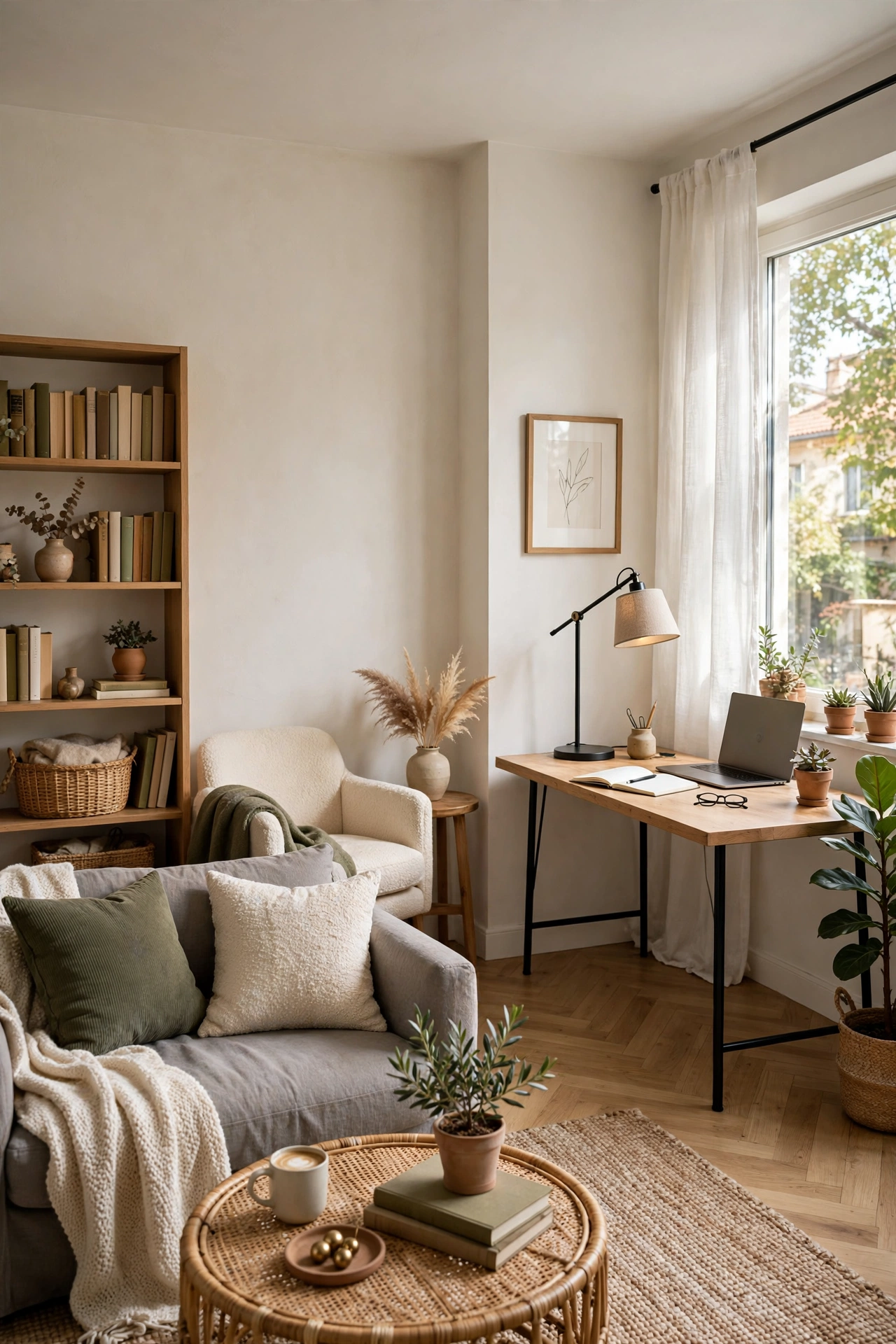
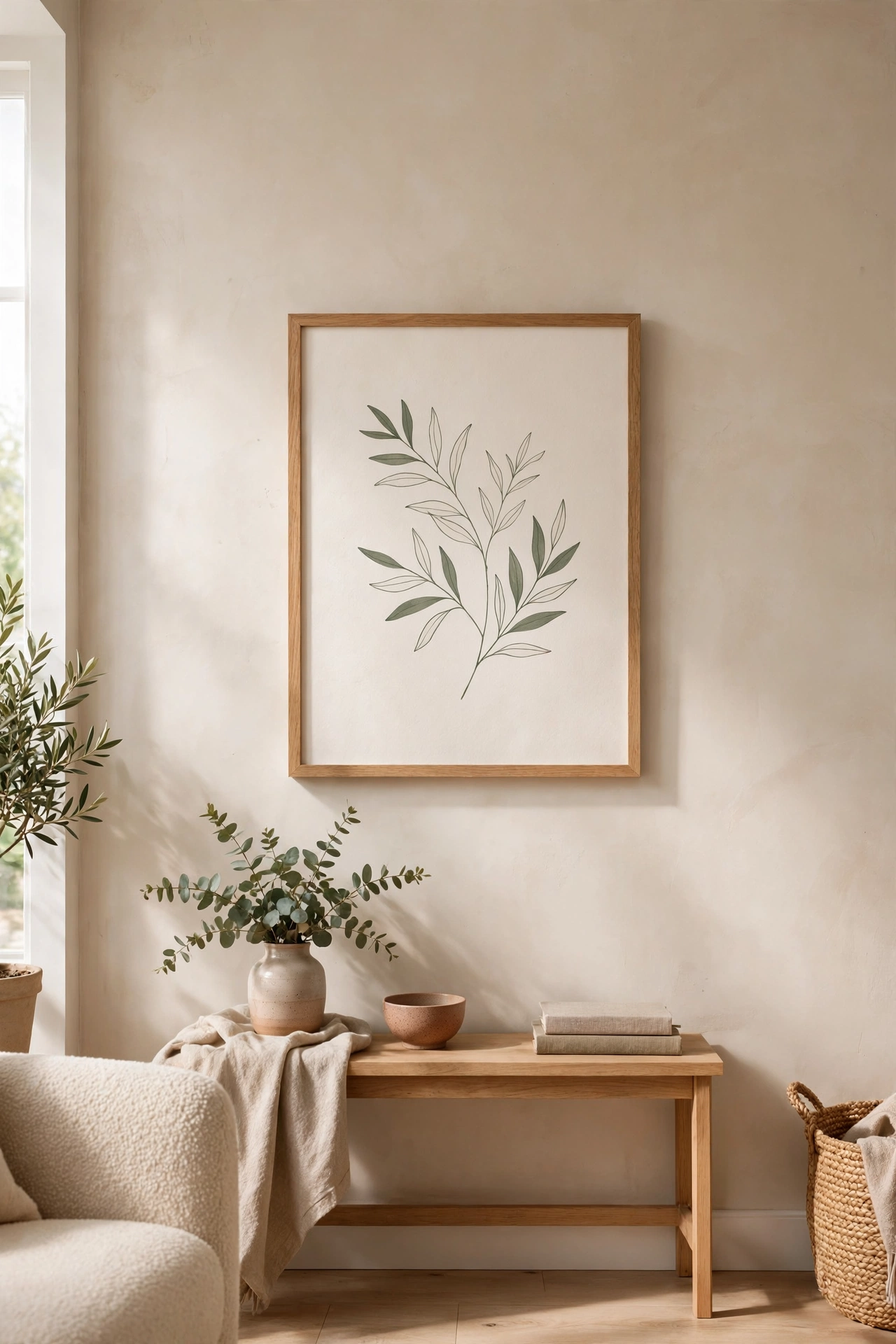
14. Choose Art That Suits the Scale
Oversized art in a tiny room overwhelms; postage-stamp art gets lost. The sweet spot: one medium-large piece that anchors a wall, or a tight, curated gallery wall with consistent framing.
Hang art at eye level (centre around 145 cm from the floor) and leave breathing room around it — crowded walls close a room in.
Renter-friendly: Adhesive hanging strips hold frames securely with zero wall damage.
15. Keep Walkways Clear — Flow Is Everything
The fastest way to make a small living room feel cramped is to block the natural paths through it. Keep walkways at least 75 cm wide and never force anyone to squeeze past furniture.
Arrange seating so people can move through the room without detouring around a chair. Good flow makes even a tiny room feel effortless.
The test: Walk every path through your room. If you have to turn sideways, something needs to move.
Frequently Asked Questions
How can I make a small living room look bigger?
Use light colours, leggy furniture, a large rug, mirrors opposite windows, and curtains hung high and wide. Keep clutter minimal and walkways clear — these changes alone transform how big a room feels.
What furniture is best for a small living room?
Leggy, multi-functional pieces: a storage ottoman, nesting side tables, a slim sofa on legs. Every piece should earn its place twice — seating plus storage, table plus display.
How do I decorate a small living room on a budget?
Declutter first (free), then rearrange what you have. After that, the highest-impact budget buys are a large mirror, layered warm lighting and a properly sized rug.
Where should I put the sofa in a small living room?
Float it slightly off the wall rather than pushing it hard against it, and arrange seating to keep walkways clear. In open-plan spaces, the sofa can define the seating zone.
Final Thoughts
Small living rooms reward intention. Every piece earns its place, every wall works hard, and the result is a room that feels curated rather than cramped. Start with the free wins — declutter, rearrange, float the furniture — and add the budget upgrades that matter most to you.
Pick three ideas from this list and try them this weekend. Your small lounge will feel like a different room by Sunday evening.
For more room-by-room transformations, explore our Bedroom Ideas, Kitchen Organisation and Home Organisation Hacks.