
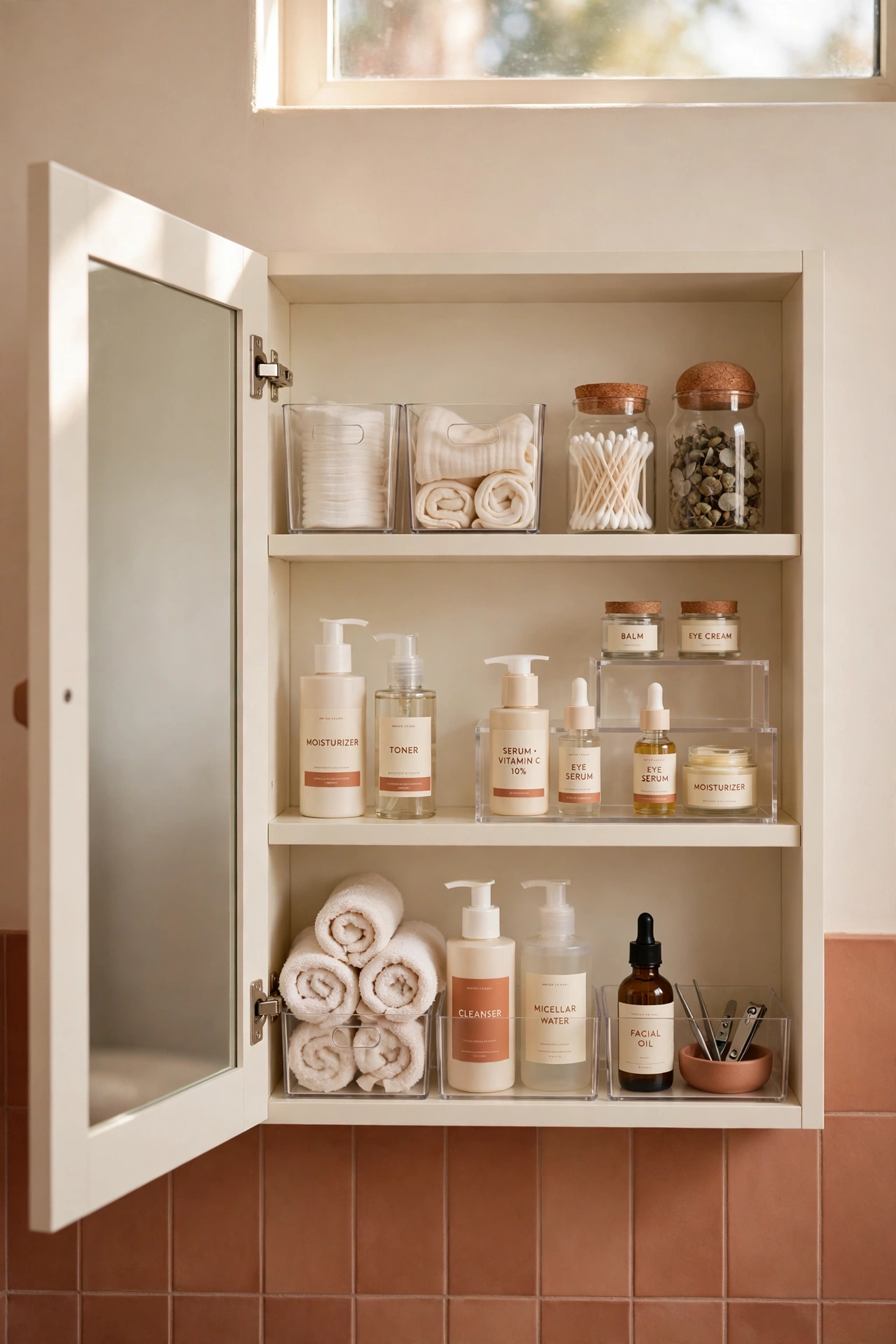
The medicine cabinet is the smallest storage in the bathroom and somehow the most chaotic: bottles toppling like dominoes, a plaster from 2018, three open toothpastes and medicines you can’t read the date on. It’s also the cabinet you open half-asleep every morning. These 15 medicine cabinet organisation ideas work on a budget and turn that daily avalanche into a cabinet where everything is visible, findable and in date.
1. Empty It, Sort It, Check the Dates
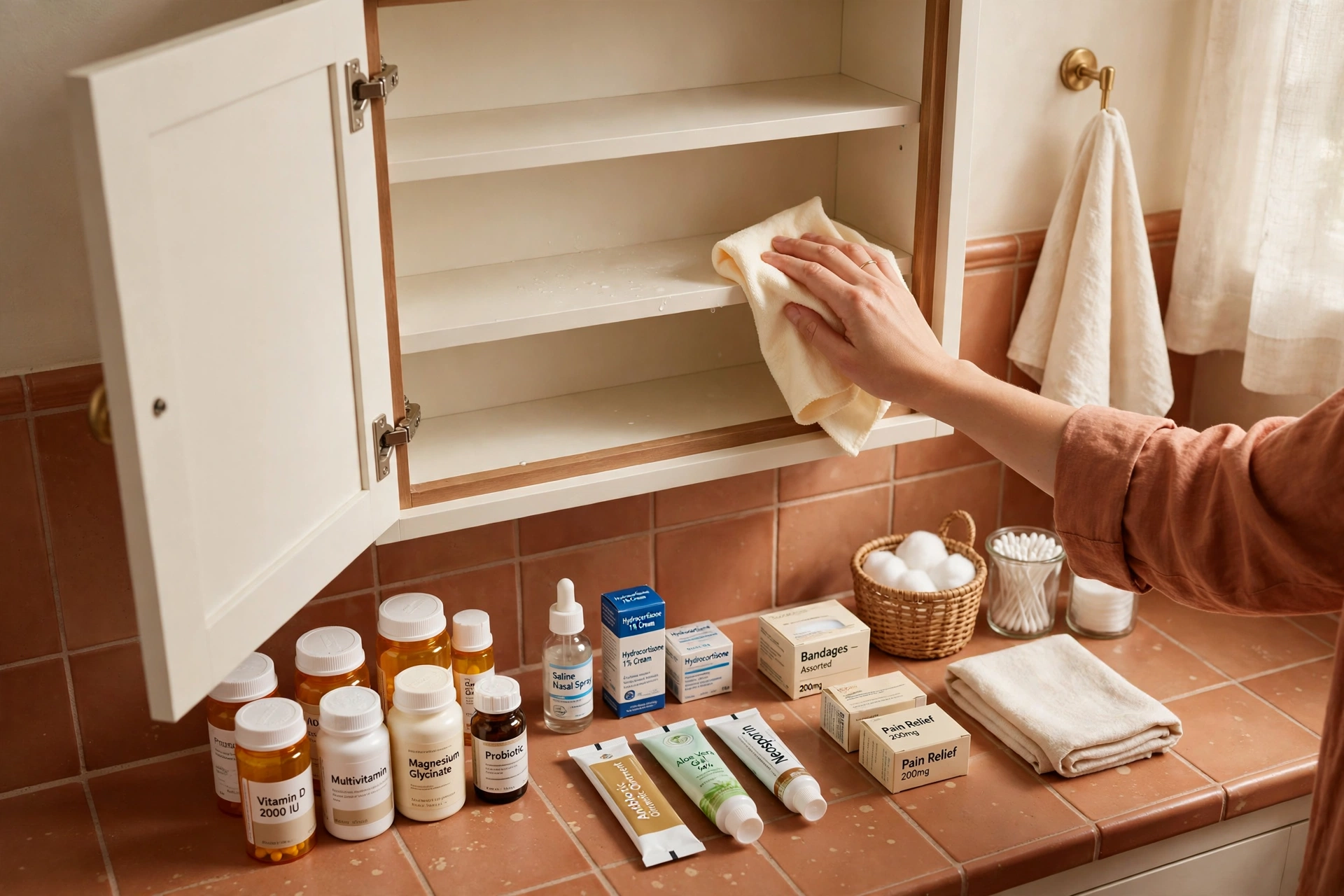
Start completely empty — a medicine cabinet is small enough that this takes ten minutes. Wipe the shelves, sort everything into piles (daily, first aid, medicines, spares), and check every expiry date as you go. Most cabinets are a quarter expired products and duplicates by volume; that space comes back before you organise a thing.
2. Slim Clear Bins for Narrow Shelves
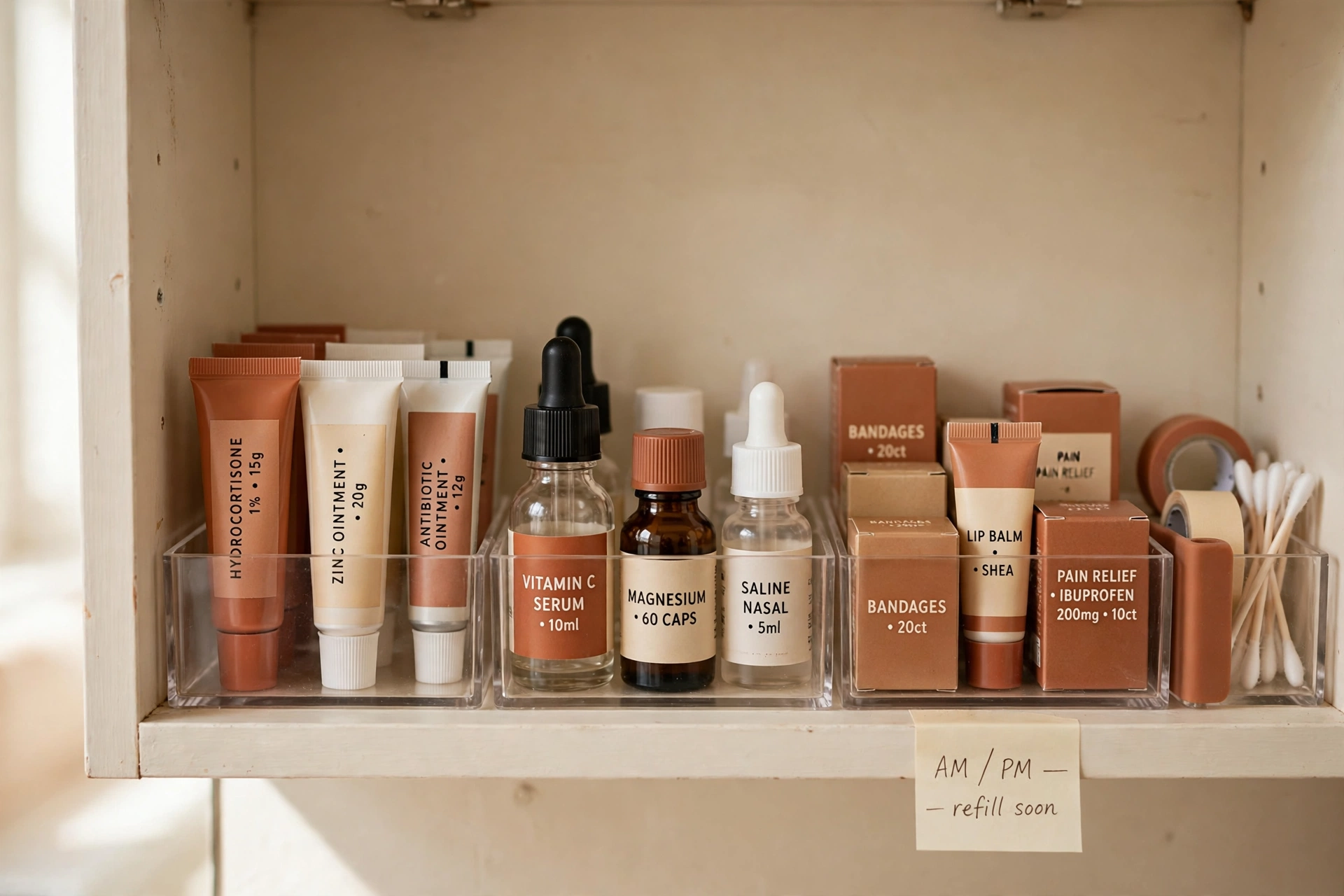
Medicine cabinet shelves are shallow, so standard organisers don’t fit. Slim clear bins made for narrow shelves keep bottles upright and grouped — skincare in one, dental in another — and because they’re clear, nothing hides behind anything else. Measure your shelf depth before buying; it’s usually shallower than you think.
3. Use the Inside of the Door
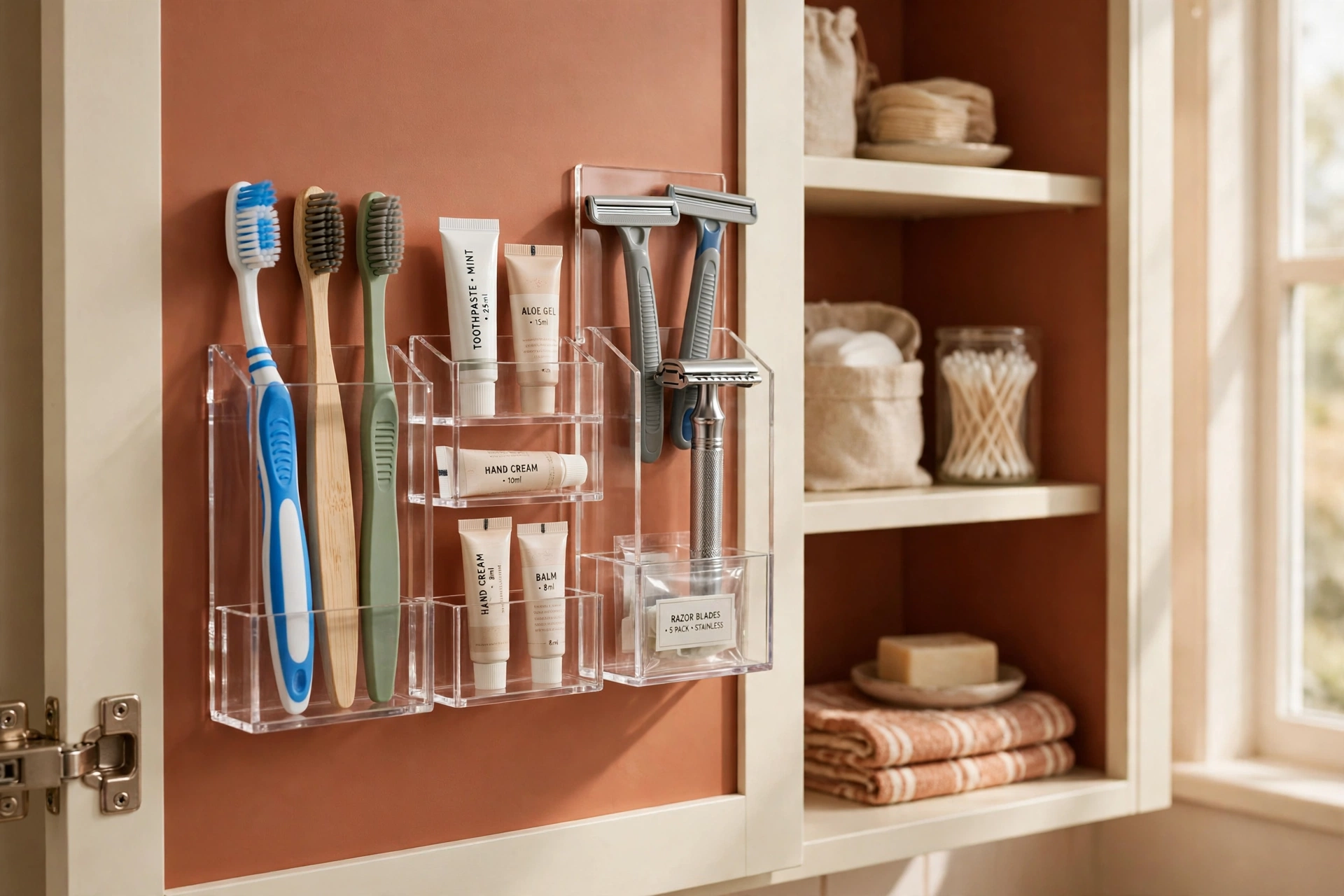
The inside of the cabinet door is a whole extra shelf you’re not using. Slim adhesive racks or clear pockets hold toothbrushes, razors, tweezers and small tubes — the fiddly things that clutter shelves. Just check the clearance so the door still closes over your tallest shelf items.
4. Tiered Risers So You See the Back Row
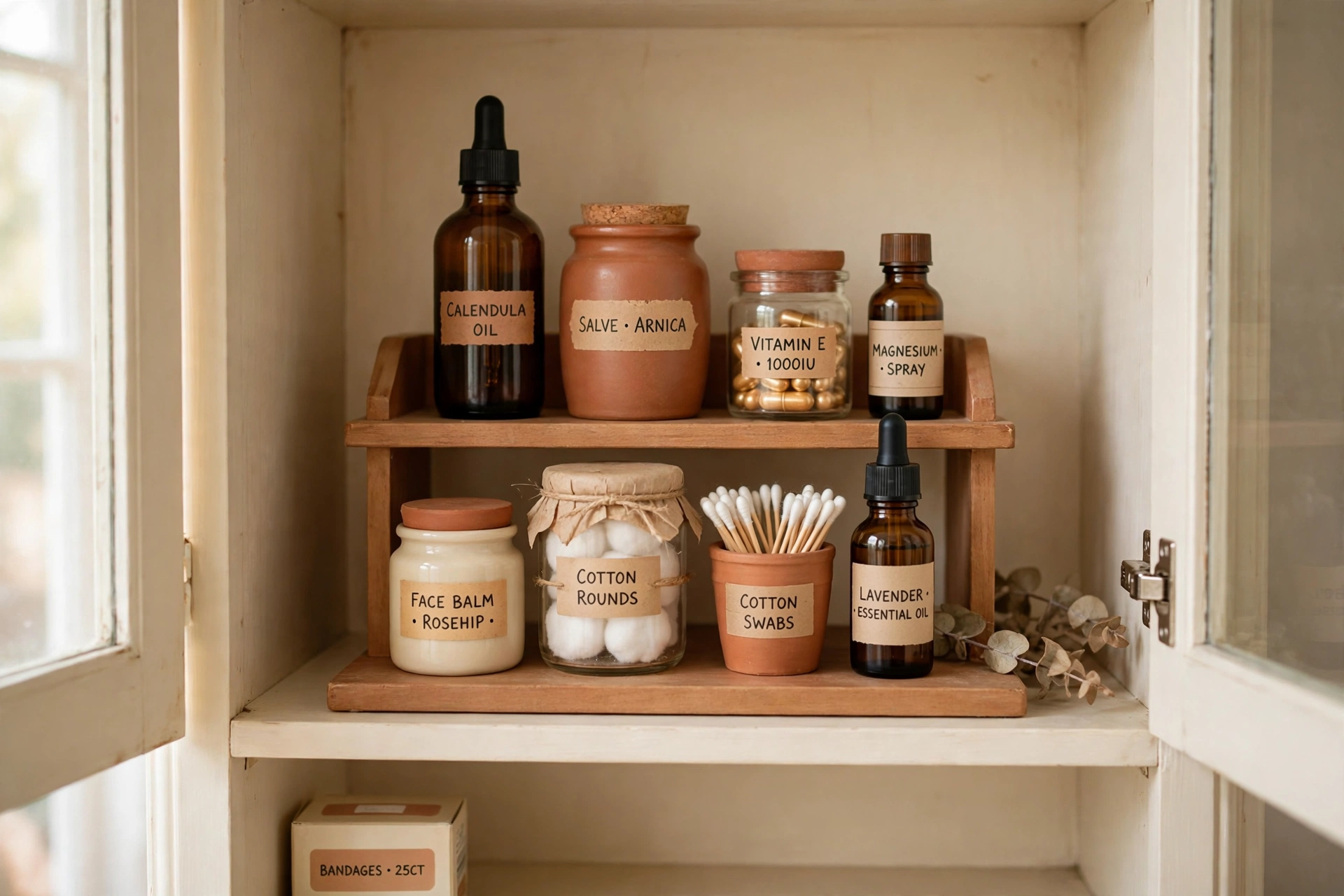
On a flat shelf, the back row is invisible — so you buy duplicates of things you already own. A small tiered riser lifts the back row above the front, stadium-style, and suddenly every label faces you. It’s the cheapest fix for the “I didn’t know we had this” problem.
5. A Magnetic Strip for Metal Bits
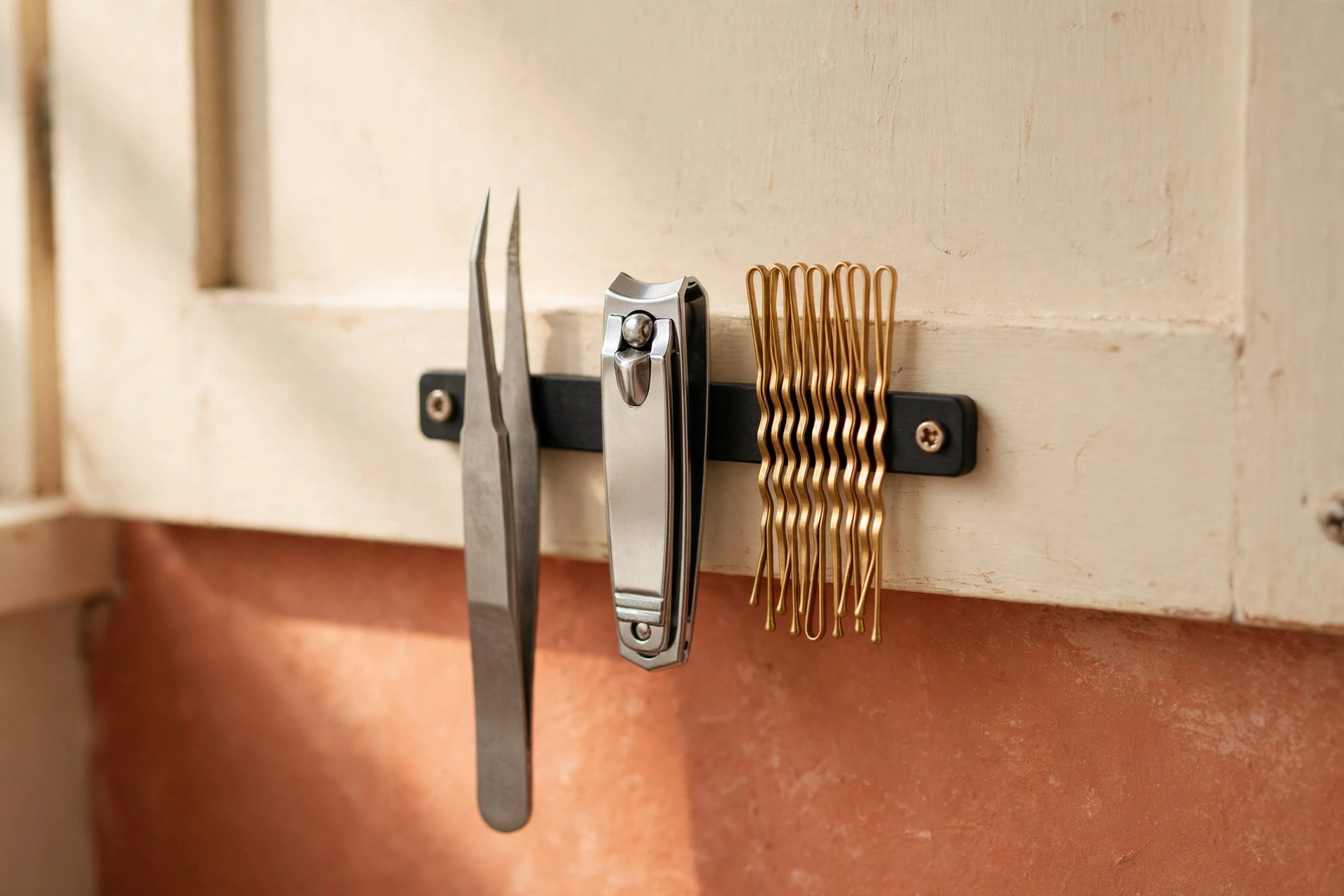
Tweezers, nail clippers and bobby pins vanish into every cabinet corner. A small self-adhesive magnetic strip inside the door or on a shelf edge keeps them in one visible row — grabbable in a second, impossible to lose. Thirty seconds to install, years of not hunting for tweezers.
6. Decant Into Small Matching Jars
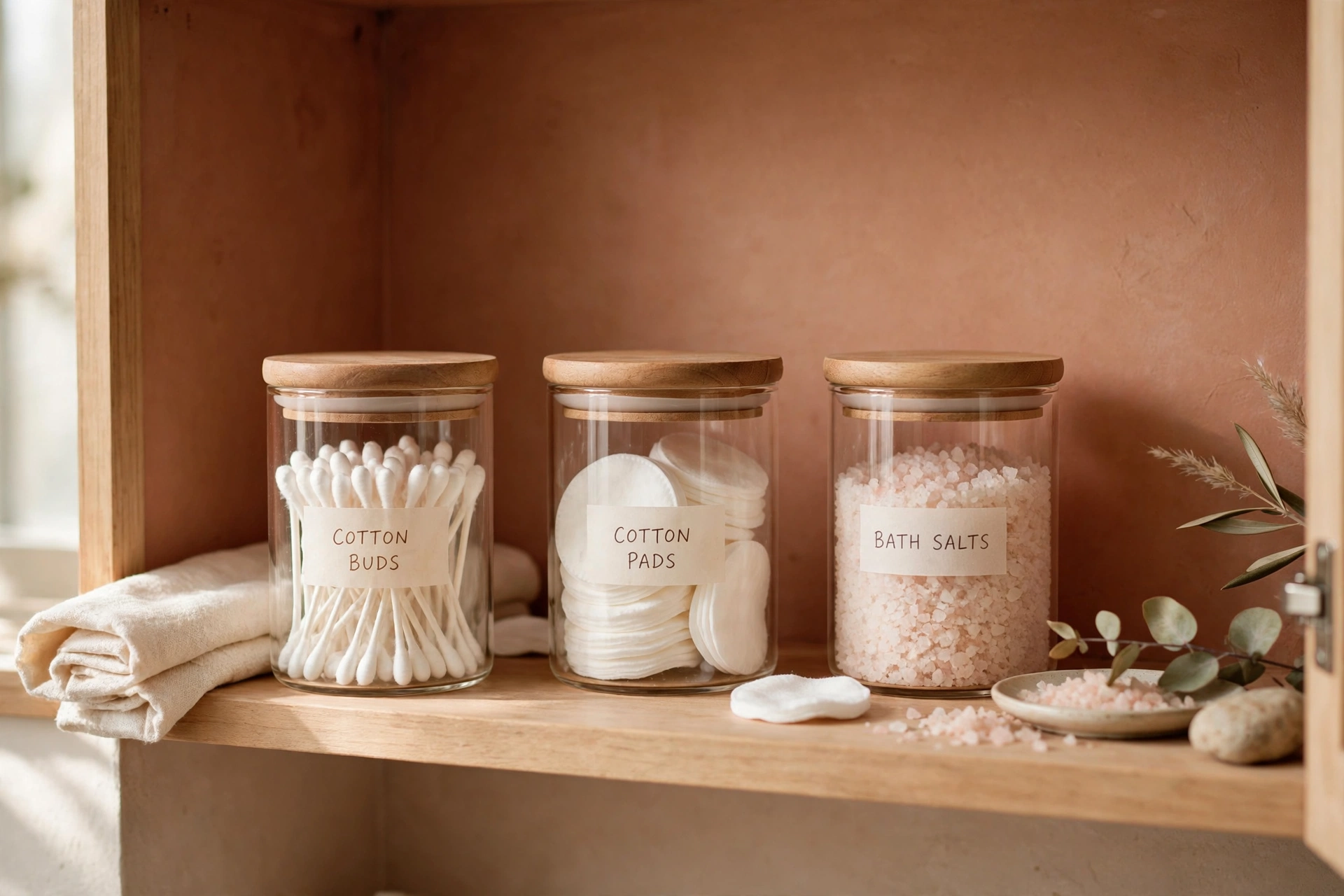
Cotton buds, pads and bath salts arrive in bulky, mismatched packaging that eats shelf space. Decanting them into small matching jars makes the cabinet look calm and intentional — and uniform jars line up neatly where random boxes never did. Keep the big refill packs somewhere else.
7. Zone It by Person
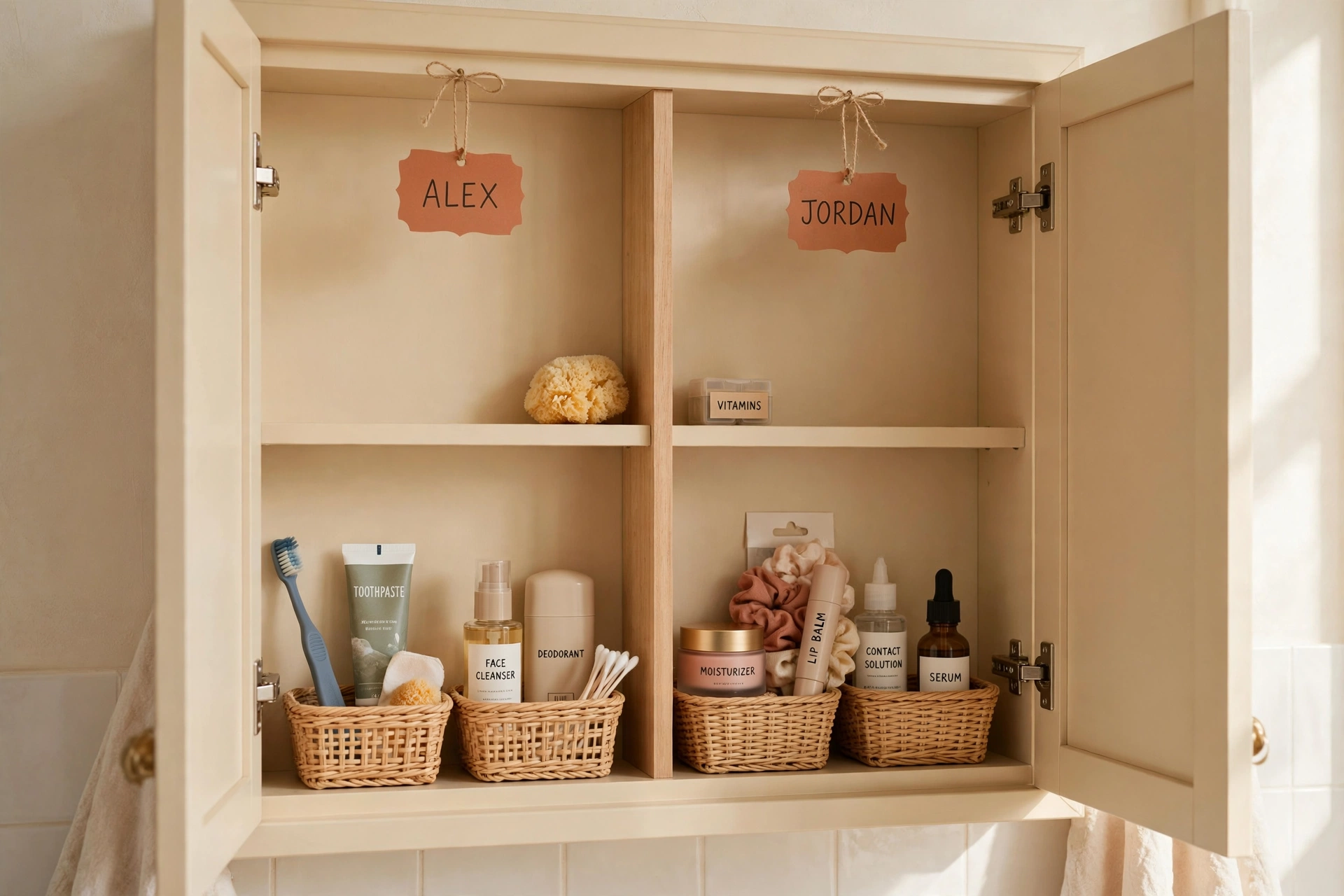
In a shared bathroom, one mixed cabinet means everyone’s stuff migrates everywhere. Give each person their own shelf or labelled basket zone. When every item has an owner and a home, things get put back correctly without a word being said — the cabinet organises itself.
8. Daily at the Front, Spares Behind
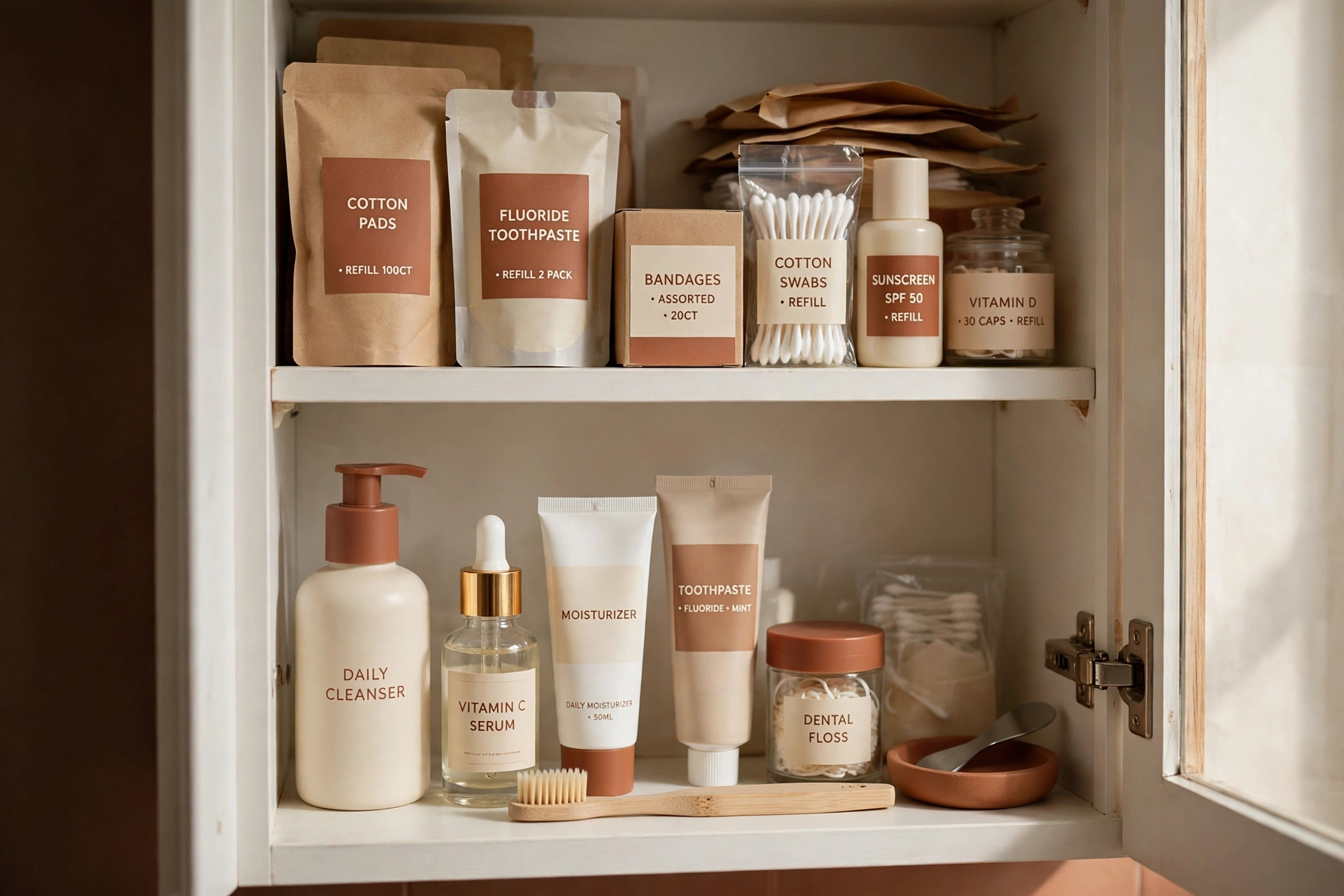
Arrange by how often you reach for things: daily essentials front and centre at eye level, weekly items behind them, and rare things on the top shelf. It sounds obvious, yet most cabinets are arranged by “where it landed”. Frequency-based placement makes rushed mornings noticeably smoother.
9. A Lockable Box for Medicines
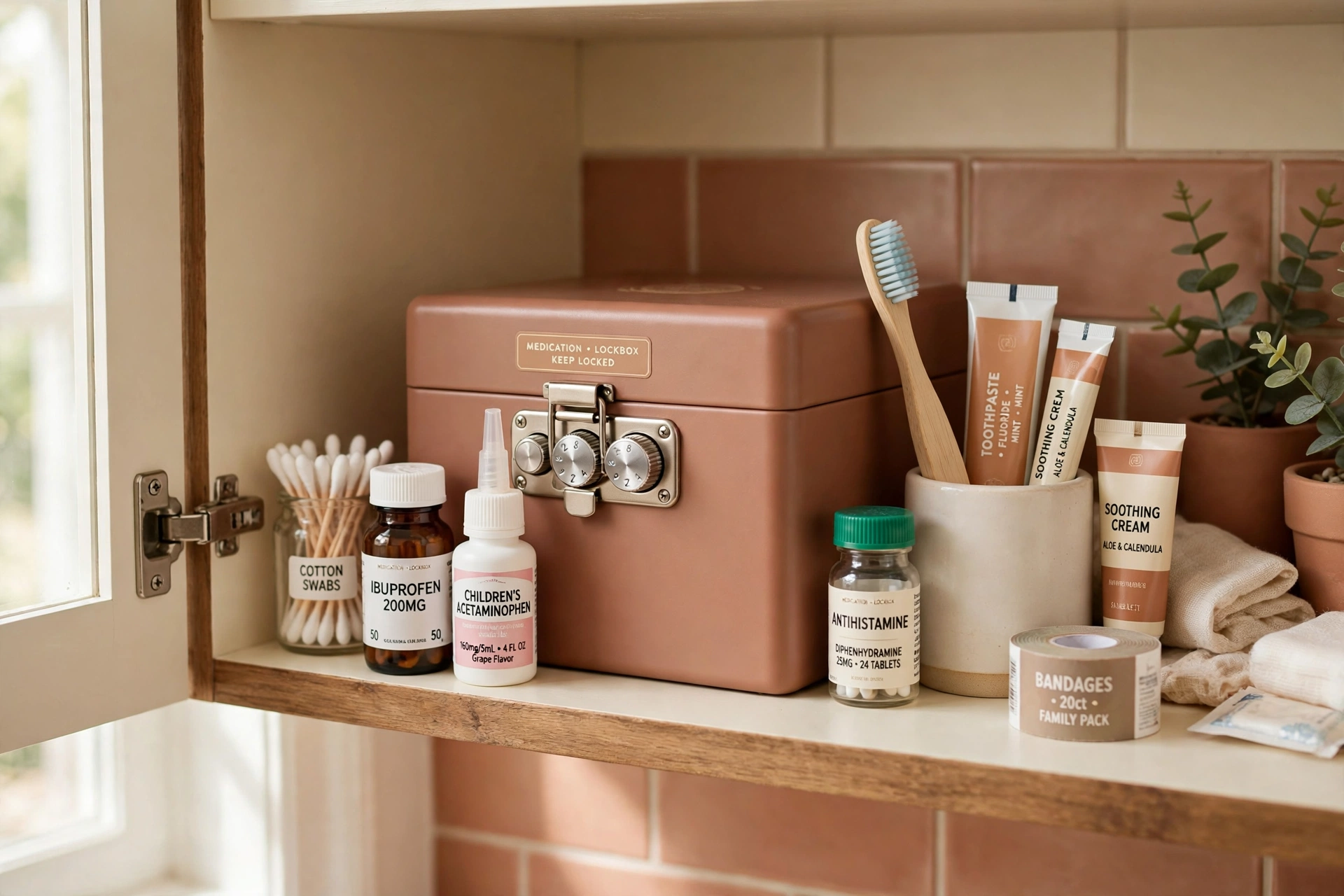
If children visit or live in your home, medicines loose on a shelf are a risk not worth taking. A small lockable box that fits inside the cabinet keeps medicines together, portable and safely out of reach — and as a bonus, it stops bottles spreading across every shelf.
10. A First-Aid Box That Actually Fits
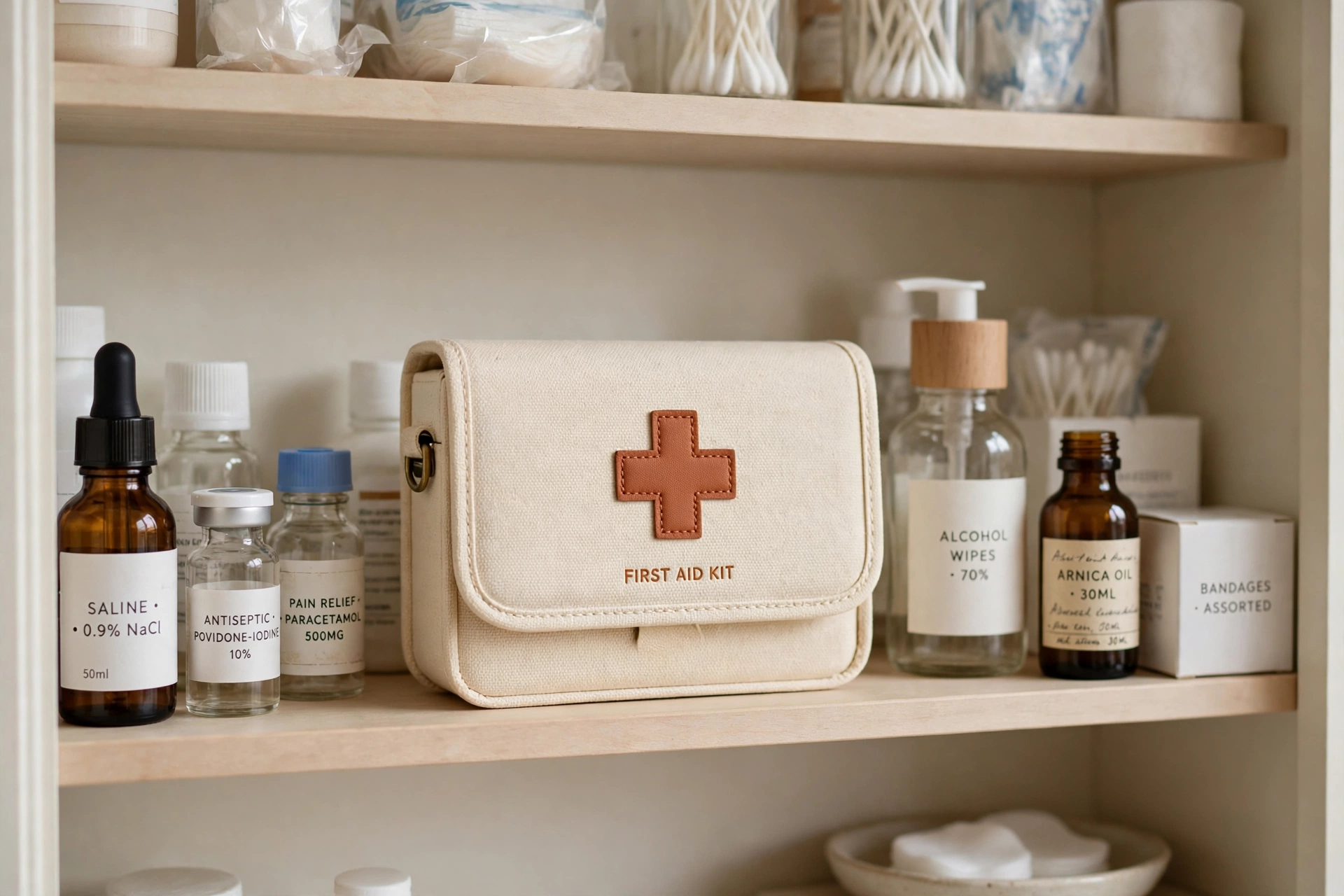
Plasters, antiseptic and bandages deserve one dedicated box sized to your cabinet shelf — not a shoebox that lives somewhere else entirely. When first aid has a home in the cabinet, you can find it in the dark, in a hurry, with a throbbing finger. Restock it whenever you use the last of anything.
11. A Mini Lazy Susan
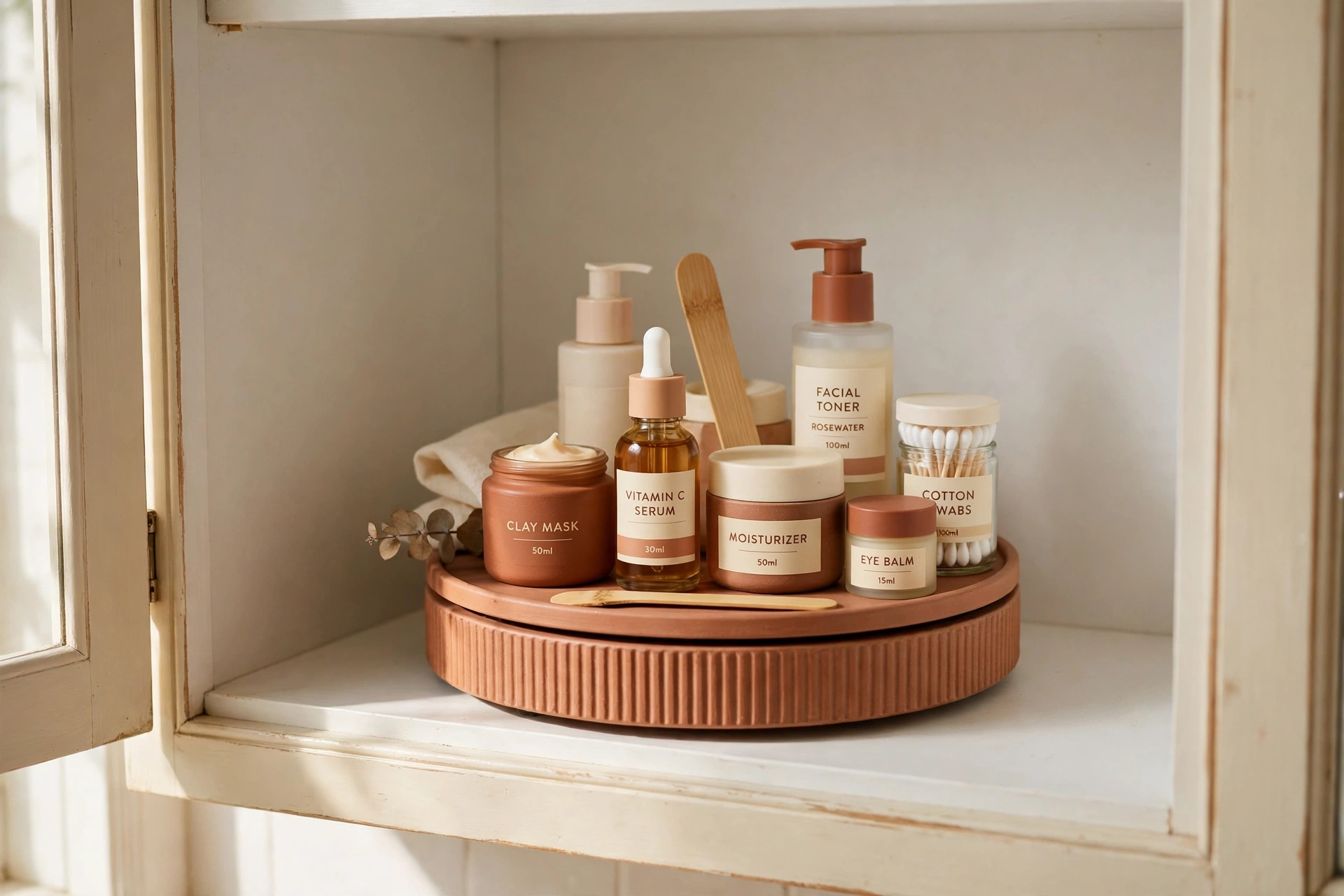
Small turntables made for cabinet shelves spin everything to the front — skincare, vitamins, jars — with one flick. In a shallow medicine cabinet, a mini lazy Susan on one shelf ends the knock-three-bottles-over routine for good. Measure the shelf depth first; minis come in sizes down to 15cm.
12. Stackable Shelf Inserts

Cabinet shelves are spaced for tall bottles, wasting the air above short jars. Small stackable shelf inserts add a mezzanine level inside the cabinet — jars below, small bottles above. It’s the same trick as risers, but enclosed inserts suit tiny items that roll.
13. Daily Items Only — Spares Live Elsewhere
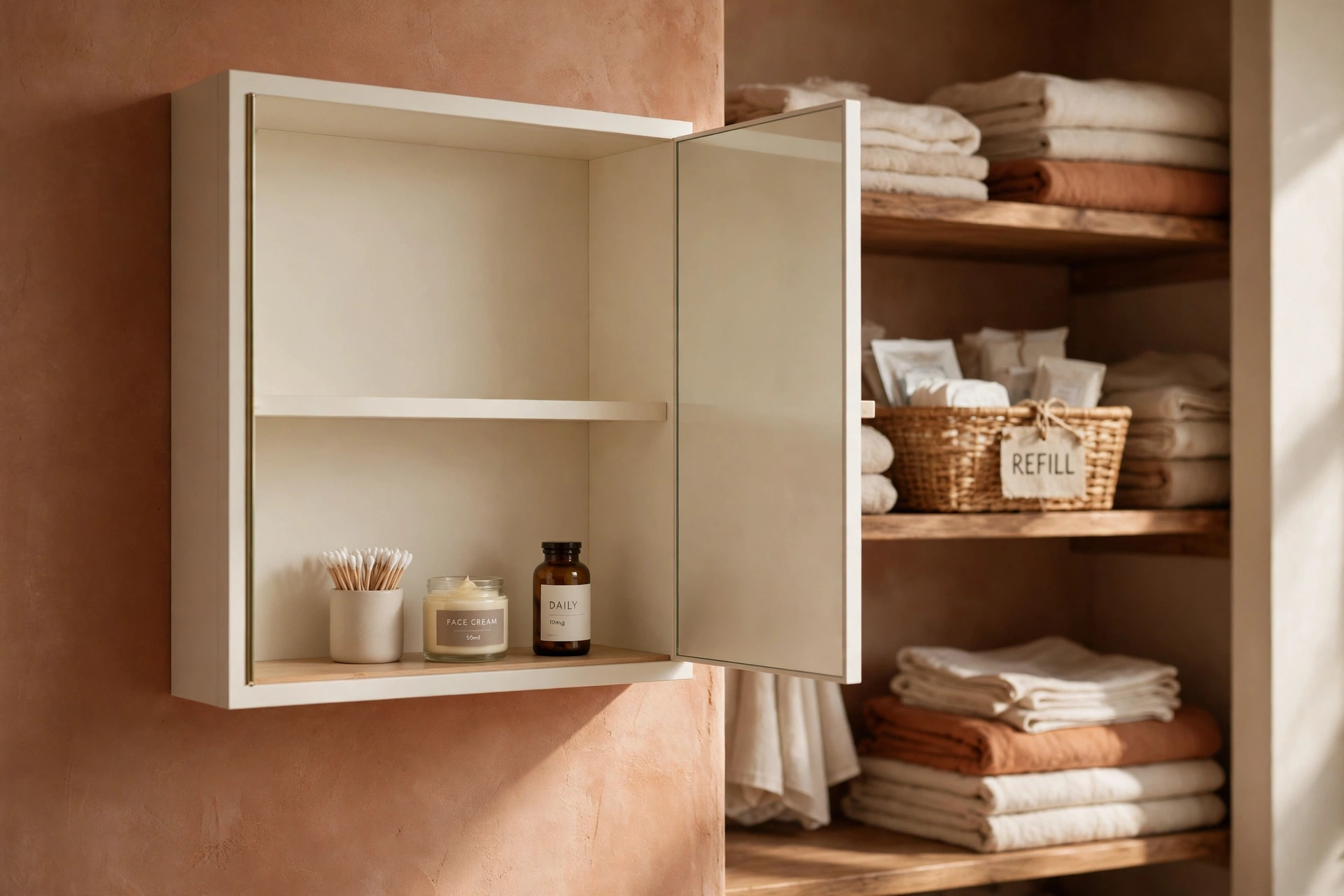
The strictest — and most effective — rule on this list: the medicine cabinet holds only what you use daily plus first aid. Bulk refills, spare toothbrushes and backup bottles move to a labelled basket in the linen closet. A cabinet with breathing room stays organised almost by itself.
14. Waterproof Liners for Drips and Spills

Medicine cabinets live on drips: wet toothbrushes, leaking bottles, damp jars. A wipeable waterproof liner on each shelf protects the cabinet, stops bottles sliding, and lifts out for a rinse when something inevitably spills. Cut it to size once and forget about it.
15. The Monthly Expiry Sweep
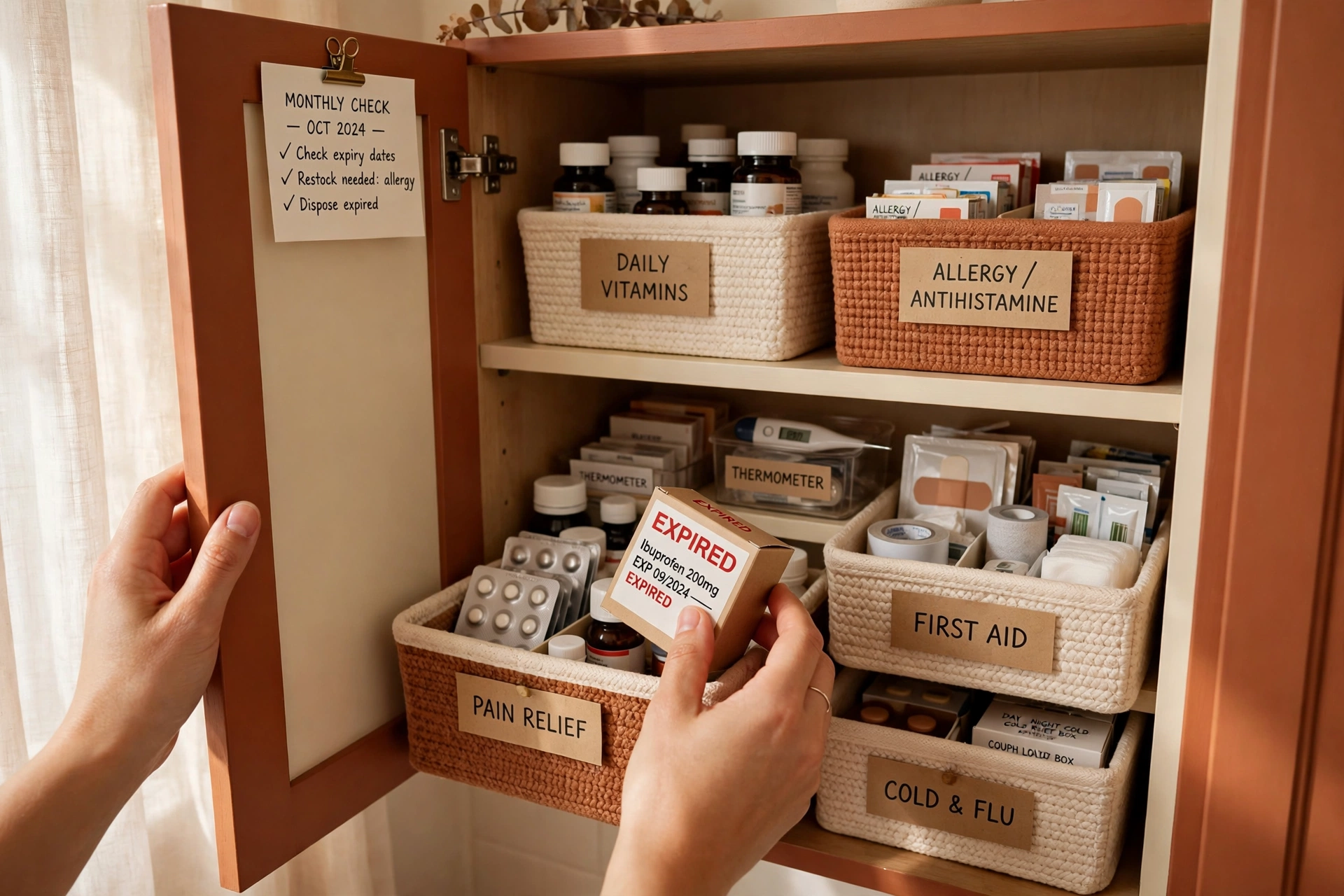
Cabinets re-clutter silently because nothing ever leaves. Once a month, spend three minutes sweeping: bin the expired, finish or relocate the duplicates, and apply one-in-one-out to anything new. Three minutes monthly beats a full chaotic reset twice a year — and your medicines stay in date.
Medicine Cabinet Organisation FAQs
How do I organise a small medicine cabinet?
Use every surface: slim bins on the shelves, racks or a magnetic strip inside the door, and tiered risers so the back row stays visible. Keep only daily items and first aid inside, and move bulk refills to a basket in a closet.
What should not be stored in a medicine cabinet?
Bulk spares and refills take up space daily items need, and medicines that must stay cool and dry are actually better in a bedroom drawer, since bathroom humidity and heat can shorten their life. Always check the label, and keep medicines locked away if children are in the home.
How do I childproof a medicine cabinet?
Store medicines in a lockable box inside the cabinet, keep the cabinet itself latched if it has one, and never leave medicines on the counter. A high shelf alone is not enough for determined climbers — the lock is what makes it safe.
How often should I check medicine expiry dates?
A quick sweep once a month while you tidy is plenty. Expired medicines lose strength and plasters lose their stick, so the monthly check keeps the cabinet safe, current and noticeably less crowded.
Final Thoughts
The medicine cabinet is small, which is exactly why it responds so well to a system: slim bins, a riser, door racks and a monthly three-minute sweep turn the morning avalanche into calm. If you enjoyed these ideas, you’ll love our bathroom drawer organisation ideas, bathroom cabinet organisation ideas, bathroom counter organisation ideas and home organisation hacks next.