
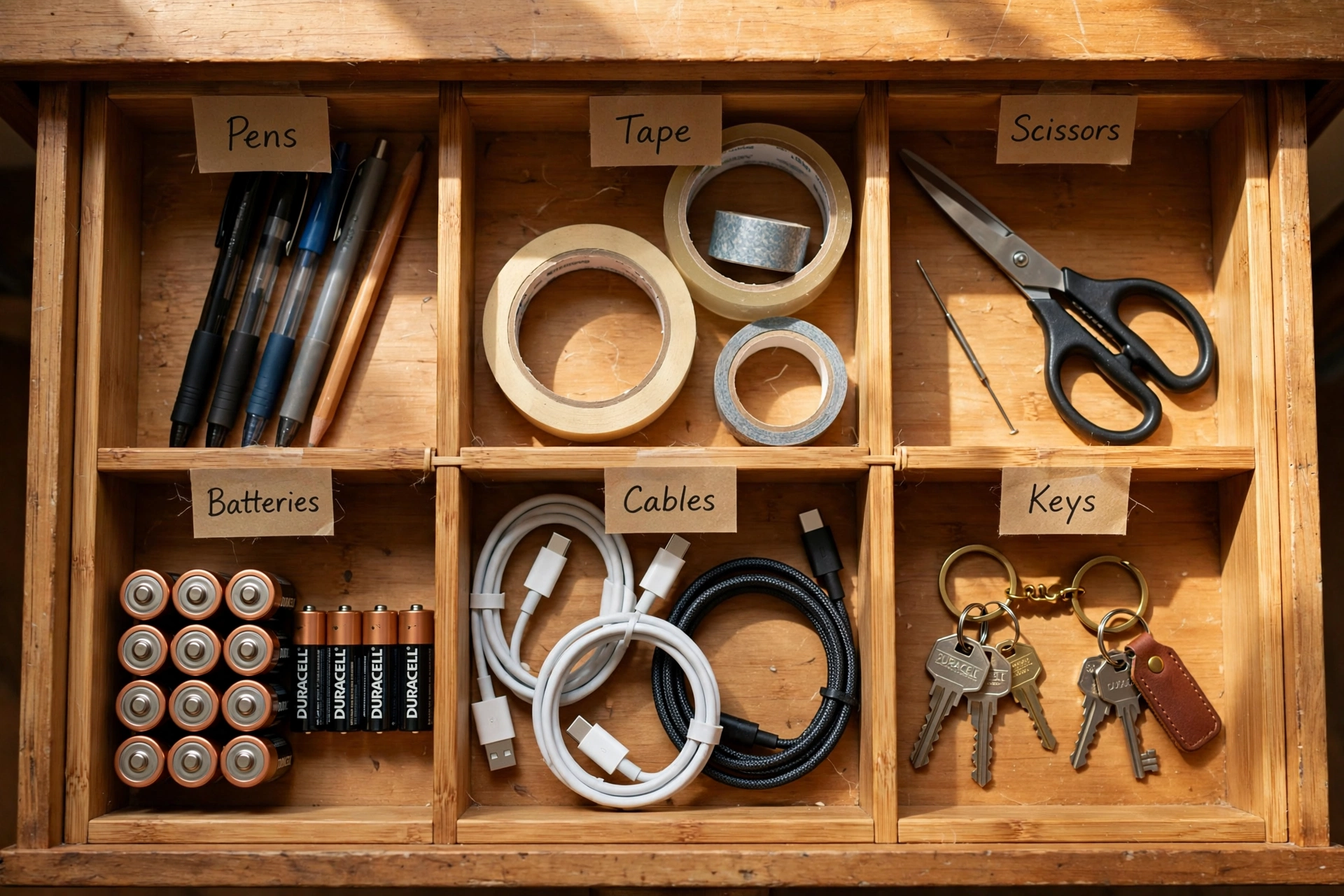
Every home has one: the drawer where batteries, old keys, rubber bands and mystery chargers go to retire. But a junk drawer doesn’t have to be a junk pile. With the right zones, dividers and a five-minute habit, it can become the most useful drawer in your home. These 15 junk drawer organisation ideas work on a budget — most cost nothing at all — and they’ll tame the chaos for good.
1. Start With a Total Empty-Out
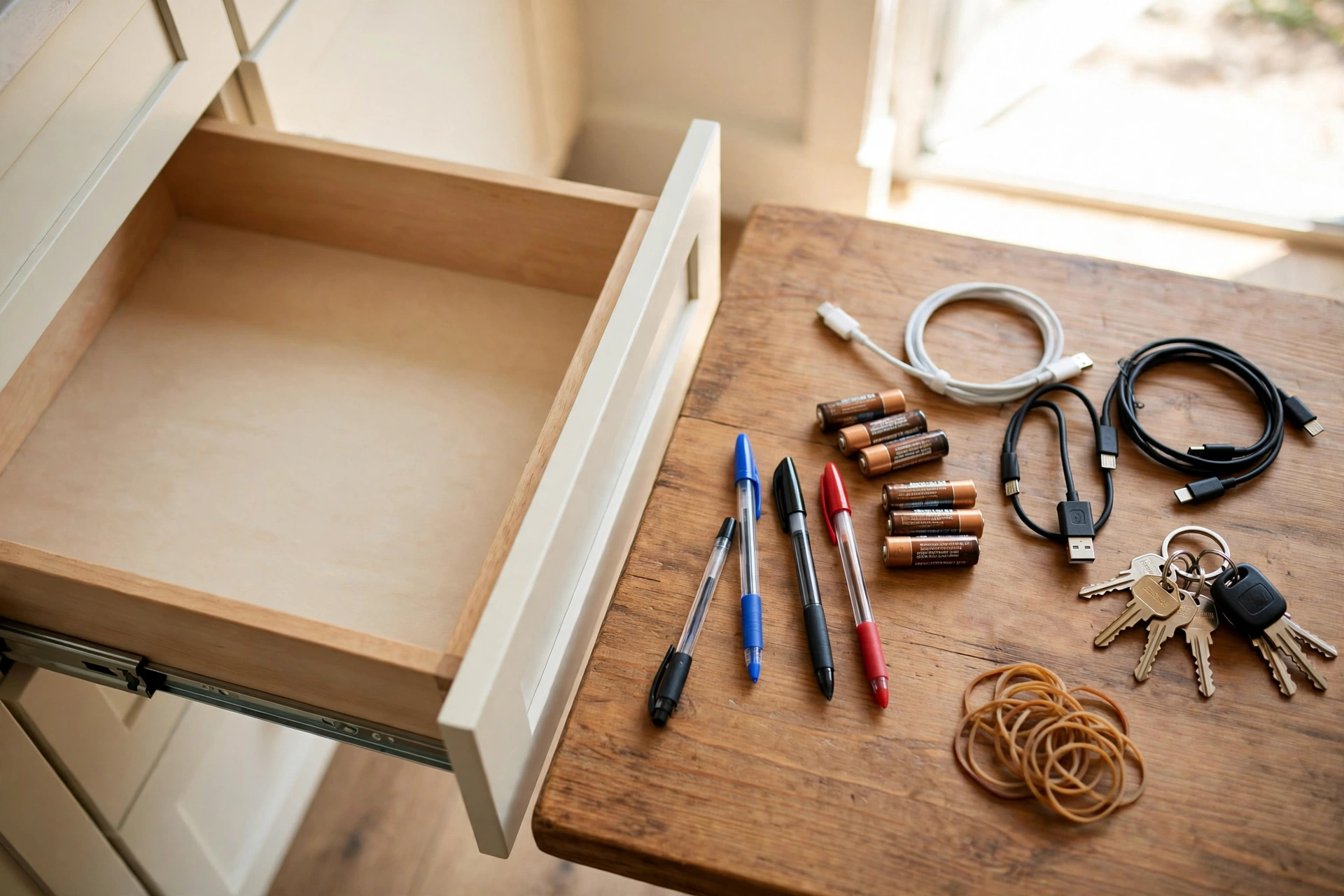
You can’t organise a mess you can’t see. Pull the drawer out, tip everything onto the table, and wipe the drawer clean. Starting from a blank canvas makes every decision that follows ten times easier — and you’ll be amazed how much is pure rubbish.
2. Sort Into Keep, Toss and Relocate
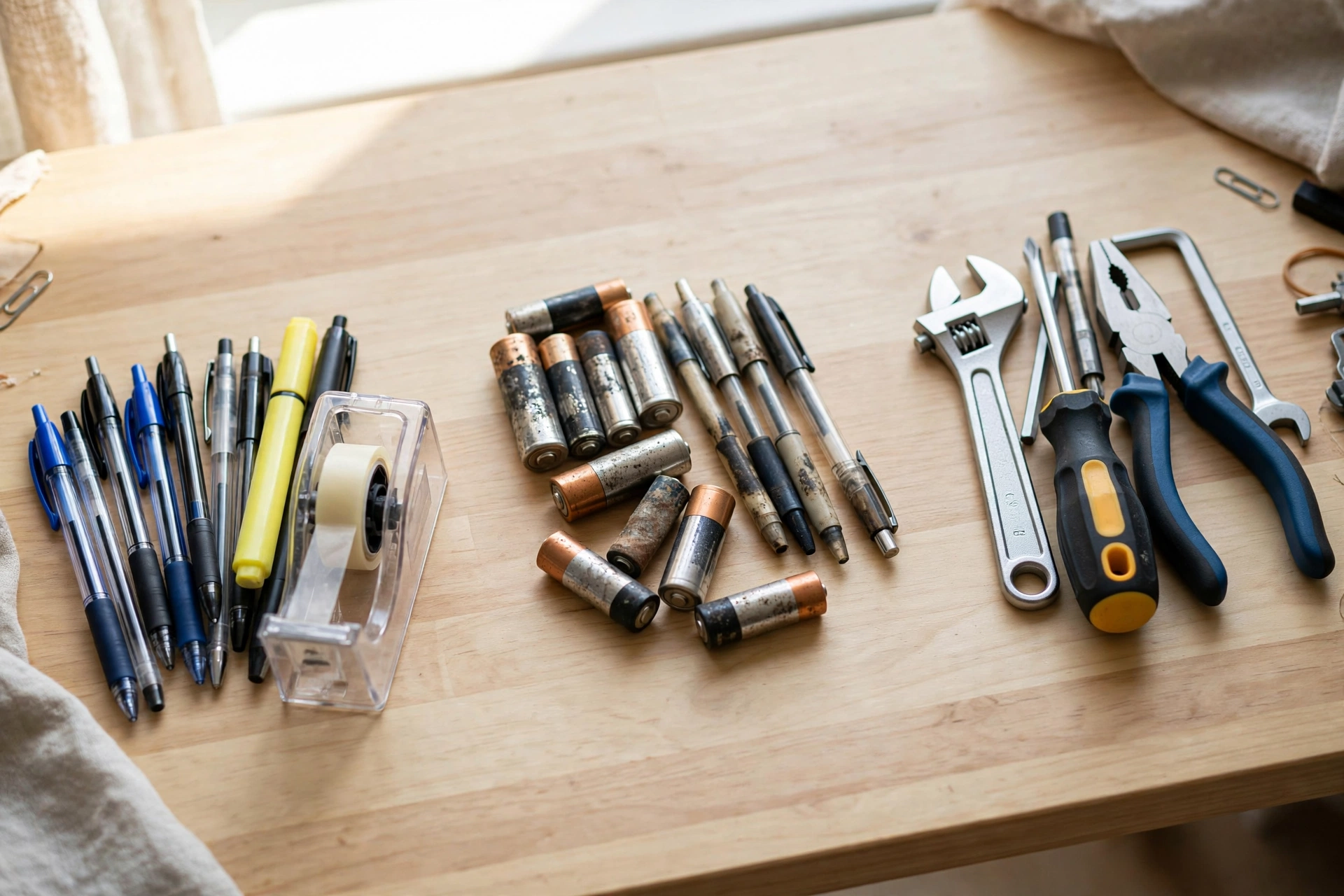
Make three piles: keep (things you actually use), toss (dried-up pens, dead batteries, expired coupons) and relocate (the screwdriver belongs in the toolbox, not here). Be ruthless — if you haven’t touched it in a year, it doesn’t earn drawer space.
3. Use the 3-Zone Method
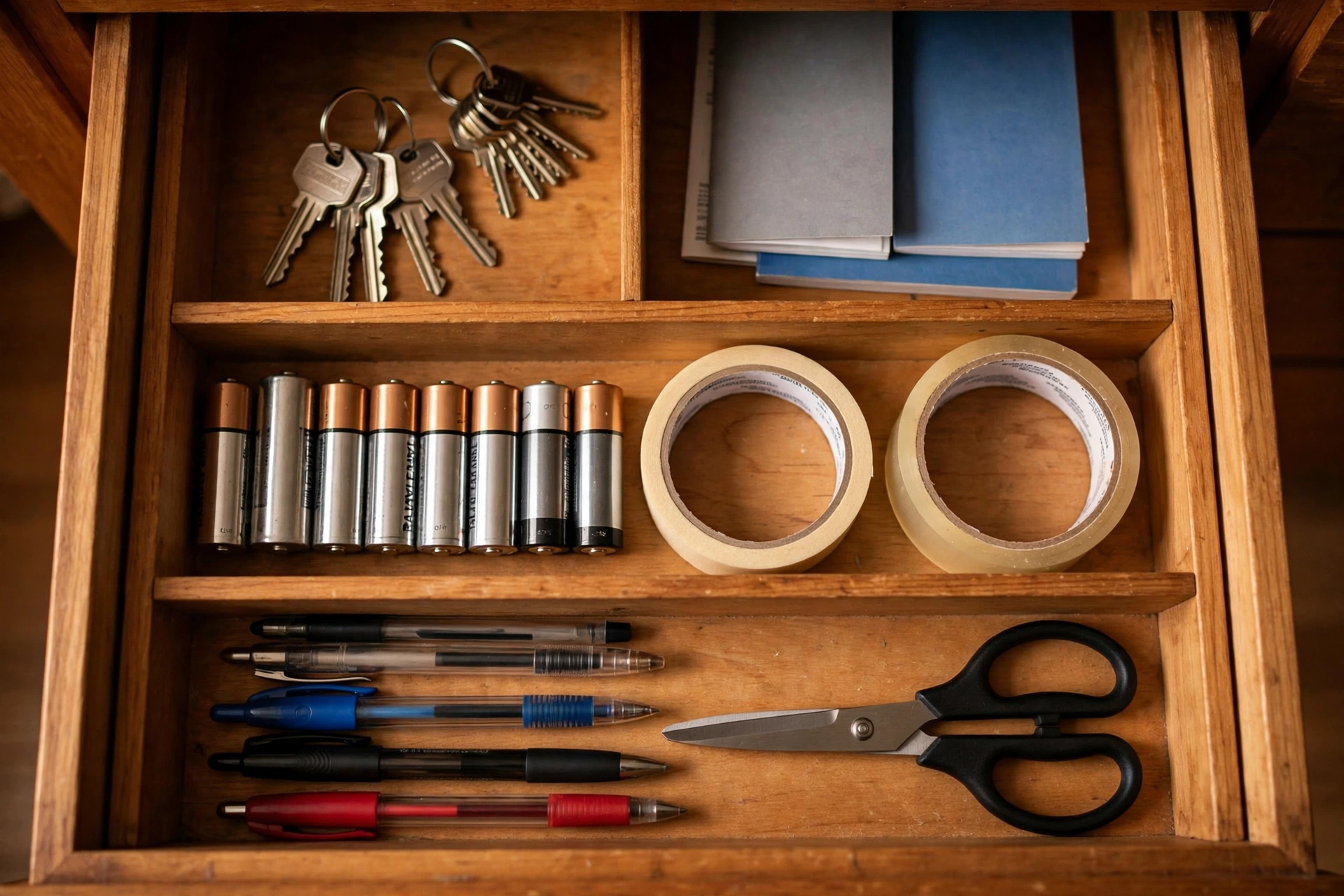
Divide the drawer into three zones: everyday (front — pens, tape, scissors), occasionally (middle — batteries, stamps, glue) and rarely (back — spare keys, instruction manuals). You reach for the front 90% of the time, so it stays tidy with zero effort.
4. Add Dividers That Fit the Drawer
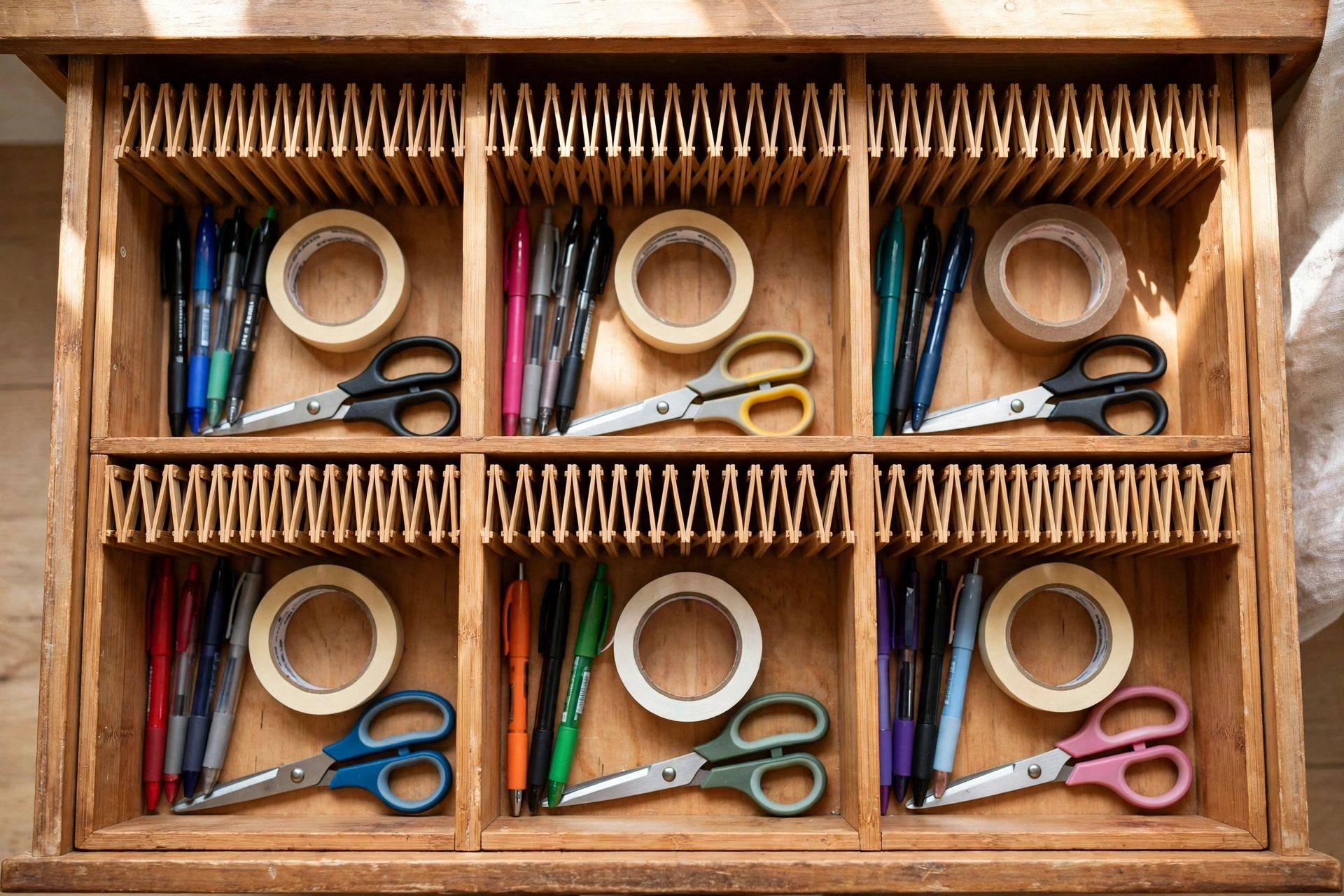
Dividers are the single biggest upgrade. Expandable bamboo dividers cost a few pounds and turn one chaotic space into six tidy compartments. Everything gets a home, and the homes don’t migrate.
5. Ice-Cube Trays for the Tiny Stuff

Paperclips, drawing pins, screws, buttons — the tiny things that vanish into the corners. An ice-cube tray gives each one its own little well. It costs almost nothing and it’s weirdly satisfying.
6. Muffin Tins as Free Compartments
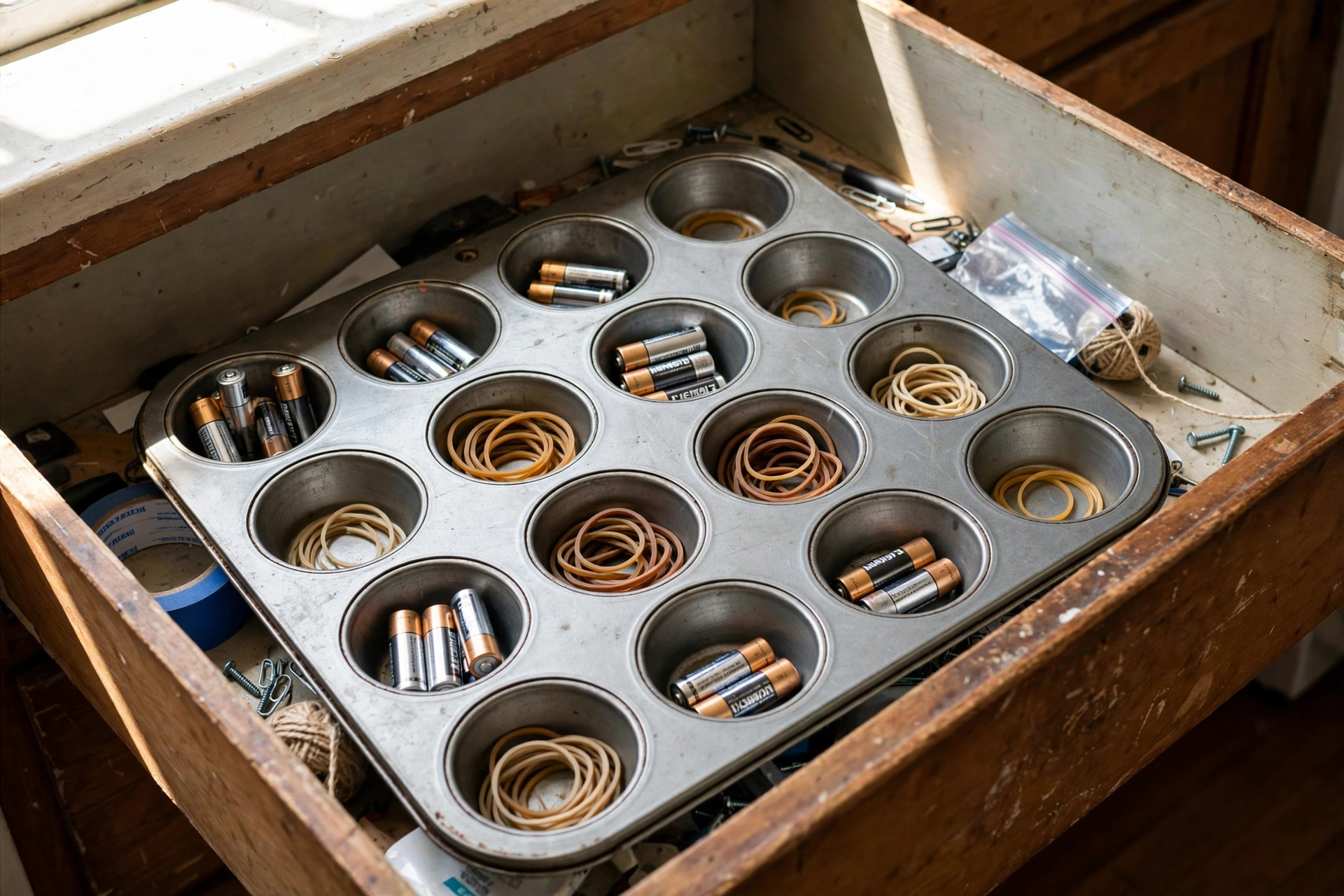
No budget at all? A muffin tin from the kitchen drawer (ironic, we know) or a cardboard egg carton makes a perfect free compartment tray. Trim it to fit, and you’ve got twelve instant sections.
7. Label Every Section
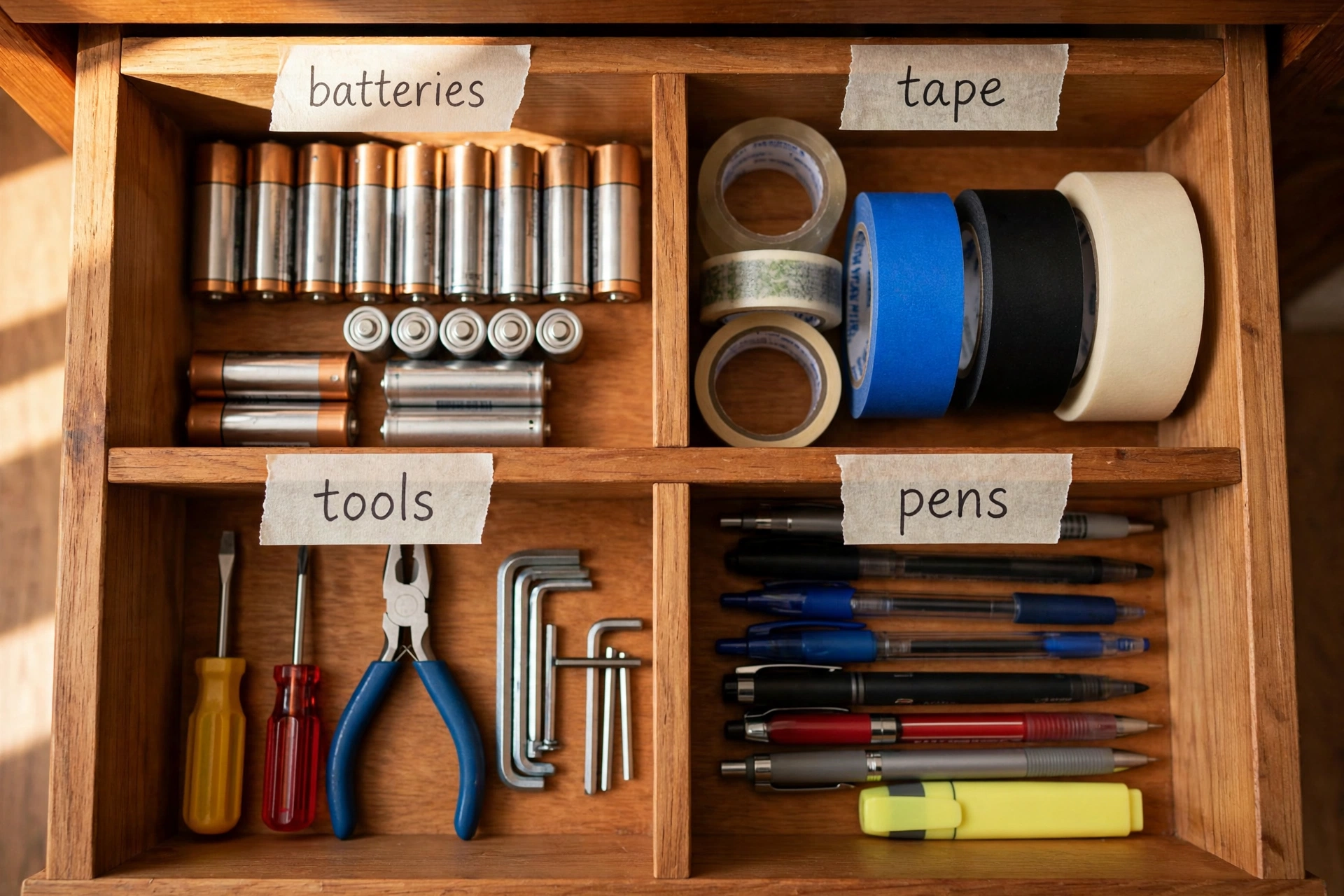
Labels turn a tidy drawer into a lasting system. A strip of masking tape and a marker is all it takes — “batteries”, “tape”, “tools”. When everything has a name, everyone puts it back in the right place.
8. Give Batteries One Home
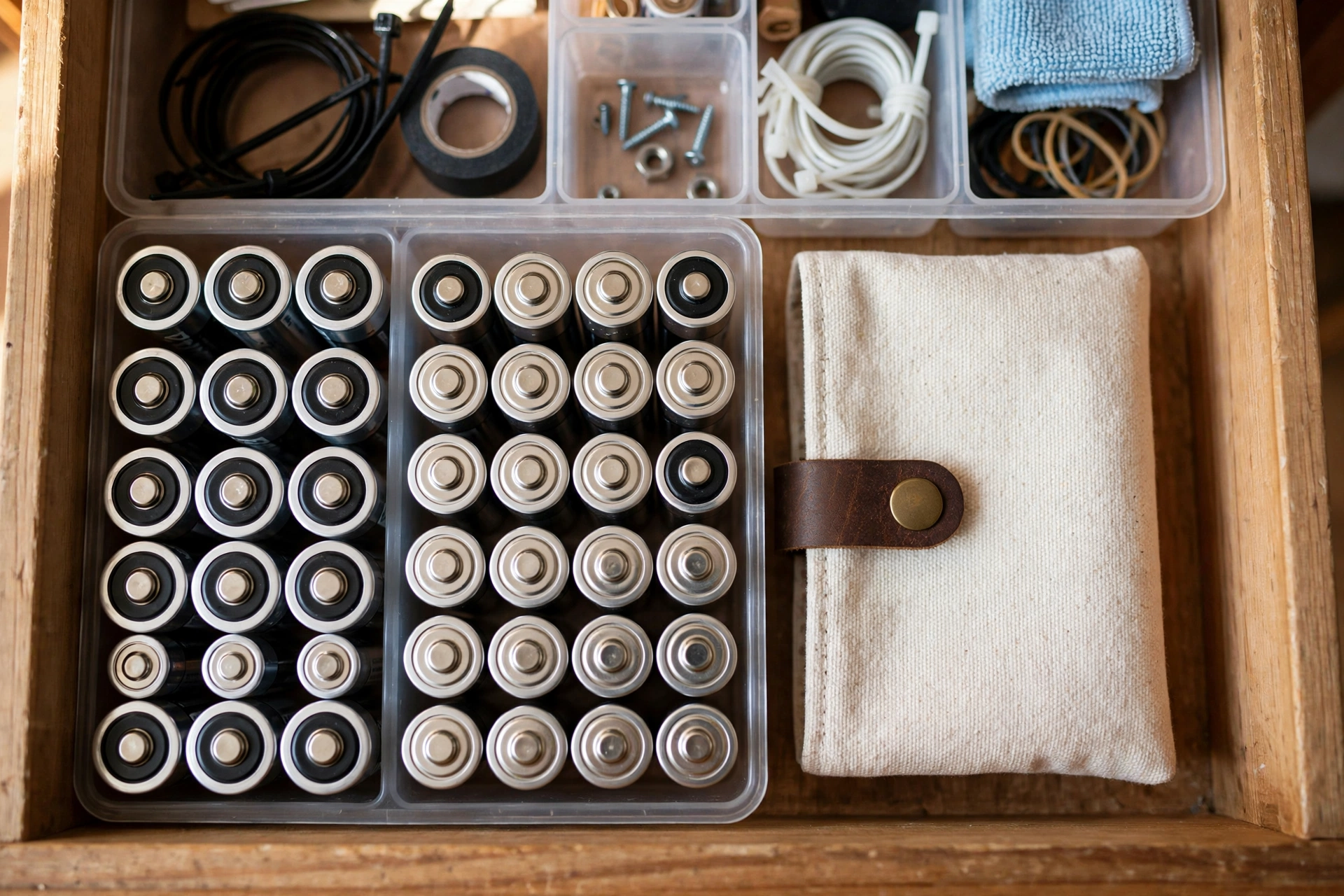
Batteries roll everywhere and you’re never sure which are dead. Keep them all in one labelled section, and add a tiny “dead” pouch so flat ones get recycled instead of mixed back in.
9. Corral the Charging Cables
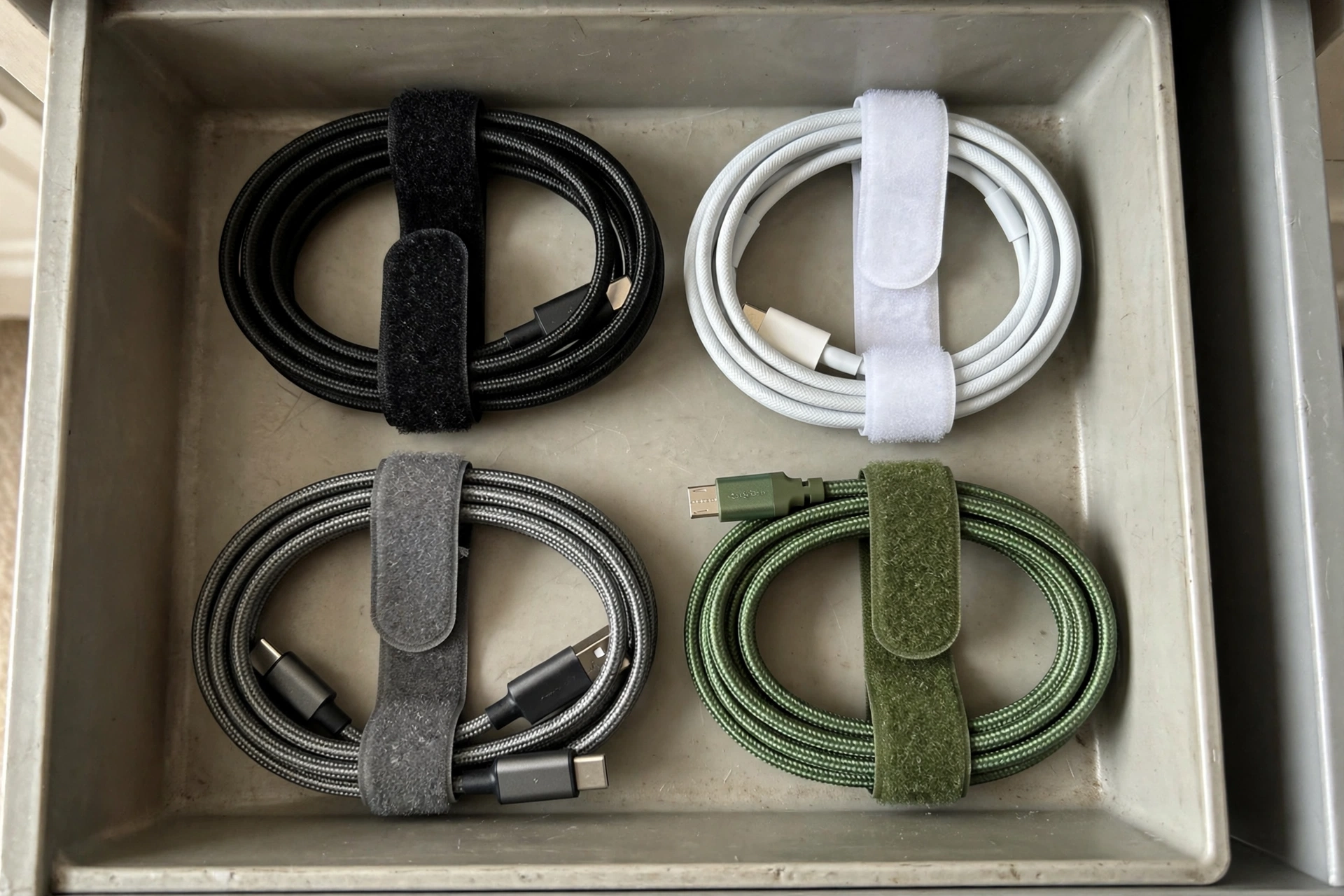
Cables are the junk drawer’s worst offender. Coil each one, secure it with a velcro tie or elastic band, and give them a single compartment. No more untangling a nest every time your phone hits 5%.
10. A Tray for Keys, Wallet and Post
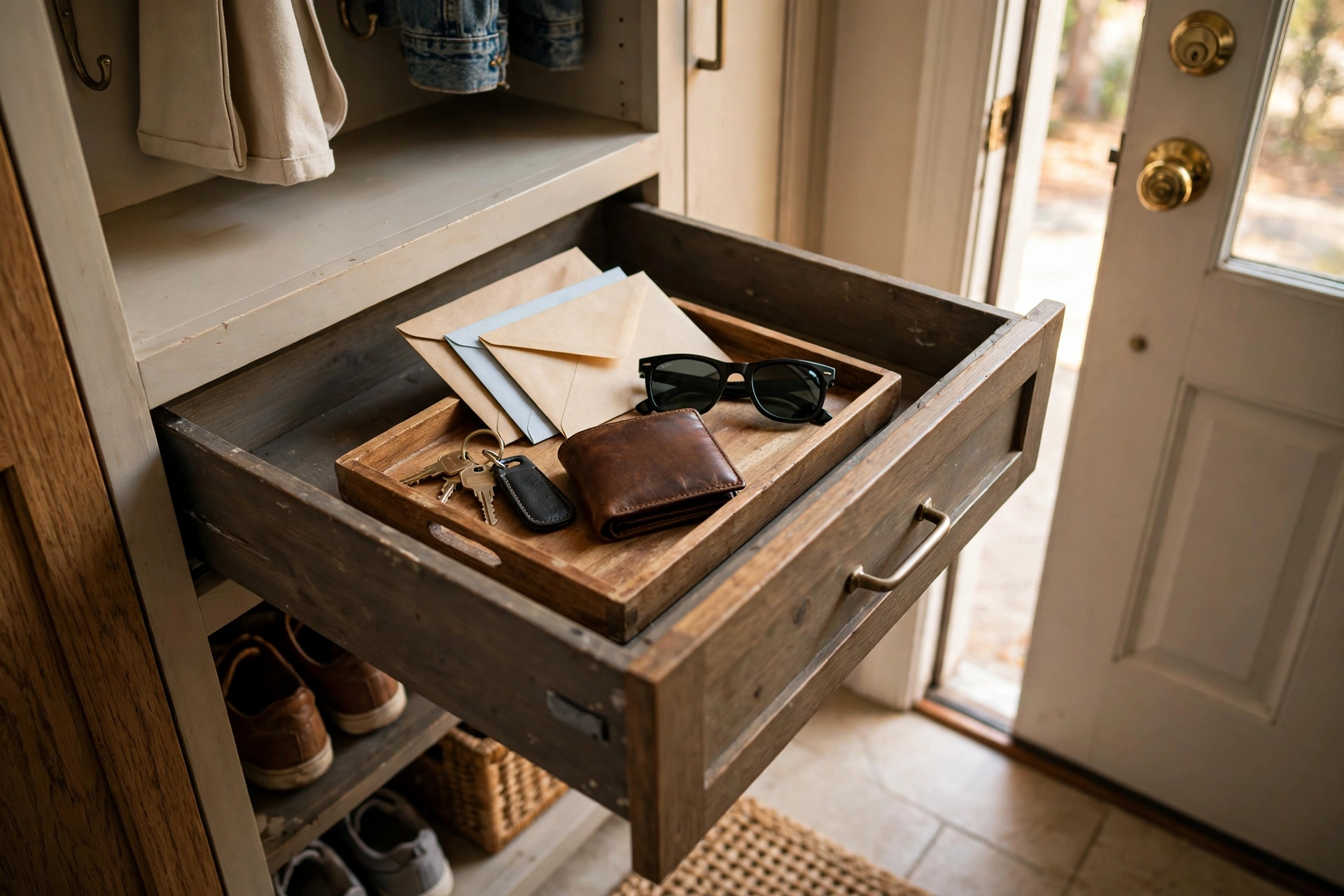
If your junk drawer is near the front door, dedicate one corner tray to the daily essentials: keys, wallet, sunglasses, today’s post. It doubles as a launch pad that gets you out of the house faster.
11. Line the Drawer So Nothing Slides
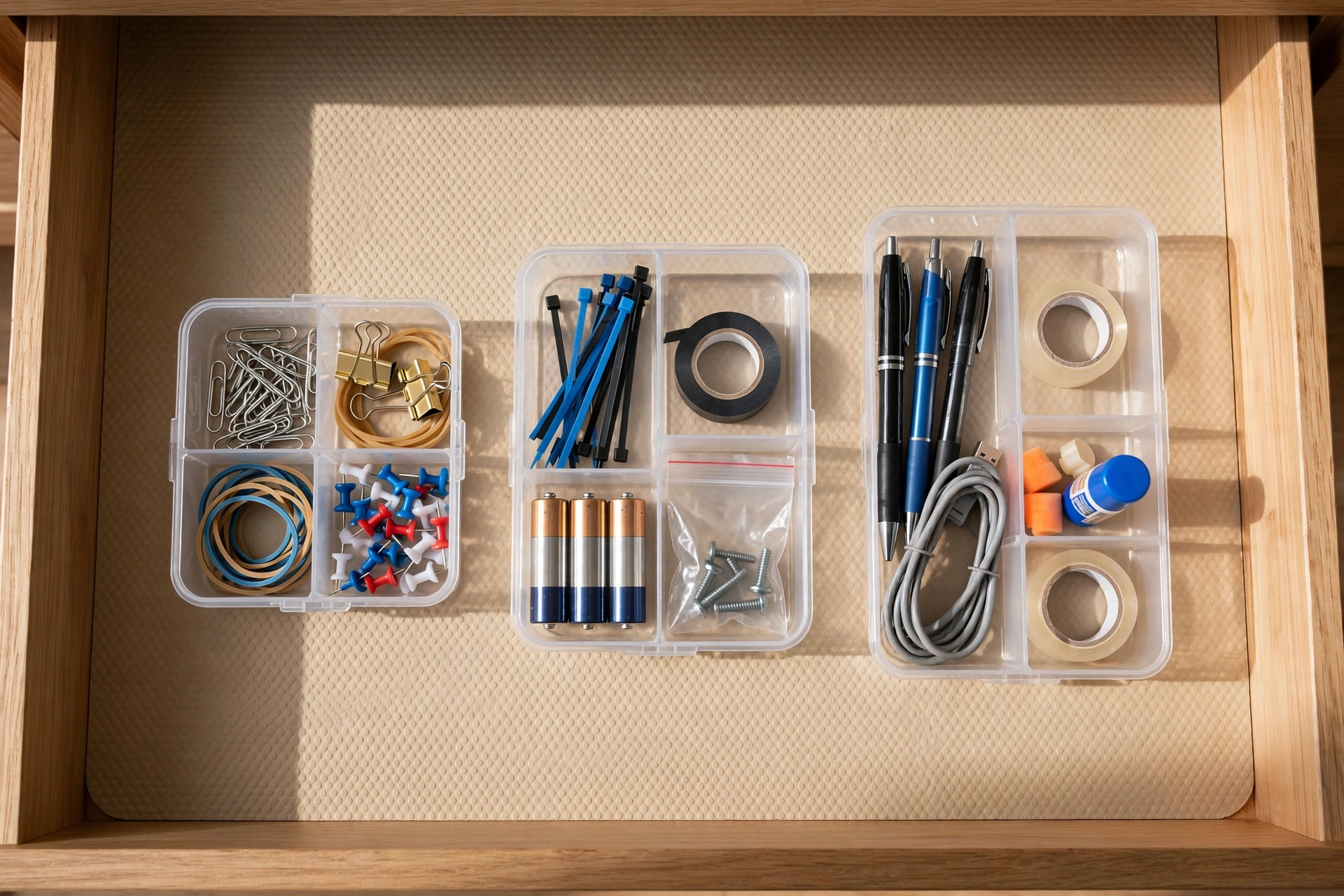
Organisers slide around every time you open the drawer, and chaos returns. A cheap non-slip shelf liner underneath keeps every tray exactly where you put it — and it protects the drawer too.
12. Ditch the Duplicates
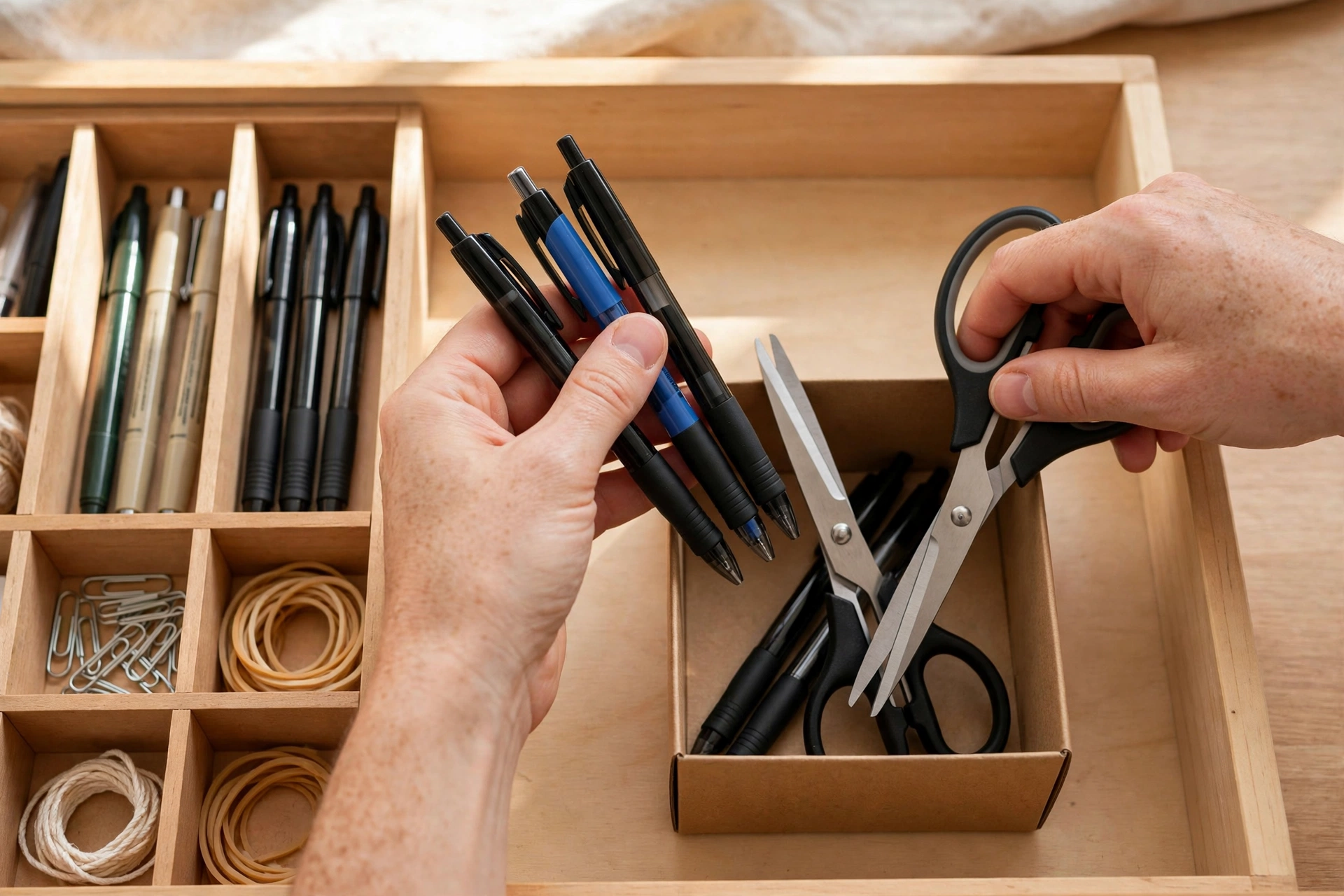
Seven pairs of scissors. Fourteen pens. Nobody needs that many. Keep the best two or three of each and donate or bin the rest — duplicates are responsible for half of all junk-drawer volume.
13. A Magnetic Strip for Small Tools

Screwdrivers, Allen keys and nail clippers sink to the bottom and disappear. A self-adhesive magnetic strip along the drawer’s back wall keeps metal tools visible, upright and grabbable.
14. The One-In-One-Out Rule

The drawer stays tidy only if it doesn’t keep growing. Every time something new moves in, something old moves out — to the bin, the toolbox or the recycling. It’s the simplest maintenance rule there is.
15. The 5-Minute Monthly Reset
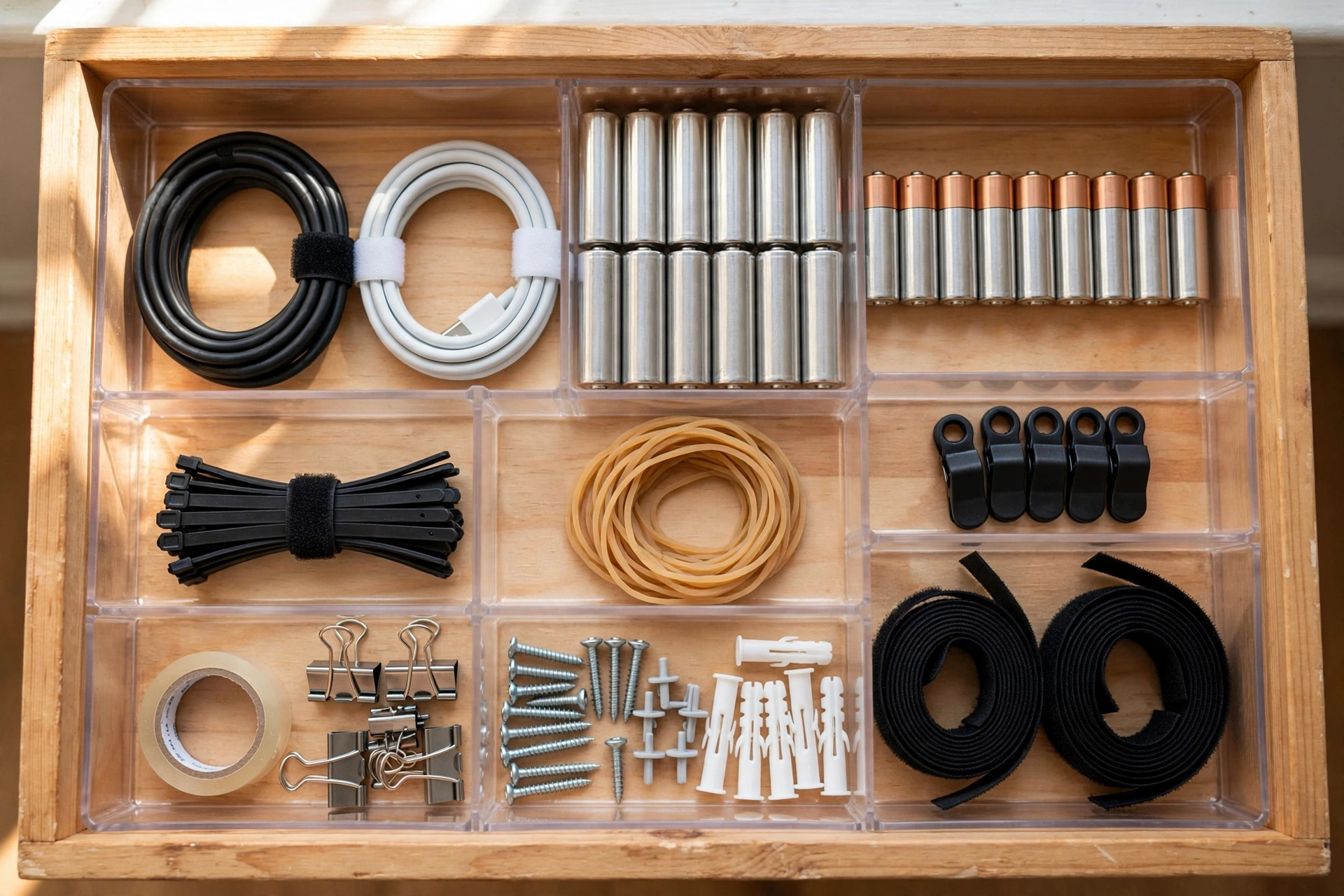
Even the best system drifts. Once a month, set a timer for five minutes: toss the dead batteries, re-coil one cable, put strays back in their zones. Five minutes keeps the chaos from ever coming back.
Junk Drawer Organisation FAQs
How do I organise a junk drawer on a budget?
Start free: empty the drawer, declutter ruthlessly, and use ice-cube trays, muffin tins or small boxes you already own as compartments. A roll of masking tape for labels costs pennies. If you buy one thing, make it expandable dividers.
What should actually be in a junk drawer?
Only things you reach for regularly: pens, tape, scissors, batteries, a torch, basic tools, charging cables and spare keys. If an item hasn’t been used in a year, it belongs elsewhere — or in the bin.
How do I keep my junk drawer organised long-term?
Three habits do the work: label every section so things go back correctly, follow the one-in-one-out rule, and do a five-minute monthly reset. The drawer only drifts when items have no home — so give everything one.
What’s the best junk drawer organiser to buy?
Expandable bamboo or plastic drawer dividers are the best all-round buy — they adapt to any drawer size and create lasting compartments. Pair them with a non-slip liner underneath and small trays or ice-cube trays for the tiny items.
Final Thoughts
A junk drawer isn’t a failure — it’s a hardworking drawer that never got a system. Give it zones, dividers and labels, and it becomes one of the most useful spots in your home. If you enjoyed these ideas, you’ll love our home organisation hacks, closet organisation ideas and small kitchen organisation ideas next.