
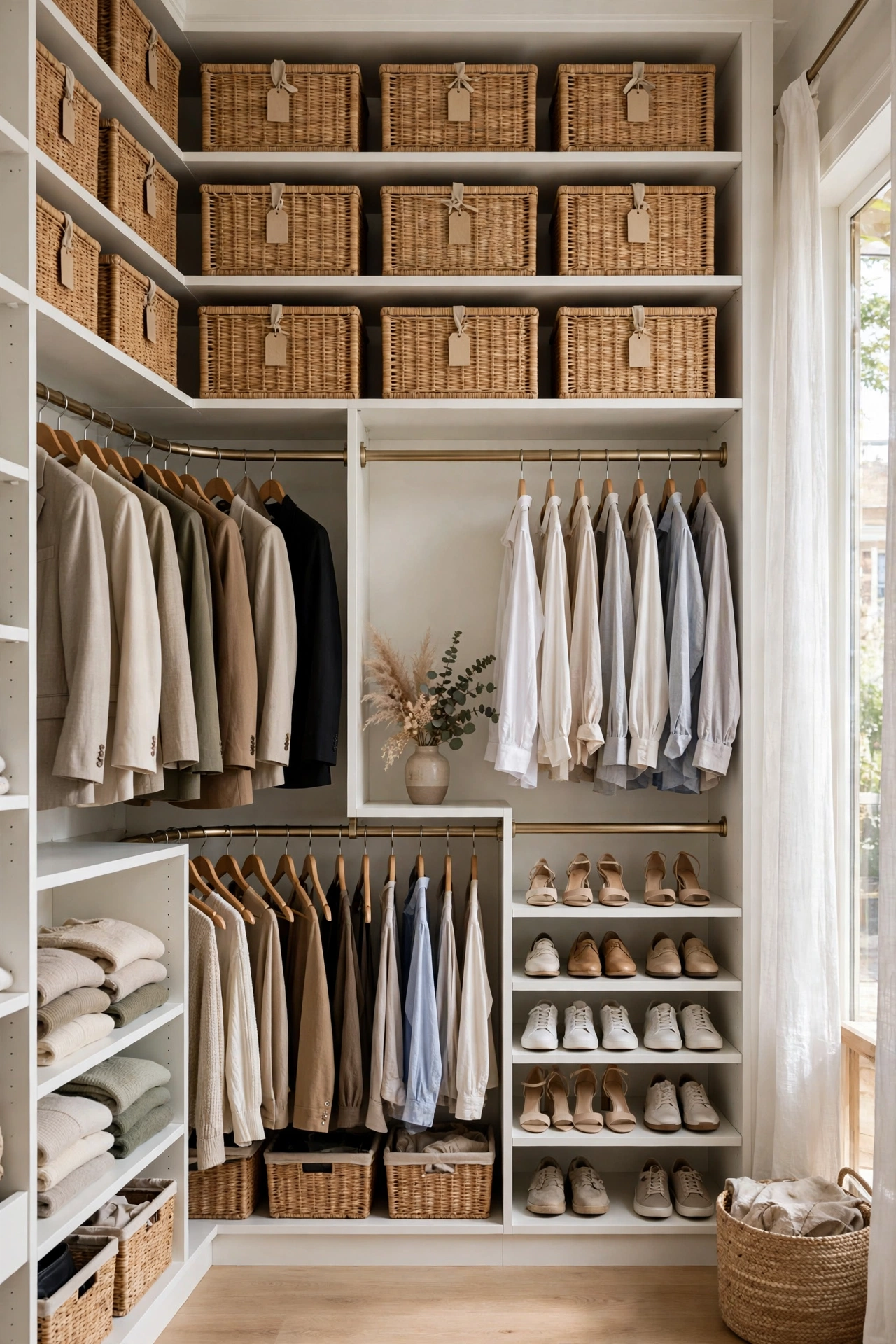
Your closet isn’t too small — it’s just under-organised. Most closets waste half their space: the dead zone above the top shelf, the floor under hanging clothes, the entire back of the door, and deep shelves where things go to die. These 15 closet organisation ideas reclaim all of it.
Every idea is budget-friendly, most are renter-friendly, and none require a custom closet build. Let’s double your storage with what you already have.
1. Double Your Hanging Space With a Second Rod
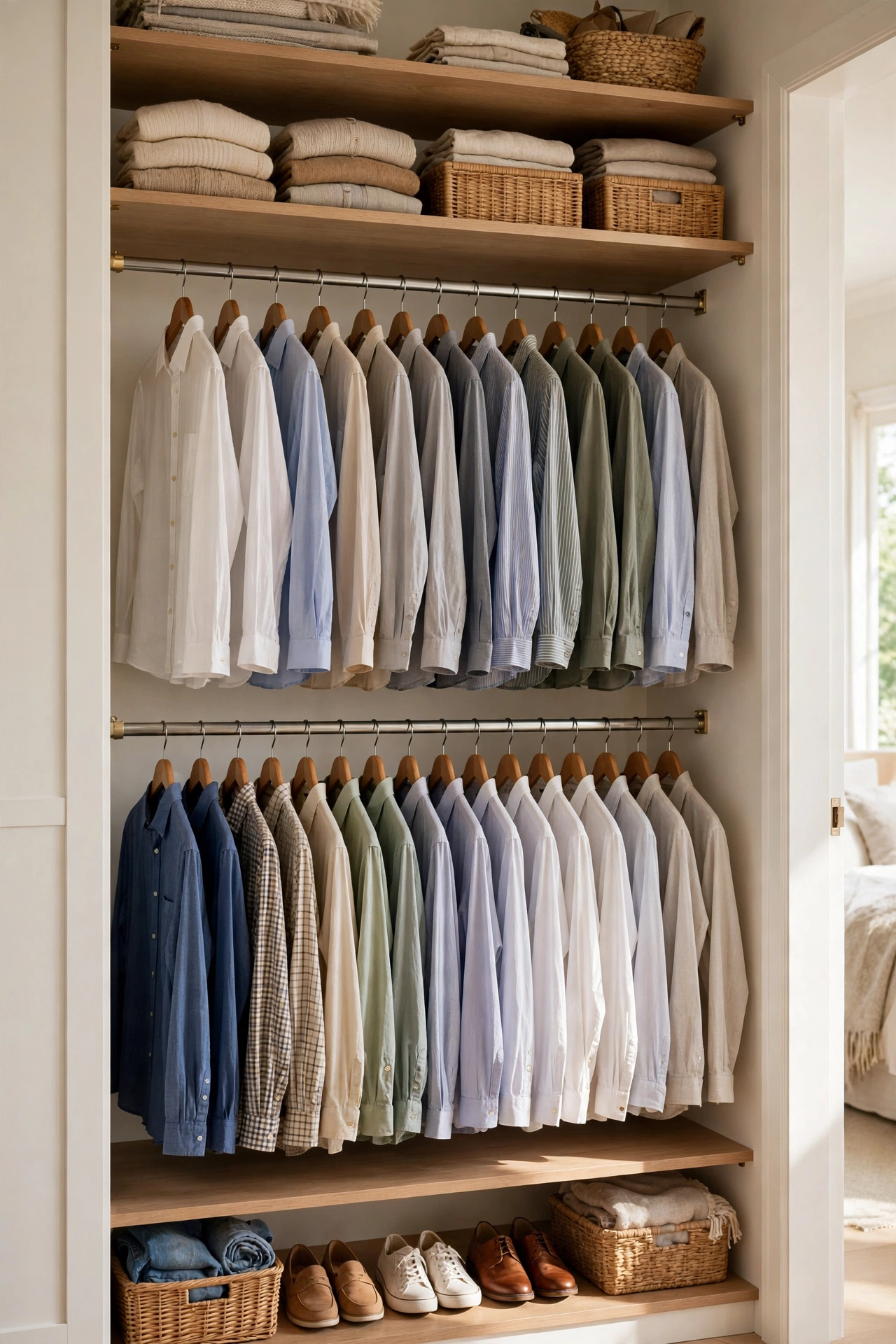
The single highest-impact closet upgrade: add a second hanging rod below the existing one. Most closets have one rod at full height, but shirts, blouses and folded trousers only need half of it. A tension rod or a hanging rod extender instantly doubles your hanging space for short items.
Keep long dresses and coats on the single-rod section, and hang everything else double-stacked.
Budget tip: A simple tension rod costs very little and installs in minutes — the best-value closet upgrade there is.
2. Add Shelf Dividers to Stop the Stack Collapse
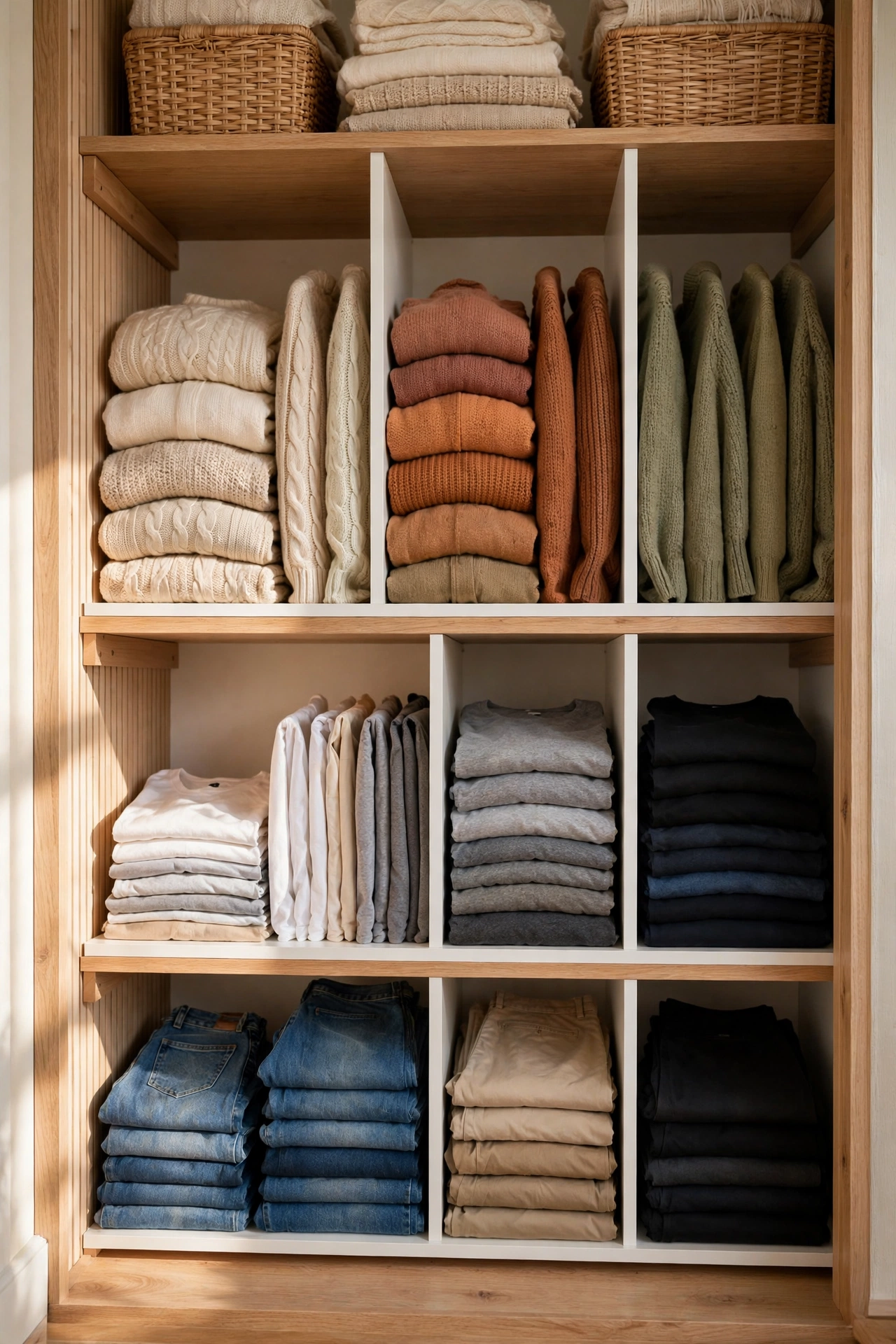
Folded clothes stacked on open shelves always topple. Shelf dividers (acrylic, wire or wooden) split wide shelves into neat sections so stacks stay upright and separated by category.
No more leaning towers of jumpers. Each stack gets its own bay, and getting dressed stops disturbing the whole shelf.
Renter-friendly: Freestanding dividers need zero fixings — they just clip or slot onto existing shelves.
3. Use the Back of the Closet Door
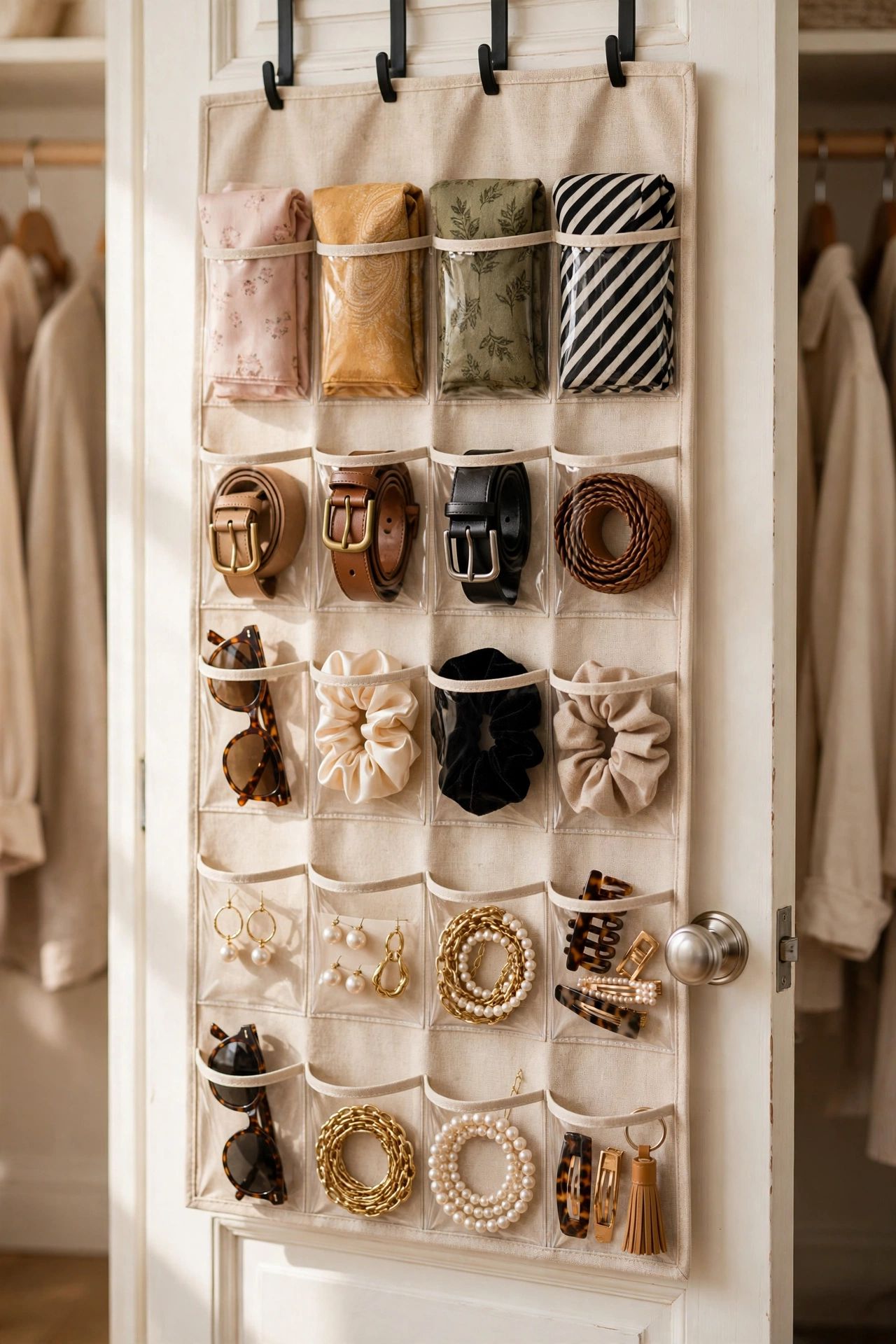
The back of the closet door is invisible storage gold. An over-door rack with hooks or clear pockets holds scarves, belts, ties, sunglasses, jewellery and accessories — all hidden when the door closes.
Clear pockets are especially good: you can see everything at a glance, which means you actually wear what you own.
Small closet win: Door storage adds a full extra “shelf” of capacity with zero footprint.
4. Go Vertical — The Top Shelf Is Wasted Space
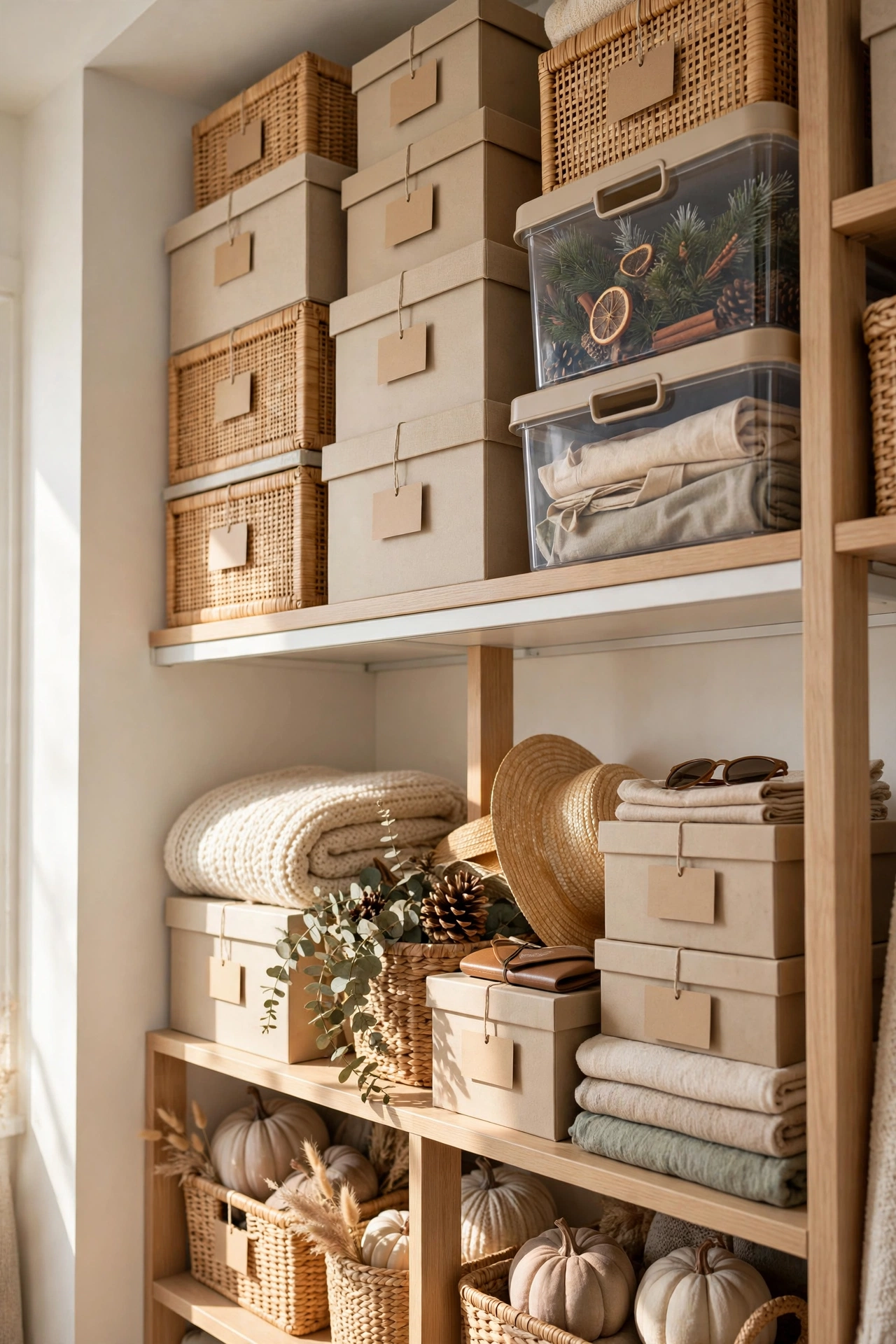
The top shelf of most closets holds one sad layer of items with a metre of empty air above it. Add a second shelf above it, or stack labelled boxes and baskets up there for the items you rarely need: seasonal clothes, luggage, spare bedding.
This is prime real estate for the overflow that doesn’t fit anywhere else.
Safety note: Keep it light up top, and use sturdy boxes so nothing topples when you reach for it.
5. Sort Clothes by Category, Then Colour
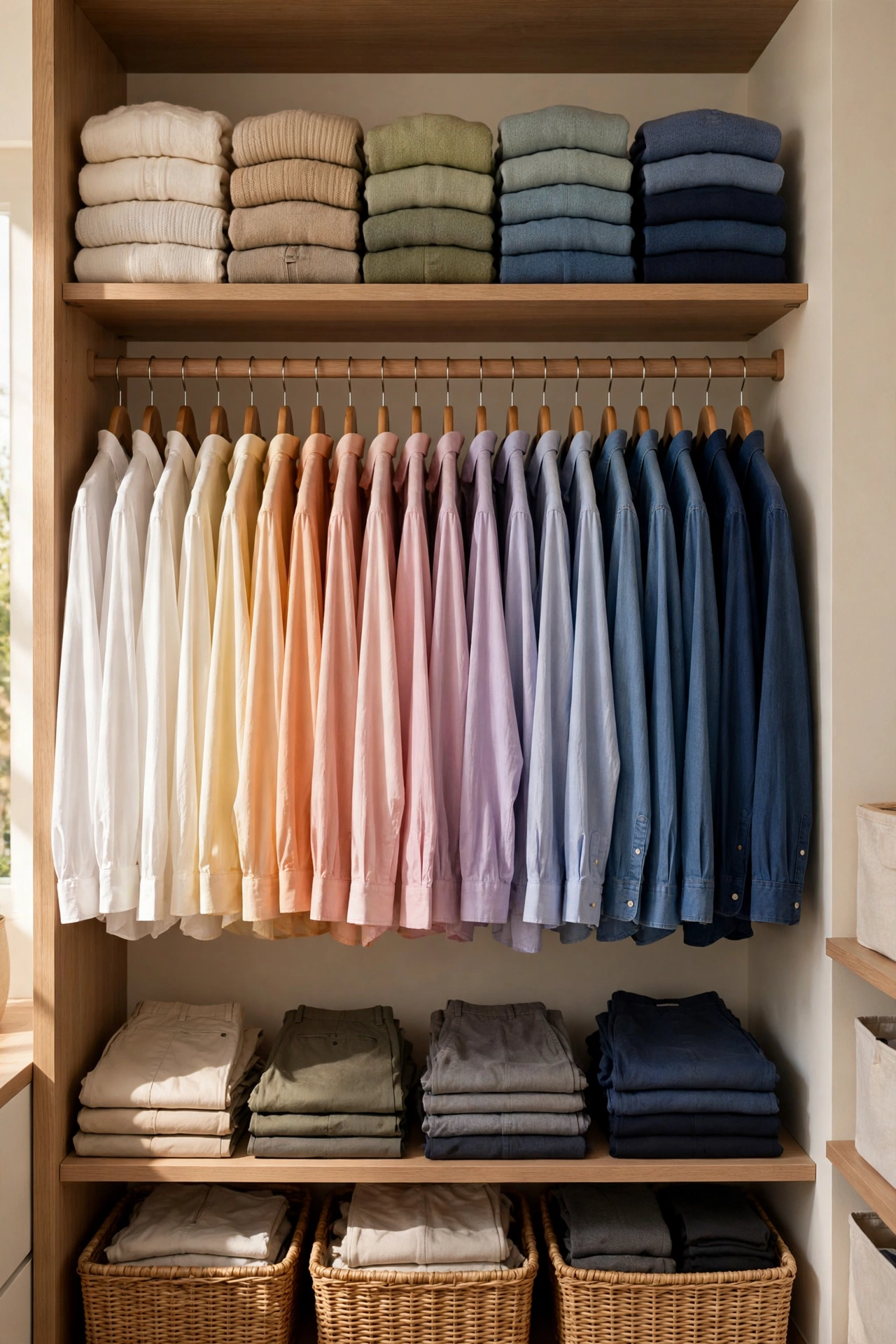
A closet organised by category (shirts together, trousers together) and then by colour is dramatically easier to use than one organised by… vibes. You find things faster, spot duplicates, and the visual order makes the whole closet feel calmer.
This costs nothing and takes one afternoon. It’s the foundation every other closet idea builds on.
The rule: Category first, colour second, and keep the categories consistent across seasons.
6. Use Slim Velvet Hangers — Instantly Gain Space
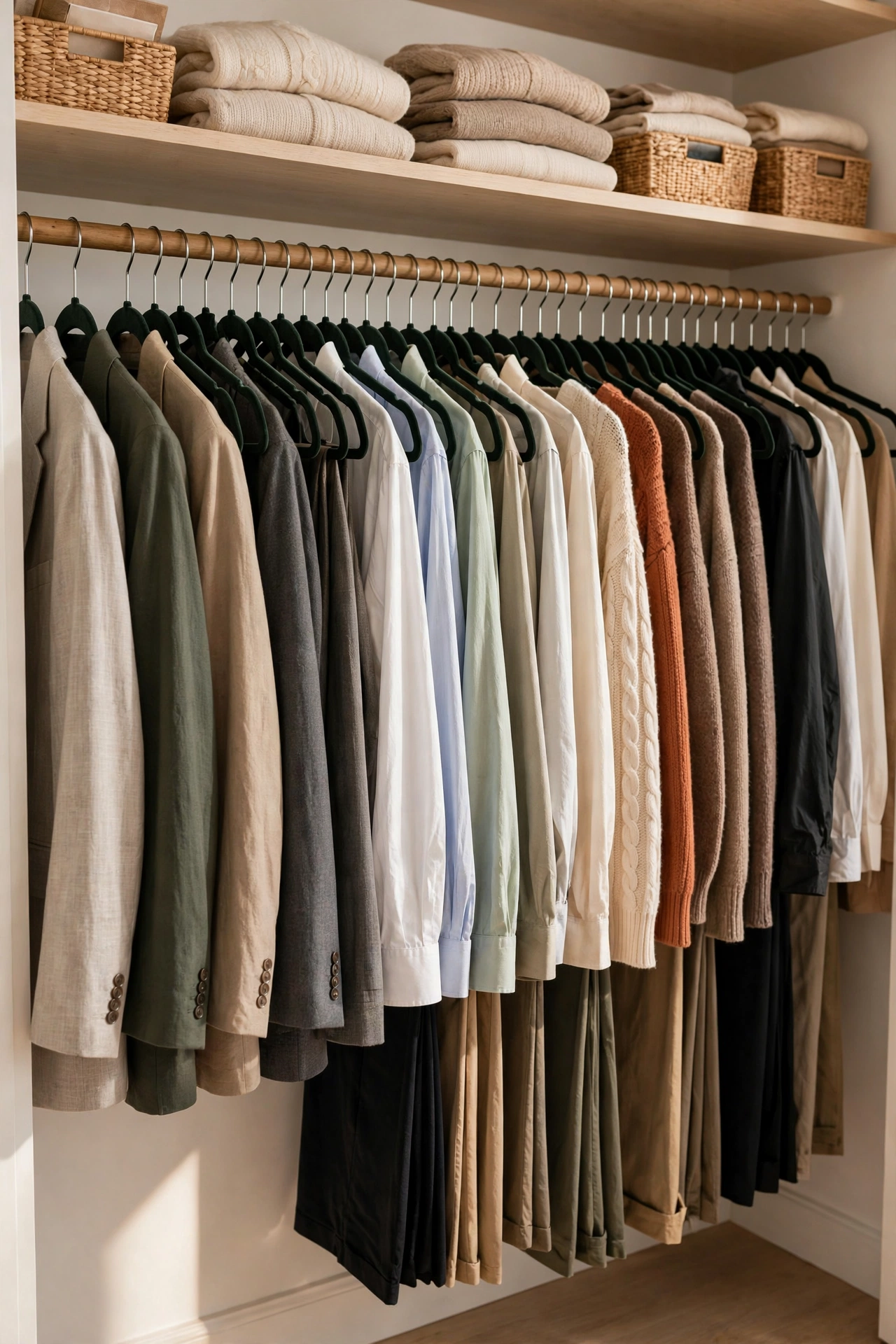
Bulky plastic and wooden hangers eat centimetres of rod space each. Slim velvet hangers are a fraction of the thickness, grip clothes so nothing slides off, and matching hangers make the whole closet look instantly tidier.
Switching to slim hangers can fit 30–50% more garments on the same rod. It’s the cheapest space-gain in the closet world.
Budget tip: Buy them in multi-packs and convert one section at a time if the upfront cost feels steep.
7. Add Drawers Where There Are None
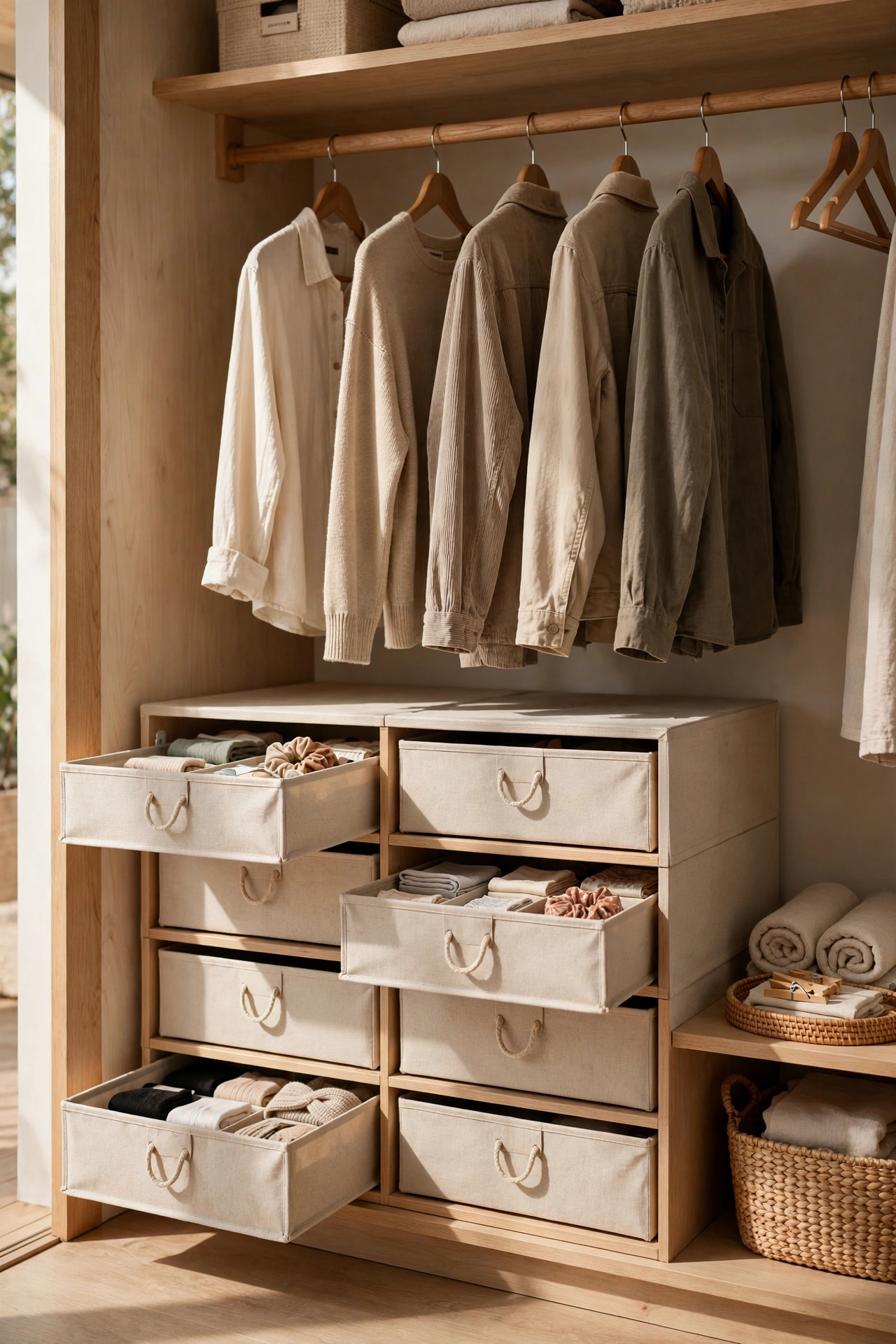
Closets without drawers waste the floor space under hanging clothes. Stackable fabric drawers, a small rolling drawer unit or cube-organiser inserts turn that dead floor zone into proper drawer storage for underwear, t-shirts, gym clothes and accessories.
Drawers beat shelves for small items every time — nothing gets buried, and everything stays visible.
Small closet win: Three stackable drawers under your hanging clothes can replace an entire dresser.
8. Corral Accessories With Hooks and Small Bins

Belts, bags, hats and scarves are closet chaos agents — too bulky for drawers, too floppy for shelves. Give them homes: hooks on the wall or door for bags and hats, small bins or a hanging organiser for scarves and belts.
When accessories have designated spots, they stop migrating onto the floor and the bed.
Try it: One row of adhesive hooks inside the closet wall holds a surprising amount of daily accessories.
9. Store Shoes Vertically, Not in Piles
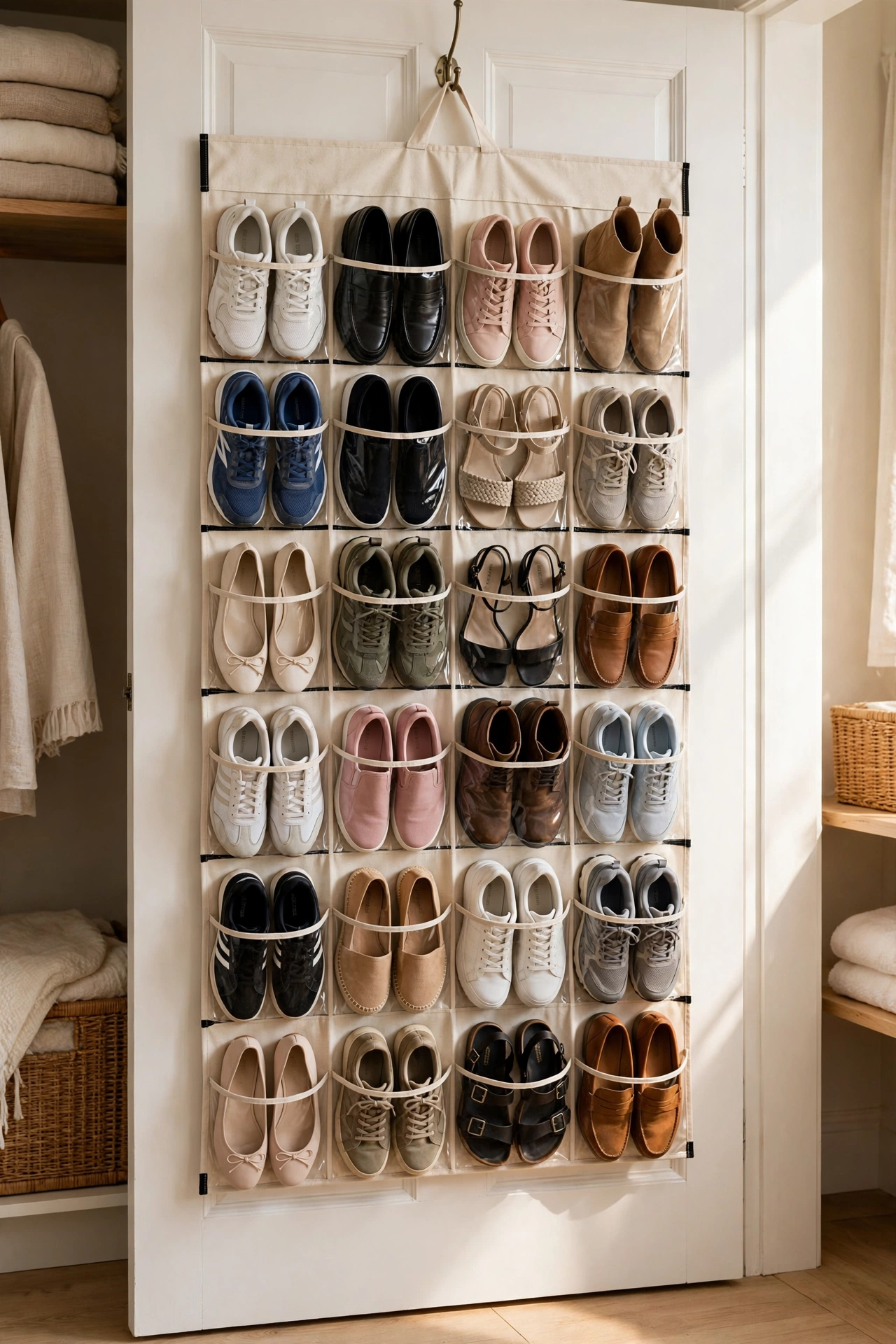
Shoe piles are where closet order goes to die. Store shoes vertically instead: an over-door shoe organiser, a slim shoe rack, or clear stackable shoe boxes that let you see every pair.
Vertical shoe storage uses wall and door space instead of precious floor, and seeing all your shoes means you actually rotate through them.
Budget tip: An over-door shoe organiser costs very little and holds 20+ pairs in the space of a door.
10. Label Your Boxes and Bins
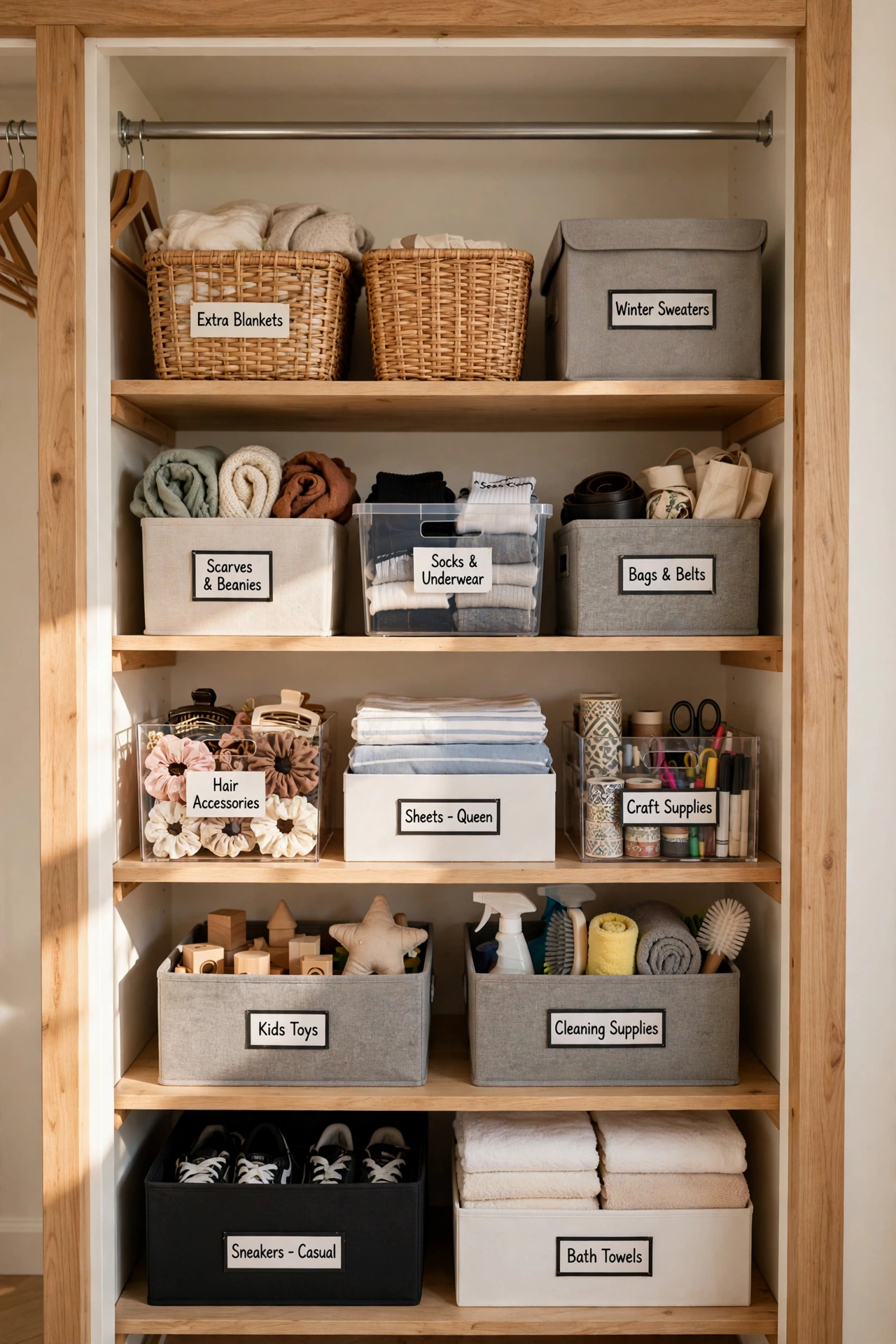
Unlabelled boxes are just mystery clutter with lids. Label every box and bin — seasonal clothes, accessories, memorabilia, shoes — so you can find things without opening six boxes first.
Labels also stop the slow drift: when the box says “winter scarves,” winter scarves are what goes in it.
The payoff: A labelled closet stays organised by itself, because everyone in the house knows where things belong.
11. Create a Capsule Section for Daily Wear
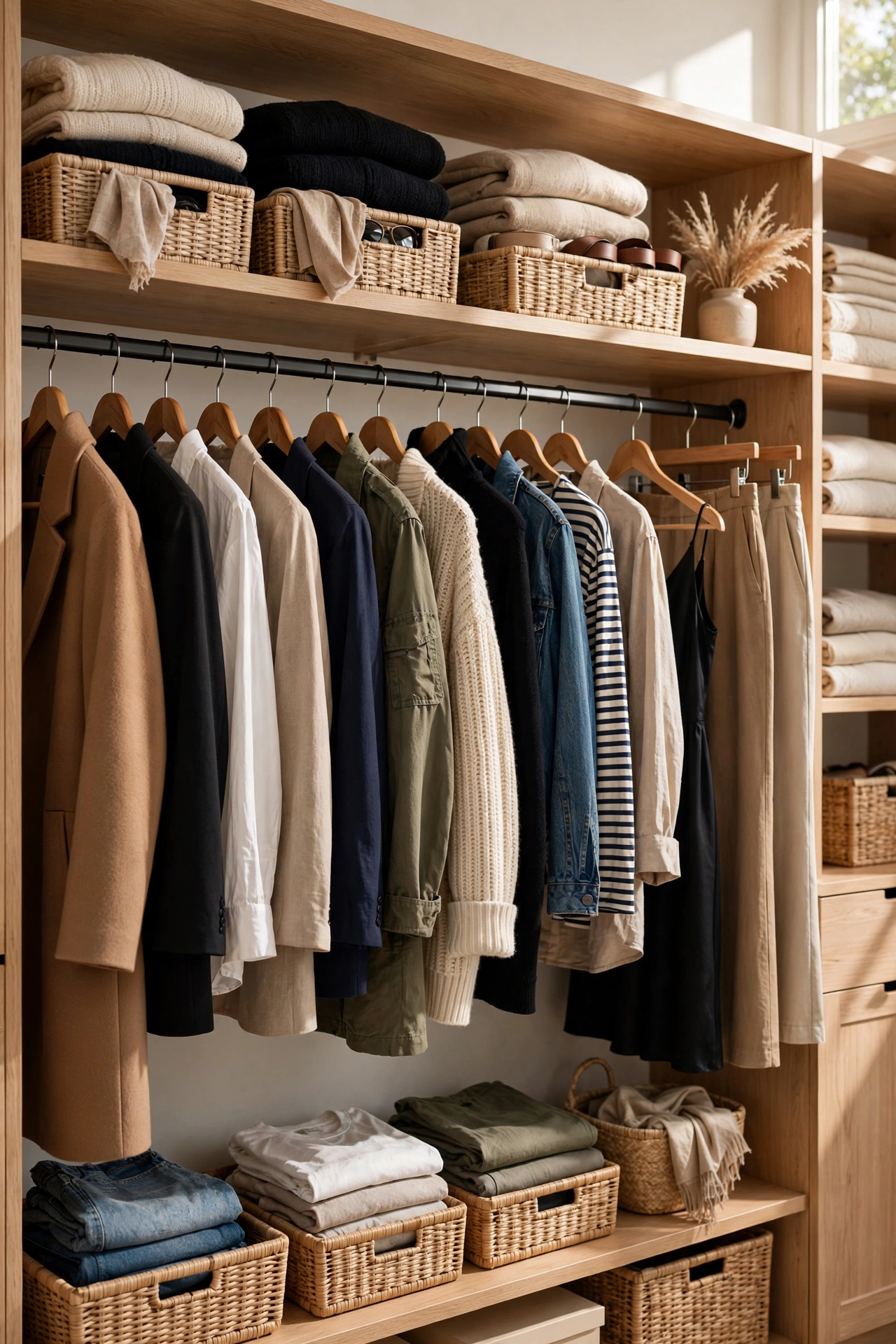
Most mornings are decided from a small rotation of favourite outfits. Create a capsule section at the front of your closet — your 10–15 most-worn pieces, visible and reachable — and let the rest live further back.
Getting dressed becomes a 2-minute decision instead of a 20-minute excavation.
Why it works: You already wear 20% of your clothes 80% of the time. The capsule section just makes that official.
12. Use the Floor Space Wisely (Don’t Waste It)
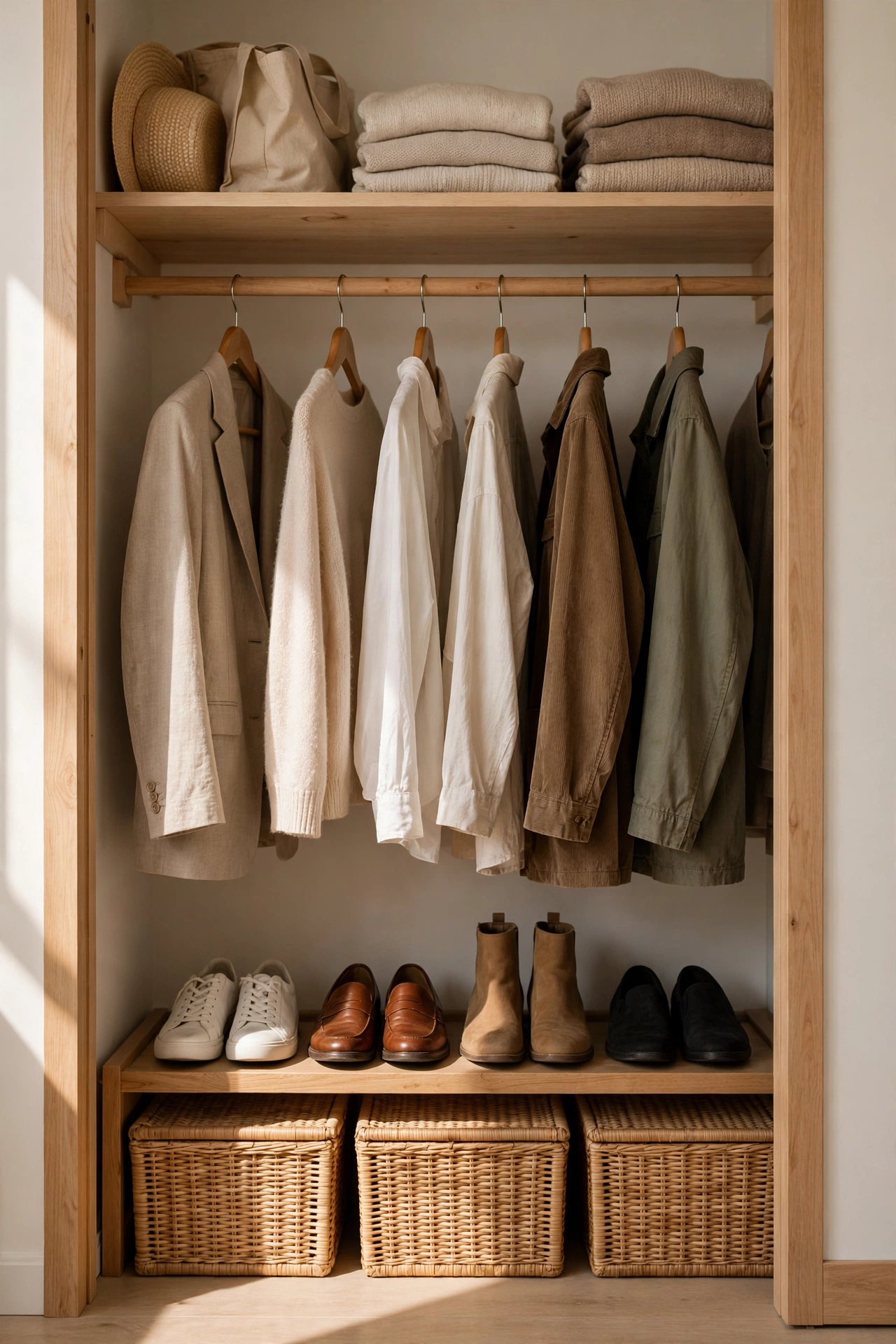
The closet floor under hanging clothes is often a dumping ground. Give it purpose: a low shoe rack, stackable drawers, or labelled bins for off-season items. Keep it intentional and it becomes genuinely useful storage instead of a clutter zone.
Leave a clear path to the back of the closet — if you can’t reach it, you can’t use it.
Small closet win: Purposeful floor storage can add the equivalent of an entire extra shelf.
13. Rotate Seasonally — Twice a Year, Swap It Out
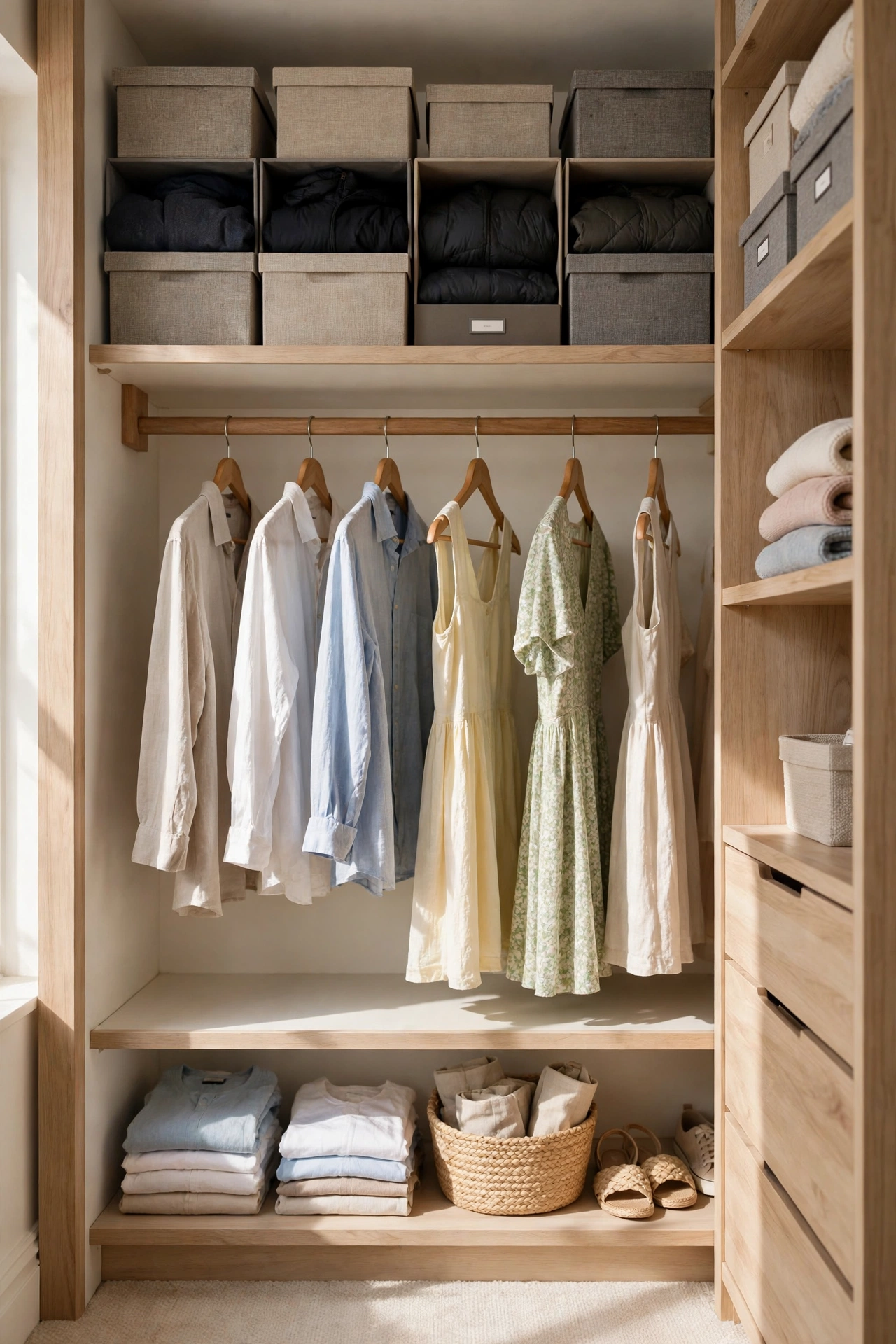
Prime closet real estate should hold what you’re wearing now. Twice a year, rotate: winter coats and boots move to high shelves or storage boxes, summer clothes take their place (and vice versa).
The seasonal swap is also the perfect moment for a mini-declutter — anything you didn’t wear all season is a donation candidate.
The rule: If it doesn’t suit the current season, it doesn’t earn prime closet space.
14. Add Lighting — You Can’t Organise What You Can’t See
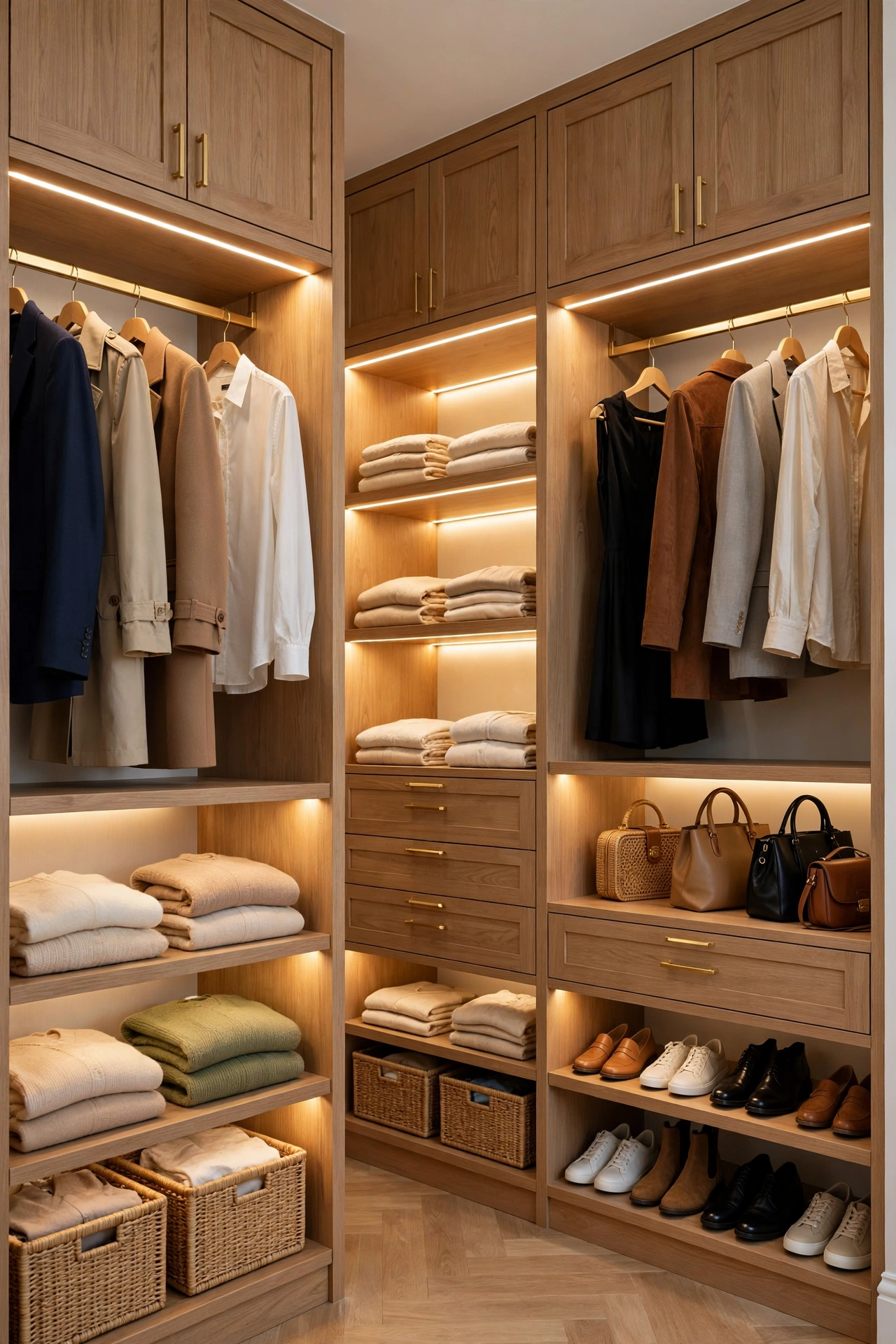
Dark closets hide clutter and make getting dressed harder. Add lighting: battery-powered LED puck lights, a motion-sensor light strip, or a plug-in light if there’s a socket nearby.
Good closet lighting makes colours accurate (no more navy-that-was-black surprises) and makes the space feel bigger and more premium.
Renter-friendly: Battery LED strips mount with adhesive and remove cleanly — no wiring needed.
15. Do a Quarterly One-Bag Declutter
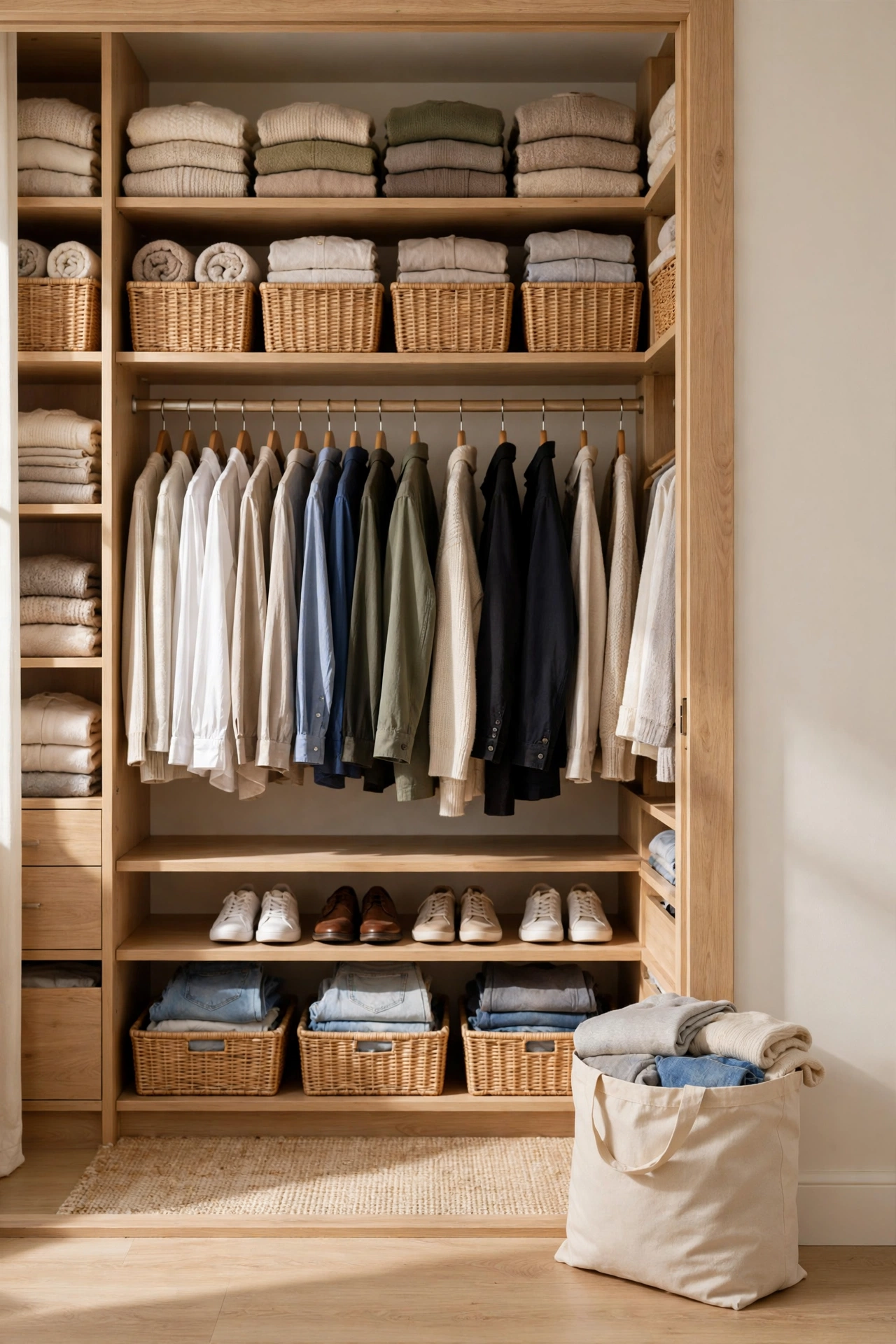
Closets refill silently — the donation bag from last year is full again. Every three months, pull one bag’s worth of clothes you don’t wear, don’t love or that don’t fit, and donate or sell them.
One bag per quarter keeps the closet permanently under control without ever needing a dramatic clear-out.
The one rule that makes it stick: If you haven’t worn it in a year and it isn’t occasion-specific, it goes in the bag.
Frequently Asked Questions
How can I organise a small closet on a budget?
Start free: sort by category and colour, rotate seasonally, declutter quarterly. Then spend small amounts on slim hangers, a tension rod for double hanging, and an over-door organiser — these three transform a small closet for very little.
How do I double my closet storage?
Add a second hanging rod, use the back of the door, go vertical with the top shelf, and add drawers under hanging clothes. Together these reclaim the four most-wasted zones in any closet.
What is the best way to organise clothes in a closet?
Sort by category first (shirts, trousers, dresses), then by colour within each category. Use matching slim hangers, and keep a capsule section of daily favourites at the front.
How do I keep my closet organised long-term?
Label your boxes, keep a permanent donation bag nearby, and do a quarterly one-bag declutter. Small regular habits beat annual overhauls.
Final Thoughts
Your closet doesn’t need to be bigger — it needs to work harder. Double the hanging space, claim the door and the top shelf, sort what you own, and let simple systems do the rest.
Pick three ideas from this list and do them this weekend. By Monday, getting dressed will feel like a different experience.
For more whole-home systems, explore our Home Organisation Hacks, Bedroom Ideas and Small Bathroom Storage guides.
5 thoughts on “15 Closet Organisation Ideas to Double Your Storage (on a Budget)”